If the dead could speak: A voice from the morgue where Edgar Chagwa Lungu lies for 10 months since 5th June, 2025
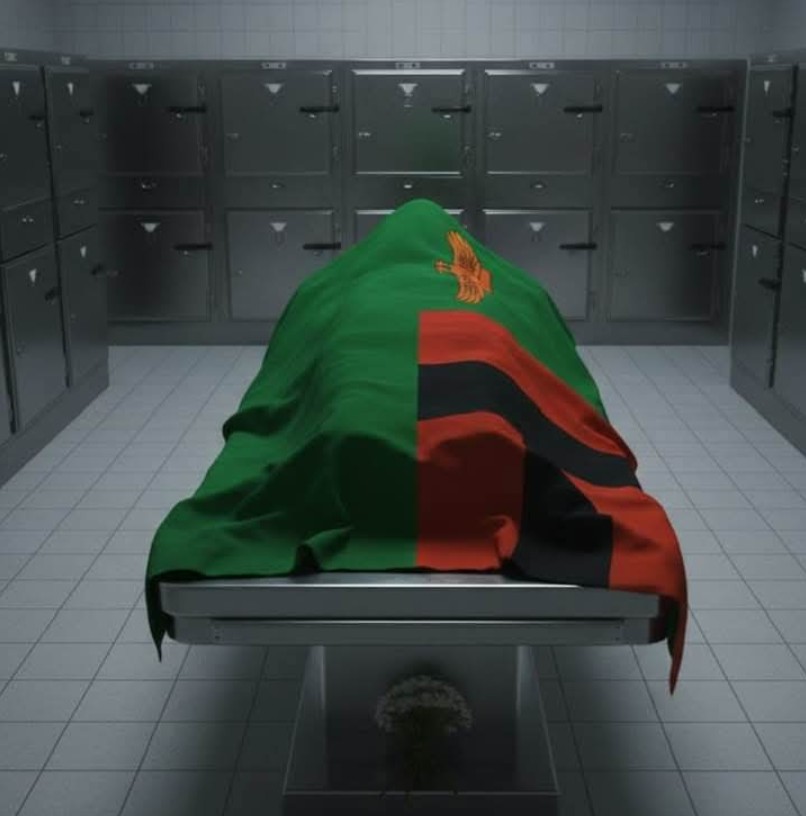
If the dead could speak: A voice from the morgue where Edgar Chagwa Lungu lies for 10 months since 5th June, 2025
By Thandiwe Ketiš Ngoma
If the dead could rise for a moment and speak to the living, perhaps the silence surrounding the fate of Edgar Chagwa Lungu (ECL) would finally be broken. Perhaps the nation would hear a voice heavy with pain, disappointment, and the quiet dignity of a man who once carried the hopes of millions.
Perhaps that voice would turn directly to President Hakainde Hichilema and say:
“Mr. President, when I left office, I accepted the will of the people. Power had changed hands, as it always does in a democracy. I stepped away from State House knowing that leadership is temporary and that every leader must eventually return to the ordinary life of a citizen.
But what followed was not the dignity normally given to those who once served the nation. I was humiliated and harassed. Day and night, I was called a thief—not only by political opponents, but even by you, Mr. President, and members of your government. Your supporters and cadres hurled insults and threats at me and my family. Some even issued degrading and disturbing remarks, promising humiliation and violence.
And through all of this, Mr. President, you remained silent. Your silence told the nation that you saw nothing wrong with what was happening.
I went quietly into retirement, hoping to live peacefully as a former leader who had handed over power. But even in retirement, you followed me with suspicion and restrictions. Every simple activity of my life was suddenly labelled political. When I went jogging, it was considered political. When I went to church, it was considered political. When I greeted citizens who still respected me, it was considered political. Almost every movement I made was interpreted as a threat to the government.
Instead of allowing a former President to live with dignity, you surrounded my life with constant political hostility.
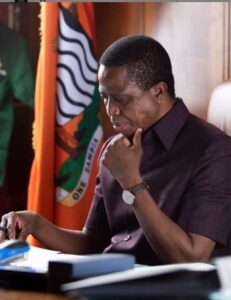
Then came something even more painful. The Patriotic Front, the party that had me with leadership and carried the legacy of President Michael Sata, was torn apart. Using state machinery, you sponsored a surrogate to hold what many considered an illegal convention, and that person was suddenly declared the president of the party.
I stood watching in disbelief as the party that had sponsored me to become President of Zambia was being taken over in a manner that was deeply undemocratic. That party was not merely a political platform to me—it was a legacy entrusted to my care by President Sata.
And so I made a difficult decision. I could not remain silent while the house entrusted to me was collapsing. I returned from retirement to defend and rescue the party that had placed its trust in my leadership.
But when I returned to active politics, the Constitution dictated that my retirement benefits would be withdrawn. My benefits were taken away. I was removed from the government payroll. The recognition and security normally given to former Heads of State disappeared. The honour that comes from years of national service seemed to vanish overnight.
So when I travelled to South Africa, I did not travel as a former Head of State supported by the government I once led. I travelled as an ordinary citizen. A man quietly seeking medical care. A man paying his own medical bills. A man relying on his own limited resources while his health slowly failed.
But, Mr. President, there is something else I must tell you. On several occasions, when my health was deteriorating and I needed specialised medical attention, I sought to travel to South Africa. I was not asking for government money. I was not asking for privileges. I was prepared to use my own resources to pay for my medical care like any ordinary citizen.
Yet time and again, your government blocked my attempts to leave the country. The doors were closed before me. Permission was withheld. Even the simple right to seek specialised treatment for my failing health became a struggle.
What threat does a sick man pose to a government? What danger does a man seeking medical care pose to a nation?
Eventually, I had to leave Zambia in a way that clearly made your government uncomfortable. The circumstances of my departure unsettled those in power so much that the airport official who cleared me to travel reportedly lost his job. A man lost his position simply because he allowed another human being to leave the country in search of medical care.
What kind of nation punishes compassion? What kind of leadership criminalizes illness? All I wanted was a chance to fight for my life. All I wanted was access to specialised care. But even that became a struggle.
And so I left my own country, not with the dignity expected of a former Head of State, but with the quiet determination of a man who simply wanted to live.
In those lonely moments of illness, when the body grows weaker and every breath becomes heavier, a man has time to reflect. He remembers the country he served. He remembers the people he once led. And he hopes that even in political rivalry, humanity will still exist.
Because sickness is not political. Pain is not political. Death is not political.
Years ago, when Michael Chilufya Sata fell ill, his political rival Levy Patrick Mwanawasa helped him travel to South Africa for treatment. They were fierce opponents, yet in that moment humanity rose above rivalry. That is what leadership looks like. That is what compassion looks like. That is what it means to recognize the dignity of another human being.
But when my own health began to fail, I waited to see whether that same humanity would appear again. I waited for compassion. I waited for a simple recognition that beyond politics, we are all human beings. Instead, I felt the cold silence of indifference.
As my body grew weaker and the shadow of death moved closer, I began to understand something deeply painful: even in sickness, politics had not left me.
So I spoke to my family with the honesty of a man who knew his time on earth was running out. I told them this: when my time comes, let those who did not stand with me in my suffering stay away from my final journey. If the government offers to grant me a state funeral, I told my family that you, Mr. President, should not preside over it or be anywhere near my remains. This is the last wish I made, and I would love for you to respect it.
A funeral must never become a stage for hypocrisy. If compassion could not be shown when I was alive, then let no one pretend to show it when I am gone. If I needed humanity when my body was failing and hope was fading, and it could not be found, then let there at least be honesty in death.
Let my family mourn in peace. Let my final journey be guided by dignity, not by political spectacle.
For in the end, power fades. Titles disappear. The applause of crowds becomes a distant memory. But humanity—true humanity—is the one thing history never forgets. A man does not need sympathy when he is already in the grave. He needs compassion while he is still breathing.
And if such a voice could truly speak from beyond the grave, it would put President Hakainde Sammy Hichilema squarely in the spotlight and ask:
Do you see as other humans see, Mr. President? Do you feel as other humans feel?
Because the dead, the suffering, and the grieving family all watch. They ask: why does a man lie in a morgue for months, denied dignity and rest, while politics and personal ambition take centre stage? Why must the family carry the weight of grief while the powerful argue over the funeral of one who served the nation faithfully?
And now, Mr. President, Zambia asks directly: How long will you allow politics to overshadow humanity? How long will a grieving family be held hostage to ego while a man who served this country lies unburied? If you cannot feel the weight of human suffering, if you cannot see the injustice, then what does leadership mean to you?
Zambia is watching. The people are watching. History is watching. One truth stands unshakable: power without compassion is tyranny. Titles mean nothing if dignity is denied. Politics cannot erase the simple, sacred human need for respect in life and death.
Mr. President, this is your moment of conscience. Will you choose humanity, mercy, and justice—or will you let ambition and ego write the final chapter? The family demands peace. The nation demands dignity. Edgar Chagwa Lungu deserves rest. And the eyes of Zambia will not look away until it is granted.
When a fellow human being was suffering, did we choose humanity—or did we choose politics?