Hellen Manda: Breaking HIV stigma, a young advocate’s story
“I have travelled to Ethiopia. I have travelled to Botswana. I have travelled to United States of America (USA), not because I am HIV positive, but because of my potential and what I’m doing as a young person to actually help others out there who are HIV positive—to actually accept themselves and never think of suicide, killing themselves or doing anything that will actually make them regret one day,” recollects Hellen Manda
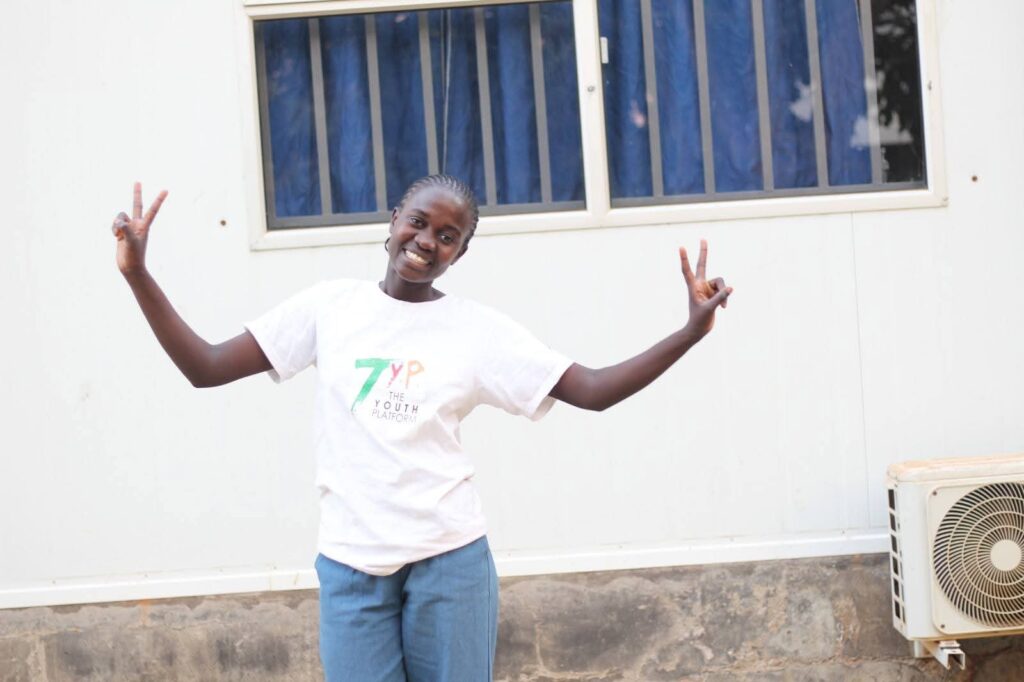
Hellen Manda: Breaking HIV stigma, a young advocate’s story
“…I accepted my status and I said, no one will contract the virus from me…,” Hellen Manda
By MacDonald Mayaba and Mwenya Mukuka
At 21, Hellen Manda travels the world speaking at high-level health meetings, hosts a weekly radio show and encourages adolescents confronting Human Immunodeficiency Virus (HIV) everyday, a virus that attacks the body’s immune system, and if left without treatment, can lead to Acquired Immunodeficiency Syndrome (AIDS).
Before this triumph—about five (5) years ago, Hellen dropped out of school for a whole term feeling humiliated, ashamed and betrayed after her schoolmate exposed her HIV medicine and status at Petauke Boarding School, Eastern Province
“…I’ve been taking Antiretroviral drugs (ARVs) since Grade 8. That’s when I was found HIV positive, though my mom [her late mum’s sister] didn’t disclose to me that I was taking ARVs. So, I kept taking them not knowing they were ARVs. I was told I was a ‘Sickler’ and had to be taking meds for me to have a good health. So, in Grade 11 at school there’s this girl who came to my bunker bed and I was about to take my meds. So, she said you usually take meds. What medicine are these? I told her they’re for my cough and then she laughed. …she was like these look like ARVs and then I just looked at her and I was like you don’t know what you’re talking about. So, the girl went to her bunker bed, picked a certain book where there was a topic on HIV/ AIDS and ARVs tablets …bottles drawn there on a picture and then she showed me and they looked exactly like the meds I was taking. So, I got angry and I didn’t want to talk to her. Then she went on and spread the news that I was taking ARVs,” she narrated.
Her story from the brink of despair to a powerful voice against stigma began in Main Location, a rural compound in Petauke district of Eastern province. Hellen lost both parents within a single month aged only five months. Her mother’s younger sister took her in and raised her.
Back at Petauke Boarding, the entire school knew Hellen had HIV and the silent whispers of her status were loudly echoed in the school corridors. The weight of the stigma was too heavy on the shoulders of a 16-year-old. She abandoned her HIV treatment in anger and despair.
“All I wished was to disappear forever,” she says, her voice steady now but recalling the sharp panic that once gripped her fragile life. “I just packed my meds… I didn’t open up that I had stopped taking my meds. Then after some months I started getting sick and I had to leave school because the condition got worse. So, when I came back home, mom asked me to tell her the truth …I did though I had hated her for not telling me that I was HIV positive,” she remembers.
Hellen recalls that the hospital became like her second home, often bedridden and hospitalised.
“I was vulnerable to various diseases… For example, I developed sores all over my body. In my head, I never even used to plait my hair. Even my eyes were affected, I couldn’t see clearly, even during the day. All those things were as a result of me stopping taking ARVs.”
The viral load results came back, and with more than 100-thousand copies of viruses in her body, her story caught the attention of Bridget Zulu, a DAPP Zambia Case Worker under the Total Control of Epidemics, Orphans and Vulnerable Children (TCE/OVC) project at Petauke General Hospital.
“What I found on the ground was that the VC [vulnerable child] had stopped taking ARVs because she had self-stigma, so to say. I created a comprehensive case management plan because it had to take a lot of education, accurate education, yeah, to dispel the myths that they had about HIV and stigma. Yes, and also, I had to support them psychologically, all the family members, then I had to link the caregiver to the [community] action groups. They learn a lot about HIV and any other related issues or topics,” explained Bridget.
She added; “Then the [child], I had to link her to Teens Club. I also helped the family to form a trio because I never wanted the girl to feel like she’s alone in this battle. But I wanted to make sure that I create a support system within a home, yes, where disclosure is concerned, so that she feels that she’s not alone, that she has people to support in order for her to continue adhering on treatment.”
In teen club and at home, Hellen found what facts about HIV alone could not give her—belonging. She learned how to live healthily with HIV, how to protect others and why adherence matters. This knowledge replaced fear and isolation.
“…if it wasn’t for me coming to the friendly space, I wouldn’t have known that there are so many ways of which one can contract or transmit HIV of which one of them is a mother-to-child transmission which is in my case. So, I learned that knowledge is power and it gives confidence. It actually boosts our self-esteem. …I accepted my status and I said no one will contract the virus from me. How was I supposed to achieve that? By adhering to my medication. Since I already accepted my HIV status, I had to adhere to my medication so that I may have a suppressed viral load and attain the U is equals to U which is the undetectable is equals to untransmittable stage where I don’t have to transmit to my partner or to my unborn children,” she said.
Hellen returned to school and completed Grade 12 with good results. Today Hellen mentors the same Teens Clubs that saved her and speaks clearly about the power of acceptance, urging young people living with HIV to remain on treatment.
“I have travelled to Ethiopia. I have travelled to Botswana. I have travelled to United States of America (USA), not because I am HIV positive, but because of my potential and what I’m doing as a young person to actually help others out there who are HIV positive—to actually accept themselves and never think of suicide, killing themselves or doing anything that will actually make them regret one day,” she explained.
DAPP Zambia implemented the TCE/OVC project from 2020 to 2025. The project reached over 46-thousand children living with, or affected by HIV in eight districts of Western and Eastern provinces using the family-centred case management approach.
The project supported families to form trios, community actions groups and linked children to teen clubs for peer-to-peer support, helping over six thousand living with to achieve 98-percent viral load suppression.
Further, DAPP OVC also supported over seven thousand children with given school support, including uniforms, books, shoes and back packs. – Rainbow Newspaper Zambia Limited Rainbow Newspaper Zambia Limited Kwilanzi New Zambia Kwilanzi News Zambia Zambian Children Young People and Women in Development Zambian Developmental Media Alliance (ZADEMA) Zambian Media Taskforce on Ending Child Marriages Rainbow Television Zambia Limited Zambian Children Young People and Women in Development (ZCYPWD) Zambia Non-Communicable Diseases Alliance – Zanocoda Zambia Gender and Energy Network – ZGEN Branding Zambia 2014 ZANIS Journalists Against Piracy in Zambia – JAPIZ Kwacha Magazine