
Different Spoons for Different Soups: Why We must respect individual coping mechanisms
“Empathy requires us to recognize that handling stress, anxiety, and trauma isn’t a one-size-fits-all process”
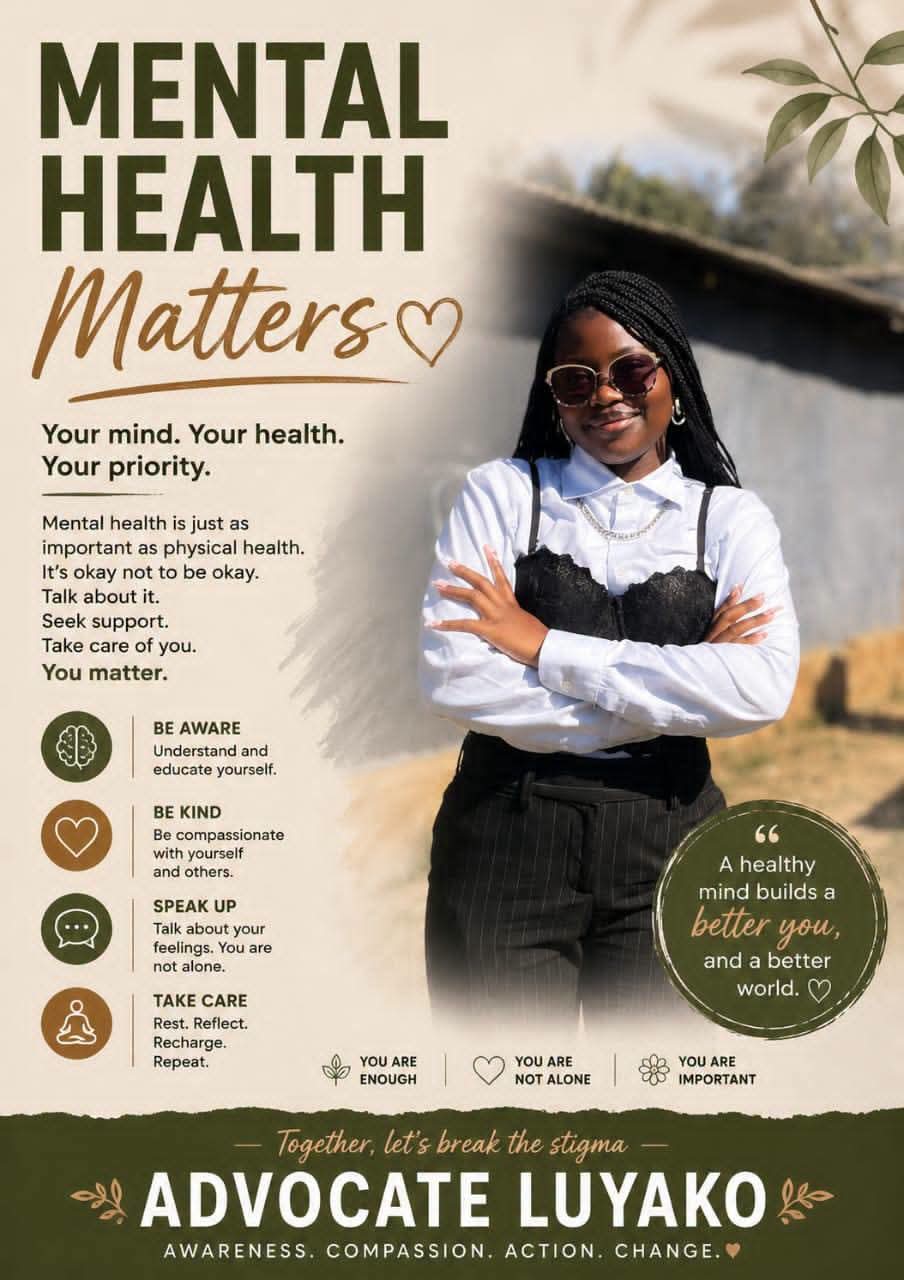
Advocate Luyako Patience
When I was a kid, I carried a weight that felt almost too heavy to bear. Growing up with severe abandonment issues, my early survival strategy was simple: convince myself that because others were facing hardship, I had to “man up,” internalize the pain, and just keep moving. It was a mindset built on a dangerous assumption; that because suffering is universal, the way we handle it should be identical.
As I’ve grown into the youth and mental health advocacy space, I’ve come to realize how flawed that logic is.
We often expect everyone to process pain through our own personal lens. When someone openly struggles, expresses vulnerability, or breaks down, it is far too easy for society to dismiss them and to ask why they are making a fuss or why they can’t just “pull themselves together.” But the truth is simple: just as no two people share the exact same name, no two people share the exact same coping mechanism.
Consider how two people might react to the exact same life-altering event, such as a devastating breakup or severe personal loss. One person might process the pain, gather their strength, and find a way forward relatively quickly. Another person, facing the exact same scenario, might find themselves spiraling into deep anxiety, depression, substance abuse, or self-harm.
It is not a question of strength versus weakness; it is a question of capacity, past trauma, support systems, and internal tools. What feels like a minor hurdle to one person can be an overwhelming wall to another.
When we judge someone’s emotional response based on how we would handle the situation, we build walls instead of bridges. Empathy requires us to recognize that handling stress, anxiety, and trauma isn’t a one-size-fits-all process.
So, what do we do when someone comes to us carrying a weight they can no longer hold?
First, drop the expectation that they should handle it the way you would. Second, recognize your own boundaries. You don’t have to be a certified therapist or have all the answers to be a supportive presence. If you feel unequipped to guide someone through what they are experiencing, the most powerful thing you can do is direct them to those who can.
Encourage them to seek out professional channels, mental health resources, and youth-friendly support spaces where they can be heard without judgment.
Healing is not a standardized test, and resilience does not look the same on everyone. By replacing judgment with understanding, we create spaces where people feel safe enough to seek help before the weight becomes too heavy to carry.

If you or someone you know is struggling with mental distress, substance abuse, or thoughts of self-harm, please reach out to available local support structures such as Lifeline/Childline Zambia on the toll-free line 933 or Child Helpline on 116. You can also visit your nearest public health facility to access Youth-Friendly Health Services (YFHS) for confidential, professional guidance.
YOUR FEEDBACK WILL BE HIGHLY APPRECIATED; Contact: +260975885144
email: luyakopatience@gmail.com
THANK YOU.
ABOUT THE AUTHOR: Luyako Patience is a medical student at Lusaka Apex Medical University pursuing a Bachelor of Pharmacy. A Mental Health Advocate, She is a dedicated Youth and Sustainable Development Goals (SDGs) Advocate specifically focused on SDG 3 (Good Health and Well-being) and SDG 17 (Partnerships for the Goals), working to dismantle the cultural stigma surrounding mental health in Zambia.