CLIMATE CRISIS INFRINGES ON CHILDREN’ RIGHTS
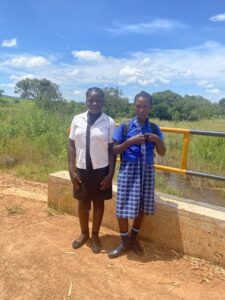
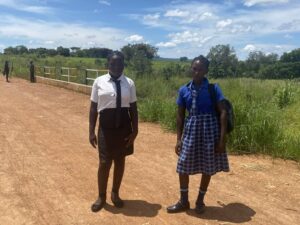
…El Niño-driven floods hampering their access to basic services such as education and healthcare in Isoka District
By SIMON MUNTEMBA
ALL-WEATHER crossing points and roads in rural areas provide connections for communities not only to access the social services they need safely and conveniently, but also access to markets for agricultural produce by subsistence farmers.
Unfortunately, almost every rainy season, Milongo Resettlement area under Chief Kafwimbi of Isoka District, Muchinga Province which is surrounded by the Nansala River and some streams is usually cut off from basic services and goods due to lack of proper crossing points and road network.
As the water levels rise especially between December and February in this agricultural community, residents, including the school going children, are hindered from accessing basic services such as education and healthcare.
The impact of these events being induced by the El Niño phenomenon are disproportionately negative on school going children, especially girls who are pushed out of school and placing them at greater risk of child marriage, violence, and exploitation.
“Crossing the river during the rainy season here is a death trap. The water comes to our waist, wetting our clothes and books. The current is usually so fast in some places in the river that sometimes we lose our footing, or if we are not lucky, end up drowning,” says Harriet Nachalwe, a grade nine pupil at Milongo Basic School. “We always miss classes during the rainy season to avoid being washed away by the current, and unfortunately, some of my former classmates have stopped schooling and got married,” discloses a 16-year-old Harriet.
The children experience multiple climate shocks combined with poor essential services such as water, sanitation, and healthcare.
This lack of access to reliable and life-saving services reduces their resilience and ability to adapt to a changing environment, creating a vicious cycle that pushes them into deeper poverty and increases their vulnerability.
As climate change disrupts the environment, some children are forced to grow up in an increasingly dangerous world. This is a crisis that threatens their health, nutrition, education, development, survival, and future.
How Climate Crisis Infringes On Children’ Rights
According to an August 2021 UNICEF report, The Children’s Climate Risk Index (CCRI), almost every child on earth is exposed to at least one climate and environmental hazard, such as heat waves, cyclones, air pollution, flooding and water scarcity.
In addition, approximately one billion children – nearly half the world’s children – live in 33 countries such as Zambia, which is classified in the index as “extremely high-risk”. The children in these climate hotspots disproportionately suffer the effects of climate impacts.
This is so true. In Milongo Resettlement area of Isoka which is approximately 950km from Lusaka the Capital of Zambia, about 106 Km from Chinsali the Provincial headquarters, the El Niño-driven floods are posing major threat to children’s health, nutrition, education, development, survival and future potential.
Zambia’s main legislation on education is the Education Act 2011, which identifies each person’s rights to early childhood education, basic education and high school education, and that every child has the right to free basic education.
However, the right to education for children in the Milongo Resettlement area is being denied. During the rainy season, there is no mode of transportation for them to go to school, they are unable to leave their families because of the bad weather, and they are mentally challenged to focus on school work.
Moreover, their schools and homes get damaged. Consequently, loss and damage to property and assets leads to shortages of basic necessities like safe drinking water and sanitation, health food, and healthcare. And children are therefore denied their rights to education, safety, and shelter.
According to Milongo Basic School Head teacher Moses Chikote, out of the 400 learners in the school, over 300 are from the nearby villages and have to cross the river and streams to attend classes.
However, during the rainy season, learners from some villages are unable to reach school in the first two months of spring because the crossing points are usually impassable.
“The pupils risk their lives every day to come to school during the rainy season as they are faced with the challenge of crossing the flooded rivers and streams. Yes, I can confirm that there are some children in the surrounding villages who are deprived of education because of a lack of bridges,” says Mr. Chikote.
He adds: “During rainy season, people are completely cut off, they cannot cross this river. Some patients die in homes as they cannot access medical services at the nearby health facility due to flooding which creates such dangerous conditions to cross safely.”
The Head teacher also laments the lack of a hostel in his school. “Had there been a residential facility for children especially for the girls, they would be spared of all the hassles,” Mr. Chikote said.
Meanwhile, some learners interviewed say, sometimes they reach their school in the morning somehow, but getting back home in the afternoon becomes very hazardous.
“In the morning while at home, the weather looks fine and then we leave for school. But while getting back home, the weather suddenly gets worse and starts raining heavily. During such times, we are left in a dilemma,” said Maurice Sinkala, a grade seven pupil, adding that: “Many students quit the school due to such challenges.”
Indeed, the climate crisis poses a major threat to children and young people’s health, nutrition, education, development, survival and future potential.
The lack of access to reliable and life-saving services reduces their resilience and ability to adapt to a changing environment, creating a vicious cycle that pushes them into deeper poverty and increases their vulnerability.
In fact, recently, the United Nations also published a 128-page report explaining how the climate crisis is a child rights crisis with the biggest impacts felt by kids in poorer settings.
Medical experts also agree that compared to adults, children are less able to survive extreme weather events, and are more susceptible to toxic chemicals, temperature changes and diseases, among other factors.
“Children are at greater risk than adults from the respiratory, neurological and other diseases caused by climate change,” says public health specialist Dr. Richard Makombe who is also a senior resident medical officer at Chinsali Hospital.
Key to addressing these threats is building the climate resilience of and access to safe water and sanitation, universal healthcare and quality education, as evidence shows that these significantly reduce children’s vulnerability to climate impacts.
The failure to confront the greatest threat of this generation has created a child rights crisis – jeopardizing every child’s fundamental right to health care, healthy food, safe drinking water and sanitation, uninterrupted learning and protection from all forms of violence.
Thus, the climate crisis is a child rights crisis as it is a direct threat to a child’s ability to survive, grow and thrive.
Concerted Action To Enhance Resilience Of Key Services
Governments worldwide are taking action to make sure that climate-related events do not disrupt children’s education.
This is because authorities have realised that improving the resilience of key services that children depend upon is often the best investment to reduce the risks they face.
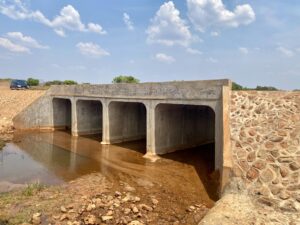
It is against this backdrop that the government has embarked on the construction of all-weather crossing points and embankments in Isoka through the Improved Rural Connectivity Project (IRCP).
The US$200 million IRCP, being financed by the World Bank Group, seeks to improve rural road accessibility for communities, strengthen their institutional capacity for sustainable management, and respond promptly and effectively to an eligible crisis or emergency. It is being implemented in six provinces of Zambia namely Central, Eastern, Luapula, Southern, Muchinga and Luapula provinces.
In Isoka, over K13.4 million (about US$ 510,000) has so far been disbursed for the construction of crossing points and embankments which will help avoid the interruption of connectivity during floods between the communities and service providers, including medical and educational services and retail trade in Katyetye and Kafwimbi chiefdoms, respectively.
“As a district, we were allocated K13, 494, 683.73 towards the construction of all-weather crossing points and embankments at Mpandwa, Musundamo, Nansala, Masangani, Nzoche, and Samba areas in Katyetye and Kafwimbi chiefdoms. And I would like to confirm that in Milongo Resettlement, two temporary makeshift constructions have so far been replaced by new modern crossing points,” says District Commissioner Jairo Simbeye.
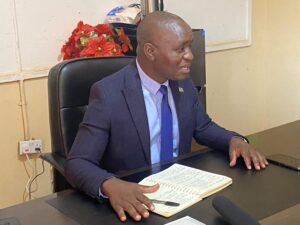
In an interview, Mr. Simbeye said the construction of all-weather crossing-points and road maintenance will not only enhance economic activities but also promote connectivity throughout the year between communities and service providers, including medical and educational services.
This development has thrilled the local community including traditional and civic leaders who have described the project as a game changer as it will change the face of the chiefdom and promote economic activities.
“I am happy that the Government has started working on the roads and building crossing points in my chiefdom. In fact, the newly constructed Nansala crossing point will open up business opportunities for our people who have faced challenges for a long time,” says Senior Chief Kafwimbi of the Namwanga people.
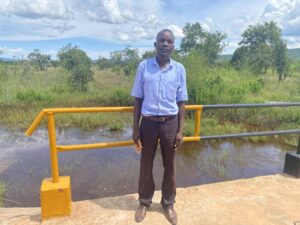
Meanwhile, area councillor Lameck Sinyangwe said with the construction of all-weather crossing-points in his ward, he was optimistic that cases of drowning especially for children which are common would be a thing of the past.
“In the past, many families were finding it difficult to send their children to school, fearing they might fall and drown in the river. But with the construction of the crossing point, children as young as seven years will now walk safely to school on their own,” says the local civic leader.
Mr. Sinyangwe however acknowledged that in his vast ward, some communities will still experience interruption of connectivity during floods due to lack of proper crossing points.
“My appeal to the Government and its cooperating partners is that let them also consider building crossing points as soon as possible at Masangani and Nzoche where people, including pupils are not able to access basic services and facilities during the rainy season,” says the councillor.
Indeed, improving the resilience of key services that children depend upon is often the best investment to reduce the risks they face which infringes on their fundamental rights.
By harnessing their potential and providing them with quality education, healthcare, and opportunities, Zambia can unlock a generation equipped to drive innovation, foster sustainable development, and propel social economic progress.
Hopefully, the Government will continue to prioritise programmes aimed at improving the welfare of the children.
In collaboration with cooperating and development partners, the Government should accelerate implementation of various interventions including the development and maintenance of rural access roads and enhancement of access to other basic services, such as health and education to ensure children’s rights were not infringed upon.