Civil Society Organisations demand return to rule of law amid regime crackdown in Zambia
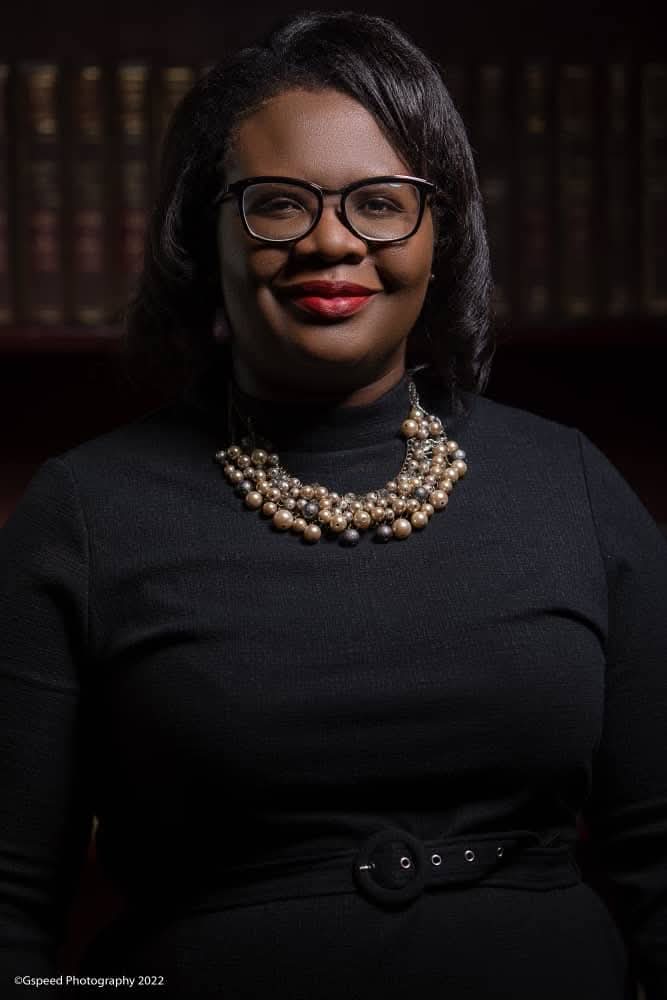
Linda Kasonde, LCK Freedom Foundation Executive Director
By Staff Writer
A coalition of Zambian civil society organisations issued a joint statement on September 14, 2026, condemning the Zambian Government for an escalating disregard for the Constitution, due process, and human rights following the August 13 General Election.
The statement—signed by the LCK Freedom Foundation, Caritas Zambia, Advocates for Democratic Governance Foundation, Chapter One Foundation, and Free Press Initiative Zambia—warns that the country is experiencing a constitutional crisis on the eve of the United Nations International Day of Democracy.
The organizations are urging the government to immediately halt unconstitutional actions, restore citizens’ rights, engage in an inclusive national dialogue, and call on the international community to monitor the situation closely.
The CSOs highlighted the arbitrary cancellation of passports without due process under Government Gazette Notice No. 1421 of 2026, targeting former Ambassador to Ethiopia Emmanuel Mwamba, historian Dr. Sishuwa Sishuwa, former MPs Binwell Mpundu and Emmanuel Jay Banda, former presidential assistant Kaizer Zulu, and social media commentator Lillian Mutambo.
This follows the prior cancellation of the passport and national registration card of Celestine Mukandila, Secretary-General of the Tonse/Pamodzi Alliance, who remains in immigration custody despite a Lusaka High Court order demanding the State show cause for his detention.
The statement further detailed prolonged detentions without court arraignment, notably involving National Reconciliation Party for Unity and Prosperity presidential candidate Brian Mundubile and vice-presidential candidate Makebi Zulu. Detained since August 27 following a August 14 security operation where a former Cabinet minister was killed, both leaders face joint treason and sedition charges alongside 16 co-accused—including George Chisanga, retired Anglican Bishop Trevor Mwamba, and Harry Valden Findlay—without having been brought before a court.
A High Court petition submitted to Attorney-General Mulilo Kabesha and Zambia Correctional Service Commissioner-General Fredrick Chilukutu alleges severe human rights abuses, including torture, waterboarding, and denial of legal counsel and medication.
Additionally, the groups raised alarm over the September 11 apprehension of Mafinga South MP Faith Munthali by uniformed men without legal representation, citing it as part of an emerging pattern of abduction-style tactics and enforced disappearances targeting political opponents.
…read the CSO Press Statement in full: JOINT CIVIL SOCIETY ORGANISATION STATEMENT: ZAMBIA’S DESCENT INTO
LAWLESSNESS: A CALL TO DEFEND CONSTITUTIONALISM, DUE PROCESS AND
THE RULE OF LAW
For Immediate Release, 14th September 2026
We, the undersigned civil society organisations, issue this joint statement to express our
grave concern at the pattern of conduct by the Zambian Government in the weeks
following the 13th August 2026 General Election; conduct that, taken together, points to a
deliberate and escalating disregard for the Constitution, the rule of law, and the human
rights of Zambian citizens.
We issue this statement a day before the world marks the International Day of Democracy
on 15 September, a day set aside by the United Nations to reflect on the state of
democracy across the globe. It is a bitter irony that Zambia approaches this day not
celebrating the strength of its democratic institutions but confronting an unprecedented
assault on them. We call on all Zambians, and on the international community, to mark
this year’s International Day of Democracy by reflecting soberly on the events set out
below, and on what they mean for the future of our constitutional order.
We set out below three recent developments that, in our view, form part of a troubling
pattern.
- The Arbitrary cancellation of passports without due process
On 7th September 2026, Government Gazette Notice No. 1421 of 2026 cancelled, with
immediate effect, the passports of six Zambian citizens: former Ambassador to Ethiopia
Emmanuel Mwamba, historian and academic Dr. Sishuwa Sishuwa, former Members of
Parliament Binwell Mpundu and Emmanuel Jay Banda, former Special Assistant to the
President Mr Kaizer Zulu, and social media commentator Ms Lillian Mutambo. The
Gazette cites “security reasons” and “the interest of national security” but discloses no
further grounds, no charge, and no opportunity for any of the affected persons to be heard
before the decision was taken.
This follows the earlier cancellation of the passport and national registration card of Mr.
Celestine Mukandila, Secretary-General of the Tonse/Pamodzi Alliance, also without due
process, and on similarly opaque grounds. Mr Mukandila remains in the custody of the
Department of Immigration over a disputed status probe, and the Lusaka High Court has
since ordered the State to produce him and show cause why he should not be released.
The right to a passport, and the freedom of movement it protects, may not be withdrawn
at the whim of the Executive. Article 22 of the Constitution of Zambia guarantees every
citizen the freedom of movement, defined to include the right to leave and enter Zambia
and to be issued a passport or other travel document. Article 26 requires that any
restriction of that freedom be authorised by law, and that the person affected be entitled
to reasons for the restriction and to have the matter reviewed. Article 18 further
guarantees every person the protection of the law, including the right to be heard before
an adverse decision is made against them. Any restriction must be lawful, necessary,
proportionate, and subject to a fair process in which the affected person can be heard
and can challenge the decision before an independent body. None of that has happened
here. We are deeply concerned that citizenship documents are being weaponised to
silence critics, dissidents, and perceived political opponents of the ruling party.
- Treason and sedition charges against opposition Presidential and Vice-
Presidential candidates, and prolonged detention without arraignment
National Reconciliation Party for Unity and Prosperity (NRPUP) Presidential candidate
Mr Brian Mundubile and Vice-Presidential candidate Mr Makebi Zulu have been detained
since 27th August 2026, when they voluntarily presented themselves to police following a
security operation at a property linked to Mr Mundubile on 14 August 2026, during which
a former Cabinet minister was fatally shot. On 29 August 2026, they were jointly charged
with treason, contrary to section 43 of the Penal Code, together with sixteen other co-
accused, and were transferred the following day to Mukobeko Maximum Correctional
Facility in Kabwe. On 11 September 2026, while still awaiting their first court appearance
on the treason charge, they were further arrested and jointly charged with seditious
practices, contrary to section 57 of the Penal Code. As at the time of this statement,
neither man has been brought before a court of law to answer to either charge.
Article 13(3) of the Constitution requires that a person who is arrested or detained be
brought before a court as soon as reasonably practicable, and in any case within 48 hours
of arrest (or, where that is not reasonably possible, the earliest practicable time
thereafter). Article 18 further guarantees the right of every person charged with a criminal
offence to be presumed innocent, to be informed promptly of the nature of the charge,
and to a fair hearing within a reasonable time before an independent and impartial court.
We reiterate the principle that an accused person must be brought before a court without
unreasonable delay. Charging a person and holding that charge over them without
arraignment is itself a form of coercion and undermines these constitutional guarantees.
We are further gravely concerned about the human rights situation of the 18 persons
detained in connection with these matters, including Mr Mundubile, Mr Zulu, Mr
Mukandila, and their co-accused. According to a petition filed with the Attorney-General,
Mulilo Kabesha SC, Harrington Akushanga, and the Zambia Correctional Service
Commissioner-General, Fredrick Chilukutu, the 18 detainees, among them George
Chisanga, retired Anglican Bishop Trevor Mwamba, Harry Valden Findlay, and 15 others,
allege unlawful detention, denial of access to legal counsel and family members, and, in
some cases, inhuman and degrading treatment. The petition further alleges that some
detainees were held for extended periods without being informed of the charges against
them and were transferred between police stations and correctional facilities without valid
remand warrants or other lawful process. Mr Findlay is alleged to have been taken from
his residence in Chisamba on 4 August 2026 and held, without access to family, legal
representatives, or his prescribed medication, first at Ibex Hill Police Station and later at
the incomplete section of Mwembeshi Correctional Facility. Three other petitioners are
alleged to have been detained for more than nine days after being picked up at Kenneth
Kaunda International Airport, and to have been subjected during that time to torture and
inhuman treatment, including alleged waterboarding and beatings. We treat these as
extremely serious allegations, made under oath in a petition now before the Lusaka High
Court, which demand independent, transparent and urgent investigation, and we remain
concerned that, weeks after arrest, several of the accused have yet to be brought before
a court to answer to the charges against them.
- A growing trend of abductions: the arrest of Mafinga South Member of Parliament
Hon. Faith Munthali
We are alarmed by reports that Hon. Faith Munthali, Member of Parliament for Mafinga
South, was apprehended on 11th September 2026 by uniformed men in a manner that did
not accord with basic due process: without the opportunity to have her lawyers present.
This arrest follows earlier public warnings, including from her own party, of a plot to
apprehend her. As with any person arrested or detained, Hon. Munthali is entitled to the
protections of Article 13 (personal liberty, including prompt production before a court) and
Article 18 (protection of the law, including access to legal representation of her choice).
We call on the Zambia Police Service to immediately and transparently confirm her
whereabouts and legal status, to ensure she has unimpeded access to her lawyers and
family, and to treat any allegation against her strictly according to law. Hon. Munthali’s
case is not isolated. It echoes the allegations, set out above, that three of the Mundubile
petitioners were picked up at Kenneth Kaunda International Airport and held at unknown
locations for over nine days before being brought to a formal detention facility, a pattern
consistent with enforced disappearance, which is recognised under international law as
a grave human rights violation in its own right, distinct from and additional to any
subsequent lawful detention. We are alarmed that abduction-style tactics appear to be
emerging as a recurring feature of the State’s response to political opposition and dissent.
A pattern, not isolated incidents
Taken individually, each of these actions is troubling. Taken together, they reveal a
pattern: the use of state power against political opponents, critics, and dissenting voices,
without regard to due process, judicial oversight, or the constitutional protections that exist
precisely to restrain such power. When passports can be cancelled by gazette notice,
when charges can be laid and left hanging indefinitely, and when a sitting Member of
Parliament can be taken into custody without due process, no citizen – however prominent
or however ordinary can consider themselves safe from arbitrary state action.
This is not merely a series of individual grievances. It is a constitutional crisis. Article 1 of
the Constitution declares the Constitution the supreme law of the Republic, binding on all
persons, State organs, and State institutions; any act inconsistent with it is void to the
extent of the inconsistency. Article 2 further imposes on every citizen a duty to defend the
Constitution. It is on this constitutional footing, not mere sentiment, that we ground the
call to action that follows.
Our Call to Action
- To the citizens of Zambia: Article 2 of the Constitution places on every citizen a
duty to defend the Constitution. We call on you to discharge that duty by rejecting
this descent into lawlessness – peacefully, and strictly within the bounds of the
Constitution and the laws of Zambia. Democracy is defended through lawful
assembly, lawful speech, the courts, and civic vigilance, not through violence or
disorder. Do not be intimidated into silence; equally, do not be provoked into
unlawful conduct that would hand the state a pretext for further repression. - To the Government of the Republic of Zambia: We call on you to:
a) immediately cease all actions taken in defiance of Articles 1, 13, 18, 22 and
26 of the Constitution and the rule of law;
b) to restore the cancelled passports pending a fair and transparent process
consistent with Article 26; to bring Messrs Mundubile and Zulu, Mr
Mukandila, and their co-accused before a court of law without further delay,
in keeping with Article 13(3), or to withdraw the charges;
c) to guarantee all detainees unimpeded and confidential access to legal
counsel, family, and prescribed medication, to independently and
transparently investigate all allegations of torture or other cruel, inhuman or
degrading treatment, and to cease any practice amounting to enforced
disappearance or abduction;
d) Restore and consistently observe the rule of law, and of the constitutional
and statutory safeguards that protect every Zambian citizen from arbitrary
state action, regardless of their political persuasion;
e) Renew and visibly commit to peace, and to the safety and security of all
citizens, particularly those in political life who may feel most exposed at this
time;
f) Take concrete steps to restore public confidence in the integrity and
independence of our constitutional and other public offices, including the
offices of the Electoral Commission the Judiciary, the Defence, law
enforcement, and Security Wings, and to restore a commitment to the
separation of powers.
g) Hold an inclusive national dialogue, bringing together Government,
opposition, civil society, faith communities, and other stakeholders, to chart
a way forward for Zambia’s constitutional and democratic order that
commands the confidence of all Zambians.
- To the international community, on the African continent and beyond: We call on
you not to look away. Zambia’s constitutional order is being tested. Silence and
inaction in the face of this pattern of conduct will be read, correctly, as
acquiescence. We urge regional and international bodies, including the African
Commission on Human and Peoples’ Rights, the Commonwealth, SADC, and the
United Nations human rights mechanisms to monitor developments closely and
to engage the Zambian Government directly on these concerns.
Zambia’s hard-won democracy was not built to be dismantled by gazette notice and
midnight arrests. As the world prepares to mark the International Day of Democracy on
15 September, we call on all Zambians of goodwill, and all friends of Zambia abroad, to
stand for constitutionalism, due process, and the rule of law. We equally call for an urgent
deescalation of the prevailing situation through careful reflection and dialogue.
Signed by:
Linda Kasonde
Executive Director, LCK Freedom Foundation
For and on behalf of:
Advocates for Democratic Governance Foundation
Caritas Zambia
Chapter One Foundation
Free Press Initiative Zambia
LCK Freedom Foundation