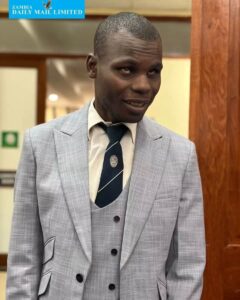
Author Michael Mulusa reminds President Hakainde Hichilema
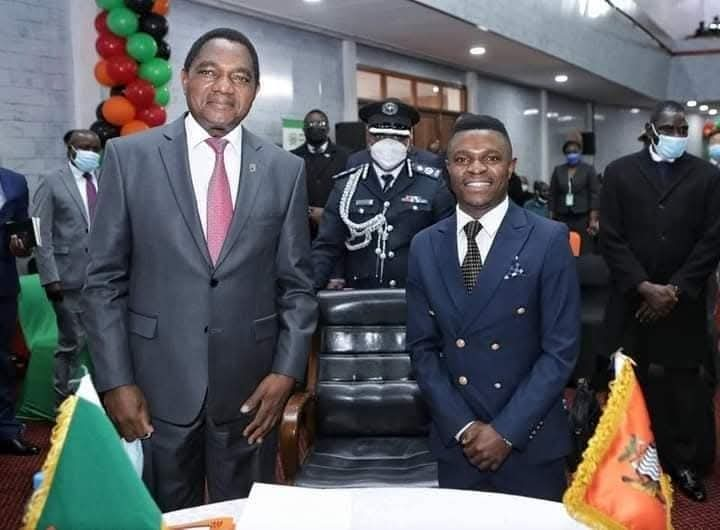
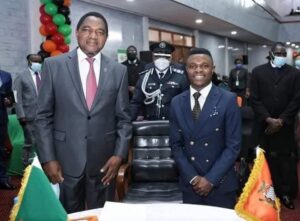
Author Michael Mulusa (right) with President Hakainde Hichilema (left)
Author Michael Mulusa wrote:
Dear President Hakainde Hichilema,
You were sworn in on August 24th, 2021, and have now served 1,566 days as President. Out of the 2.8 million votes you received, more than 2 million came from young people.
Mr. President, I ask:
– Out of 27 cabinet portfolios, how many were given to youths or persons with disabilities?
– Out of the 8 MPs you can nominate, how many were youths or persons with disabilities?
– Among the 10 provincial ministers, how many were youths or persons with disabilities?
– Out of 116 District Commissioners, how many were youths or persons with disabilities?
– Of the 40–45 ambassadors and high commissioners, how many were youths or persons with disabilities?
– Out of more than 52 Permanent Secretaries, how many were youths or persons with disabilities?
– In the Ministry of Youth and Sports, you created 2 Permanent Secretary positions. How many were youths or persons with disabilities?
– Of the 10 police commissioners, how many were youths or persons with disabilities?
– Out of 50+ directors and your presidential aides, how many were youths or persons with disabilities?
In total, I have listed uncountable presidential appointments and many still remain. My question remains: how many of these positions went to youths or persons with disabilities?
Mr. President, the Constitution gives you immense power to empower and appoint youths. With 246 days left before the next election, why were youths and persons with disabilities overlooked during your 1,566 days in office, only to be considered now through Bill 7 and while you only have 174 days before parliament is dissolved?
Mr. President, We survived without these seats before . What real difference will they make, and what guarantee do we have that youths will benefit this time?
Mr. President, does Bill 7 truly give us freedom or is it indirectly locking us?
Respectfully,
Michael M. Mulusa.
The Voice
Caeser Zulu said: “He can’t answer that question, bill7 is the only way he thinks he can win an election”.
Kasonde Daniel responded: “This is somehow misplaced eg
Under normal circumstances PS should or rise through civil service, ministers/provincial are appointed from the pool of MPs, diplomats you cannot risk it with youths when you’re dealing with other nations.
But on DCs,nominated MPs(8) we expected youths to be considered”.
Pat son equipped: “Indeed”.Kasonde Daniel which civil service did Kangwa Chileshe and Fuma Chama(Pilato) as youth PSs rise through? Wasn’t it on patronage?”.
Kay Bwale: “Does the police recruit people with disabilities for you to question how many commissioners are disabled? Do you think a youth can be a commissioner, do you know how long in the system one has to serve to rise through the ranks”.
ASTA Tembo alluded to Jonas Shakafuswa’s explanation.
“Jonas Shakafuswa explains why Hichilema needs Bill 7 so badly
*Hon. Jonas Shakafuswa wrote:*
BILL 7 SIMPLE EXPLANATION FOR EVERY ZAMBIAN
1. What the government is telling you
They say:
“We want to add more MPs.”
“We want to include women, youth, and disabled people.”
“We want to improve the Constitution.”
This sounds good when you hear it on radio or TV.
2. What is really happening (the part they don’t tell you)
BILL 7 gives more power to the ruling party and takes power away from ordinary people.
Here is how:
A. They want more constituencies in areas where they are strong.
More MPs in their strongholds = more seats for their party.
That helps them win elections even if people are angry.
B. They want political parties (not voters) to replace MPs who leave office.
If your MP dies, resigns or is kicked out:
❌ No by-election
❌ No voting
Instead:
➡️ The party sends a replacement.
Meaning:
You lose your right to choose your leader.
The party becomes more powerful than the people.
C. They pretend they are helping women and youth — but they will choose their own loyal people.
Reserved seats sound nice, but:
The party chooses them.
Not the people.
So they serve the party, not the community.
It is window-dressing.
3. Why BILL 7 is dangerous
1. It hides autocratic power in “nice” language.
Words like “inclusion” and “representation” are being used to cover up a power grab.
2. It reduces your voting power.
Less voting = less democracy.
3. It makes MPs fear the party, not the voters.
If you can be replaced by the party, you obey the party, not the people.
4. It can keep one group in power for many years.
Once the Constitution is changed, it is very hard to reverse.
4. The main trick being used
The trick is simple:
👉 Give the people a sweet story (“we are adding more MPs for you”)
👉 Hide the bitter reality (“we are taking power from you”).
It is like giving someone a sweet with poison inside”.
Chaama Uthant Banda said: “Indeed it’s government of misplaced priorities”.