Xinhua Commentary: Cultural preservation empowers Xizang’s rural modernization
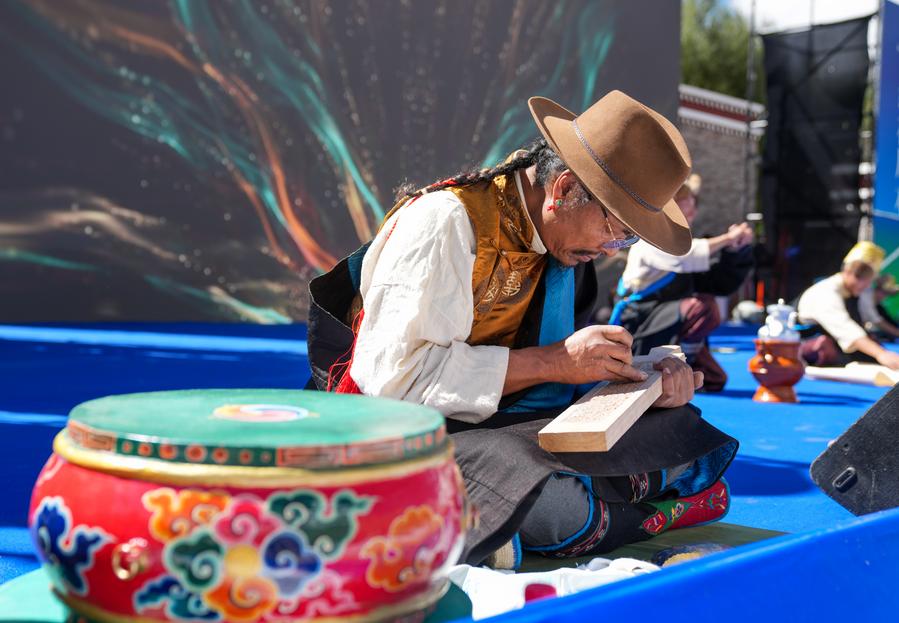
(250912) -- LHASA, Sept. 12, 2025 (Xinhua) -- A craftsman makes wood carvings at the opening ceremony of a tourism festival featuring traditional Tibetan incense culture in Nyemo County of Lhasa, southwest China's Xizang Autonomous Region, Sept. 12, 2025. (Xinhua/Jigme Dorje)


Xinhua Commentary: Cultural preservation empowers Xizang’s rural modernization
Source: Xinhua
Editor: huaxia
2025-10-16 18:58:15

BEIJING, Oct. 16 (Xinhua) — Rural villages in southwest China’s Xizang Autonomous Region are a microcosm of its historic achievements in comprehensive development since the region’s epoch-making establishment in 1965.
Over the past six decades, Xizang has not only achieved political and economic progress but also revitalized the modern relevance of its traditional culture through institutional innovation, endowing rural development with renewed vitality.
Rural residents account for more than 60 percent of Xizang’s population. Across vast farming and herding areas, traditional culture has been preserved well, and the agricultural and animal husbandry industries have undergone significant upgrades, resulting in the marked improvement of living standards.
A research report, jointly published by China Foundation for Human Rights Development and National High-Level Think Tank of Xinhua News Agency, grouped rural development in Xizang into five categories: economic development, cultural preservation, improved livelihoods, ecological protection and ethnic unity.
Under the strong leadership of the Communist Party of China, Xizang eradicated absolute poverty and realized moderate prosperity in all respects. The region is striving to build a new modern socialist Xizang that is united, prosperous, culturally advanced, harmonious and beautiful.
Modernization is more than economic advancement. The development in rural areas of Xizang represents the integration of tradition and modernity, as 80 percent of the region’s intangible cultural heritage items are preserved in rural communities, and 90 percent of recognized intangible cultural heritage practitioners are farmers or herders. Remarkable improvements to infrastructure and public services, such as unprecedented access to power, roads and education, have contributed much to the systematic preservation of the tangible and intangible heritage of all ethnic groups in Xizang.
Data highlights the preservation and continued vitality of intangible heritage. Xizang now boasts 2,760 intangible heritage items on the representative lists of all types and levels, with 1,668 bearers, and five state-level and 12 regional-level demonstration bases ensuring protection of intangible cultural heritage items by transforming them into cultural products. Meanwhile, it has 159 bases for training intangible cultural heritage practitioners, 224 intangible cultural heritage workshops, and 153 part-time Tibetan Opera troupes.
In Xizang’s rural areas, distinctive village buildings and natural landscapes have become popular tourist sites. Various handicrafts have helped boost the income of farmers and herders. These demonstrate deep integration of rural revitalization and cultural heritage preservation, as rich cultural resources are being converted into endogenous drivers for local sustainable development.
With a deep-rooted tradition of protecting the environment, Xizang is committed to maintaining harmony between man and nature during the process of its modernization. It prioritizes eco-environmental conservation and green development, and the protection of local people’s environmental rights has been improved steadily.
Rural development and cultural preservation in Xizang have both benefited from policy support, innovative development, cultural tourism, and training of heritage inheritors and talent. Xizang’s progress provides valuable insights for multi-ethnic regions seeking to balance the preservation of cultural heritage with modern transformation. ■