Political Vision – Reconstituting Zambia in Africa
“An accountable, ethical and service visionary leadership that is clean, clear, competent, committed, credible, courageous and compassionate. This quality and character of leadership is called for in guiding the nation through the initiation and process of reforming the Constitution, as well as the post reform governance. Without it, all constitutional reform efforts shall be a waste of words, money and time, and the whole process shall yet again, have to be revisited in the future, when it shall be more difficult and less appropriate. We, as Africans and Zambians, do not have to continue failing on this score” prods Prince Akashabatwa Mbikusita Lewanika
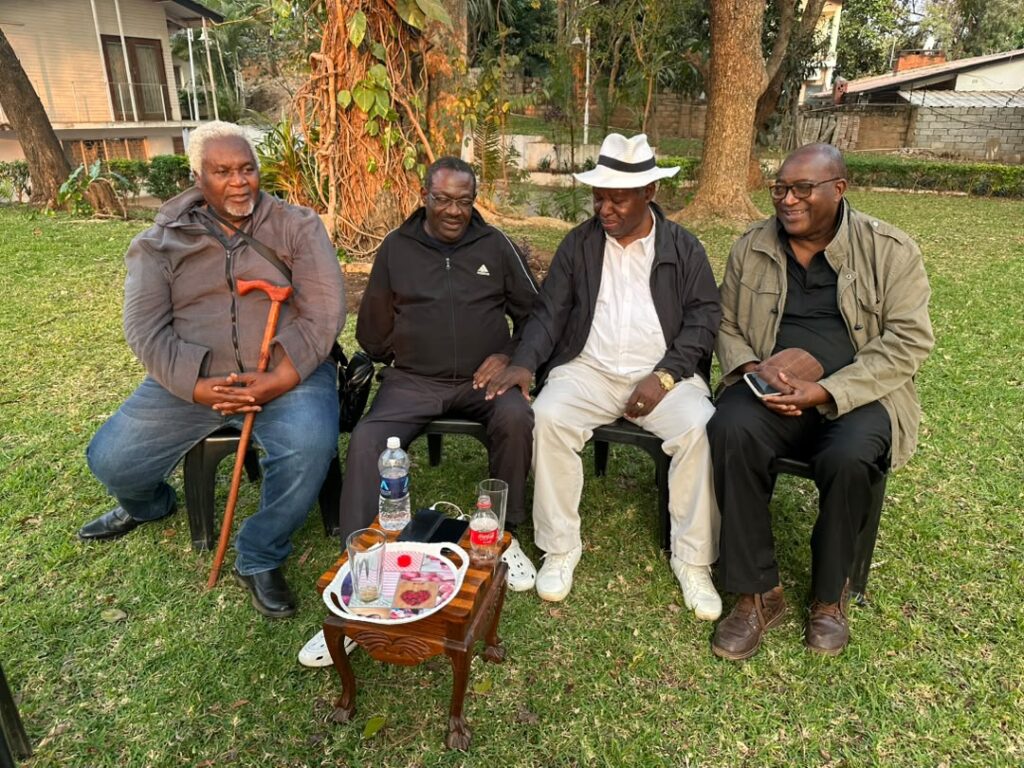
Prince Akashambatwa Mbikusita Lewanika (left), Dr. Sebastian Kopulande (second left) and Dr. Derrick Chitundya Chitala (second right) in Lusaka, Zambia.
Resolutions Reviewed: Constitution, Economy and African Unity
A Personal Testament of Ideas for Debate
By Akashambatwa Mbikusita Lewanika
Introduction
This presentation is a personal perspective, in exercise of individual citizen rights and civic responsibility. It is presented as a contribution towards a continuing, rather than defining and concluding, discourse. This is a discourse within the continuing struggle for democracy and human rights. This presentation and the purpose and intentions of my personal and active political participation in politics are premised beyond the narrow confines of being opposed to, or in support of, other individuals or groups of people, in the quest for democracy and development. It is in the tradition of this struggle, which is an integral part of the struggle to liberate the African and black world, that some of us organised and conducted the July 1990 National Conference on the Multi-Party Option, at Garden House Hotel in Lusaka. This National Conference established the Movement for Multi-party Democracy, on the basis of what has come to be known as good governance.
African Good Governance and Good Governance in Africa
Good governance can neither be appreciated nor achieved, without recognising two factors. The first is that the injustice of bad governance, and opposition to it, almost always has to do with exclusion, discrimination or exploitation. The is illustrated by the characteristics of One party State systems, Apartheid and Military regimes that have had to be overcome, before the quest for good governance could begin.
The second is that inclusiveness and non-exploitative relations are a merit feature commonly found in most African systems of governance. For example, the supreme forum of government, under several African systems, is an all-inclusive Citizens’ Assembly. This is an institution of African direct democracy. It is, almost literally, an all-people’s participatory deliberation and decision-making forum. It is the institutionalisation of power to the people in the most powerful and real way. This forum can address and decide any matters, on the basis of unhurried consensus. All other public authorities and personalities are subordinate to this people’s assembly.
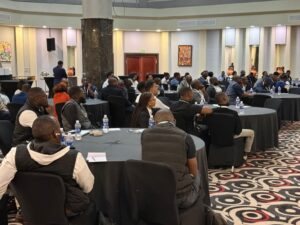
Each and every individual citizen is entitled to attend and speak, in direct self-representation, at meetings of this people’s institution. An individual citizen is entitled to direst self-representation at all levels of government, from the homestead to the King’s throne. This functions as the basis that the people are sovereign, not the government or the King. In contrast, in modern and supposedly more democratic institutions, like Parliament or District Council, an ordinary citizen can never be heard. The citizen of the modern post-colonial African State is not a master even of own livelihood, not even at local and community government level. Having cast a vote, the modern African citizens remain almost without any other functioning means of influencing day to day government or holding the government effectively accountable.
In short, the modern postcolonial regime does not have a serious and effective place for ordinary citizens and civil society in general. Indeed, even what is popularly referred to, or what refers to itself, as civil society, is not civil society, in any fundamental sense. Independence did not fundamentally improve this situation, but made it worse in several ways. For example, immediately after Independence, the functions of African traditional governments in various parts of Zambia were curtailed and further negated. This was done without giving citizens institutional alternative ways and means to better taking part in the mainstream economy and governance.
The imposed One Party State later further reduced citizens’ freedom and suppressed community rights, including in matters of local government. This was achieved in the guise of an unreal “decentralisation” reform programme. It practice it was scheme to consolidate and centralise power, through personal agents of the President. This continued to sideline independent minded individuals and autonomous institutions of Africans, in the false name of freedom, progress and democracy – participatory democracy, at that!
On the eve of the One Party State, President Kenneth Kaunda, who was the Head of State and Government expressed the view that: –
“The rural areas still face hunger, poverty, ignorance and disease. The answers to these lie not only in Government policy but also in the people organising themselves for action.
We can conquer Hunger by growing more food and diversifying our diet. We can conquer Poverty by industrialisation and fair distribution of wealth and social services. We can conquer Ignorance through education by increasing the knowledge, technical skills and competence of the people. We can conquer Disease through better and increased Public Heath Services, Housing and Welfare.
Village Productivity Committees are being established to help organise community action to defeat these enemies…. The provision of administrative machinery at village level must increase the capacity of the man at the Village to fight to improve his economic and social conditions…. The greatest weakness in the growth of our participatory democracy is the slow response of our man in the village to new economic and social opportunities regardless of the incentives that have been offered…. The path to full Participatory Democracy lies through the Village.”
This unfairly puts responsibility for development on the shoulders of people who really have neither political freedom to make development decisions nor political power to carry them out and review them. It based on the mistaken notion that underdevelopment is not caused by people’s ignorance, backwardness and unresponsiveness to imposed institutions and “incentives.” The state and political economy hinders people’s capacities to overcome underdevelopment, by maintaining them as subjects and instruments of the decisions and interests for people and institutions they cannot understand or control. In particular, neo-colonial governance, which continues unchallenged up to date, is established and operated the needs and convenience of government leaders and state security, rather than the needs and convenience of ordinary people and their social security. In this unfair governance, the objectives are determined by the administrative requirements and political wishes of the central government and decreed upon the people, in a “top-down” approach, which can never cultivate or facilitate democracy.
The experience of most Africans is that the postcolonial States denigrate the culture and role of the people in initial decision-making. It identifies the people as the problem to be controlled or eliminated or to be civilised, not as the forces and purpose of solutions. It holds that it is the people’s failure, and weakness, if they do not understand or obey the dictates of their leaders and elites based at the capitals of the colonially established countries. This outlook is very colonial, and more critically, it blocks the path to people initiated radical political and economic solutions. Thus, it undercuts possibilities for genuine development and effective democracy. This explains why “decentralisation” could not attain its stated noble goals.
The local government reforms that have been contemplated since Independence have equally sought mere cosmetic changes to the colonial structure that are keeping natives from effective power and control over public affairs in their communities. This attitude, together with accompanying political and economic programmes makes a majority of Africans second-class citizens. Irony and tragedy of Africa is that the heroes of the Independence movement ended up in moving countries into new form of underdevelopment and colonisation. Even most claimants of the multiparty championship have accepted this status quo of multi-national colonialism. Thus, even after the re-introduction of multi-party politics, just as during One Party State, leadership and programmes have not even considered applying African roots of good governance.
And yet, there is need to review the African roots of governance, civil rights and social responsibilities. And. More directly, there is need to change European boots of governance and colonial economic system. This is the real liberation struggle in whose name Independence was demanded, but on which postcolonial governments have failed to deliver. The postcolonial state is colonialism with black faces in local political power, and white faces in international political and economic charge of operations. In many key areas post colonial changes in policy and institutions have attempted and succeeded only in pushing mentally decolonised Africans and authentic African institutions and organisations further off the main field.
Changes introduced in the name of modernization and democracy have been in the direction of consolidating possession of, and certainly control over, land through the very personalised “supremo” of central government. This is bound to be at the expense of traditional authorities and local communities, which are under the charge of indigenous civil society. This development is actually laying foundations for only those with money to acquire individual and corporate private property, at the expense of African communities. This invites the sort of land problems being faced in Zimbabwe, South Africa and Namibia, as a result of a system of power over land, which is tailored in favour of private individuals and non-communal groups. The difference with the future Zambia may be that many landlords may have the same skin colour as the landless. In short, the postcolonial governments are establishing the foundation for a colour blind but money conscious Apartheid system over land and other economic relations, which has the ultimate effect of popular disempowerment.
This development has serious consequences. Firstly, unlike under European capitalist industrial revolution, those who are slowly being rendered landless and being pushed out of rural areas, are without substitute non-land based jobs. They left with difficulties of finding where to relocate themselves. The second consequence is that the situation is most unlikely to lead any broad-based human development. It is unlikely to enhance human development, or increasing agricultural and industrial production. It is unlikely to place broad native labour into more productive and a greater variety of employment and income earning opportunities. In the case of Europe’s emergent capitalism, while people were made to lose land and land security, they, more or less simultaneously, opened up new and better ways of earning a living, even under the inhumanity of early capitalist industrialisation.
The postcolonial states in Africa have tended to be fast to establish anti-social programmes, to ensure repayment of debts owed to international finance. They have been slow, and, often, not concerned with directly creating national employment and production, to ensure promotion and protection of heath, education and social welfare services for the majority of the national population. This can be tolerated, on the ground that it is a matter of delaying or denying people what they do not have. However, policies like those on land are preparing to take away power and resources, which people have had, without substitutions or compensation. This is not development. It cannot be acceptable. Under postcolonial governments, it is allowed t o impose this on ordinary poor and weak people, but not accepted to render the same treatment to international, rich and powerful corporations.
This type of situation encourages international profiteering practices that cause hunger, poverty and poverty related illnesses and dangers in societies of those least able to defend themselves. Above all, these policies undermine the community social and political basis of African society. The African system of good governance, civil rights, and responsibilities for citizens, kinship group members, homesteads, local communities and institutions at all levels of government have something to offer, and lesson to render, in the modern process of democratisation and development. The role and responsibility of modern government, in terms of development and operation of constitutional, legislative, executive, judicial and economic function, can benefit from the taking of account of the background, values and cultural status of the majority of people.
Modern and democratic government, from local to central administrative ranks, can only be successful and satisfactory under the ownership and control of the people as a whole. People can only effectively own and utilise what they master and direct, not what is imposed upon them and what is operated by other people, on their behalf, in name only. This ownership and controlling place for people in politics and production is best secured by a democratically determined and universally accommodating constitution. This should enjoy unquestionable national consensus. This is possible through constitutional and operational cultural provision of freedom, justice, equality, progress and peace for all. It can be assured by a regime of free, fair and open honest elections at local and national levels.
This has to be under an election administration that is, and is seen to be, representative, independent and just to all contenders. A public service administration and judiciary that is transparent, publicly accountable, just and equitable in its services to all people can guarantee it. An economic management that is focused on human development and national production can sustain the system, but not one dictated by and for foreign controlled institutions and interests. The objective is to establish an efficient and broadly participatory system, in terms of employment and income earning opportunities, which can only be achieved on a sustainable bases through genuinely home grown, home interested and home driven economic management.
The lessons of history should teach that genuine and lasting development lies in appreciating, promoting and utilising people’s culture and resources. In order for development to be meaningful to the majority, it must not be dictated against them or alienated from them. The point is that Africans have much to learn from Africa, and much to teach to, and learn from, the outside. Inside Africa there are suitable treasures of good governance and desirable development, as well as ideas and practices that are not. Outside Africa there are both appropriate and inappropriate political and economic factors of management. These need to be weighed prudently and pragmatically. There is need to focus on caring for all people and keeping an eye on what it takes to score the goal of establishing a free and just African future.
There is much of worth and positive value in some of the root features in African governance, which if taken up, would contribute to the inclusiveness and non-exploitative relations. This is what is required to ensure home grown and home driven democracy for sustainable development. Un-Africanised democracy, as in the Zambian Constitution, which has not yet been fully repaired since it was severely damaged in 1972, is so inherently and inevitably exclusionary, discriminatory and exploitative that it can not be genuine or sustainable democracy. Multi-party constitutions and politics may lack sustainable roots, if the do not appropriately take the challenge of taking account of historical and cultural features.
What Multi-party Democracy?
The resolutions of this July 1991 National Conference on the Multi-party Option constitute an agenda for democracy and development. The process of realising this was initiated with the re-introduction of what we optimistically called multi-party democracy. We are for the restoration and realisation of this agenda deeply bedded in the African aspiration for freedom, justice and equality, under self-rule. This has been our vision focused agenda.
This was depicted in The Resolutions and Framework for Action agreed on 21st July 1990 at the Garden House Conference, in Lusaka, Zambia. This dream, if we have to refer to it as such, still lives on. This is so even if it may seem forgotten in the media and political field, which is usually focused on day to day and personal or sectarian issues. It may have been abandoned by some, like an unremembered birthday, but it cannot, by its very nature, be lost.
But, when even as we call of its remembrance and its reinstallation unto the drivers seats of political leadership and economic promotion, it is important to appreciate that history cannot, and need not, be made to recur, as in a replica of itself in future. While the general features, such as the objectives and strategies of Garden House resolutions, together with the experience that has followed, may usefully be revisited, the situation in the year 2007 calls for the revolution to take on its own situation-specific features. These specific features need to take account of the changes in general knowledge base, social awareness, human relations and political-economic environment.
The principles of the 1990 Garden House Hotel dream remain valid, and, in fact, need to be re-enforced. The promises of the dream remain, but require be reviewing and re-formulating, where shortfalls are found. The programmes of the dream require re-working and determining afresh, where performance is found to be on the rusty side. It cannot be denied that, some times, and in some ways, the personnel of the dream, the visionaries and formulators of the dream, are among those that have betrayed the dream in action and effect. It is difficult not to conclude that some the early days champions of the dream have turned it into a nightmare. They have made themselves unfit for the mission of fulfilling the dream. It is on this account that the agenda, as depicted in the Resolutions, needs to be reviewed. They need to be addressed directly and specifically, through frank questioning, rather than superficially and diplomatically.
In the first area, it was asserted that PEOPLE PARTICIPATION IS AN INELIENABLE RIGHT in governance, economy and society, not just in voting every now and then. The question is: seventeen years since the Garden Resolutions, has the quality, class and gender of participation in political and economic affairs changed significantly for the better? Has the number of people earning their living in security, dignity and honesty increased significantly? Has the numbers of citizens, particularly women folk, participating meaningfully on both sides of the electoral process, that is, both as the electors and the elected, increased significantly and satisfactorily? Has the election process been reformed and institutionalized enough as to be accountable, with a Electoral Commission, whose integrity depends on institutionalised guarantees and established common culture rather than unreliable personal whims or goodness of its chairperson?
The second recognised that there can be NO DEVELOPMENT WITHOUT DEMOCRACY, AND NO DEMOCRACY WITHOUT DEVELOPMENT. This idea was recognised in the Report of the 1990 Constitutional Commission, which stated that: “a prosperous economy … is a necessary facility to a good constitution.” The question is: what has been achieved, and what remains to be done, in order to advance and secure human development and the national economy to support a “good constitution” – or a bribery-free electoral processes and practices. Why and how has it been possible to, so far, failure to change the Zambian Constitution in ways that open up the development process and national economic management regime to popular relevancy, control and accountability? In what ways have political practices, and economic malpractices, promoted the neglect of necessary safeguards for social welfare? What are we doing, at individual and collective levels, to move away from a situation of increasing “donor” dependency, with citizens, Parliament and other institutions remaining more or less powerless over the economic crises that undermines democracy, by facilitating corruption?
The third demanded OPEN, FREE AND FAIR ELECTIONS. In this are, we were bemoaning the fact that the leadership of the then “ruling party are determined to maintain the present system of political monopoly, while simultaneously silencing free democrats, appeasing foreign financiers, and ensuring a continued absence of effective institutionalised opposition, using the state of emergency, the lack of separation of the ruling party’s operations and personnel from the Civil Service, security forces and parastatal enterprises.”
Under the first MMD Administration, the State of Emergency was twice unjustifiably declared and unjustly applied against opposition party members, and, more especially in the run up to the 1996 elections. The Register of Voters, and the operations of the NIKUV COMPUTERS contracted to establish it, had been found wanting in the court of law, although the results of the 1996 elections conducted under it were not nullified.
The constitutional provision for RESTRICTIONS ON PRESIDENTIAL CANDIDATES was tailored to prevent former President Kenneth Kaunda from standing, on account of his parents’ place of birth, while not requiring incumbent President Frederick Chiluba to positively prove the place of birth and identity of his parents. Criminalisation of political dissent, including by doctoring and discriminatory application of laws, has featured during the decade of the first MMD Administration, as has been the abuse of public service and resources for personal and partisan electioneering ends.
The fourth RESOLVED TO DEMOCRATISE, by pledging to “work together with courage, commitment and effort, to ensure that the process of democratisation is established with minimum delay and maximum effectiveness.” The question is: Since the 1990 Resolutions were declared, has the process of democratisation proceeded beyond the minimum attained at the end of the government of the United National Independence Party (UNIP)? Has the constitutional regime democratized beyond this minimum, which was achieved when the Constitutional Clause restricting the freedom of forming political parties and participating in local council, parliamentary and presidential elections were removed? Is it a fact that the constitutional amendments of 1996 were intended, and achieved only, to restrict the freedom and constrain the rights of select individuals over the provision for the qualification of candidates for being candidates in elections for the presidency of Zambia? Under these circumstances, is it not time to stop side bickering and personal emotionalism from continuing to derail the process of preparing the final draft new constitution for the verdict of the people as a whole?
The fifth REJECTED THE ONE PARTY MONOPOLY OVER GOVERNMENT, “which is characterised by minimal, ineffective, and undermined institutional channels of accountability, as well as uncontrolled latitudes for economic mismanagement, sustained by inadequate levels of democracy.”
One lesson of the first, actually the lost, decade, under the first-MMD Administration, is that there can be a one party monopoly over government and the electoral process, even under a multi-party constitution. This is possible, as long as government continued to be under a single ruling party, power continued to be centralised in the Capital and political leadership continues to be a quarter master personalised function for dishing out bribes to electorates and patronizing government. Under these circumstances, the constitutional regime and political culture would continue to undermine citizens’ freedom to vote-in and vote-out governments, Presidents and parliamentarians.
The sixth REJECTED THE TACTICS OF ALARMIST FREEDOM-PHOBIA. In this regard we condemned “fixations on unfounded fears of so-called ‘tribalism,’ unsustainable commitment to false ideologies, as well as false alarms over images of past inter-party violence, as excuses for restricting the freedom of political association and the right of electoral participation.”
The question is: since the subject Resolutions were passed, have Zambian politics outgrown the practice of failing to celebrate the ethnic and community diversity of the country rather than to see every act of group assertion or pride as anti-nationalist tribalism? Have we stopped suppressing freedom of expression by tending to be over-sensitive and over-reactive to sharp and frank criticism? Has religion become more or less politicised or bigoted, since 1990? Now that we have had seven years without witnessing the false imprisonment of innocent opposition leaders on false charges of treason, can we celebrate that the dark days are gone forever?
The seventh appealed for PRESSURE AGAINST THE STATE, so long as it maintained an unjustified state of emergency, denial of freedom of association, political trials and political prisoners, over which it refused to establish “a free, serious and irreversible consensus on a new democratic constitution.” Some citizens were still calling on the international community to put pressure against the Zambian government, because it has failed, if not refused, to establish a free, serious and irreversible consensus on a new democratic constitution. We may understand this resort to the support of the so-called donors, but we believe that Africans must sort out their governments by themselves. We must not continue to believe that the Western dominated international community shares our entire agenda for freedom, justice and equality in all matters of human relations, including the global economic fields. In this regard, African state institutions may have, in some cases, been found wanting in the necessary task to hold their governments accountable, but, even in such cases, for the sake of not setting a dangerous president, is it not prudent to try and keep outsiders off the field?
The eighth specifically laid down the CONDITIONS FOR FREE AND FAIR ELECTIONS. These included the lifting of the state of emergency, up dating of the register of voters and de-linking of public service from partisan politics. This called for the ending of the practice of abusing public authority and resources for personal and partisan purposes. It called for establishment of the reign of press freedom freeing of political prisoners and ending of political trials. It also called for the invitation of local and foreign election observers.
In this regard, the registration of voters had not been continuous, for much of the period since 1990, the number of registered voters, and voting voters, had been relatively low, but the later was much improved upon for the last election in 2006. There has also, of late, been acknowledged de-politicisation of the police force, although question still arise, justly or otherwise, over allegations of partisan biases in the public service, including the public media. There has also been much evidence of continued of public resources and offices. Thus, although there may have been some positive scores on general governance, there still remains some areas of concern that continue to undermine the integrity of the electoral process and re-introducing multi-partism. However, the solution may be on hand, for some of these issues areas, through the recently reinvigorated institutionalised dialogue among the ruling party-cum-government and opposition parties and interested civic organisations. Therefore, an answer to long-standing problem issues may be in the current initiatives and efforts towards constitutional and electoral reforms, as well as re-starting inter-party dialogue.
The ninth resolved to organise under an action committee, the NATIONAL INTERIM COMMITTEE, to spear head the campaign for the re-introduction of multi-party democracy and multi-party elections. This Committee became the founding leadership of the Movement for Multi=Party democracy, which successfully campaigned to end the One party State system. This opened the door towards a further democratic destination, which the country has not yet reached.
The tenth affirmed CONFIDENCE IN THE PEOPLE, who “like people everywhere and throughout history, cannot, and shall not, fail to rise and defeat all obstacles to their freedom, particularly now that there is a chance for peaceful change, through the ballot box.” And, now, despite, the disappointments of the past, and the yet unfulfilled promises of the present, we must still hold confidence in the people, for putting the freedom train back on rail for democracy and development.
Therefore, the fate and future of the original agenda democracy and development need to be reviewed, with the aim of restoring, but not to replicating, the dream of freedom, justice and equality, under self-rule at all levels from village homestead to the continental level. In this regard, the agenda for establishing an open, free and fair electoral process and establishing more democratic and more broadly accepted Constitution, is as necessary and as critical, now, as it was on 21st July 1990. It is in this regard that the struggle must continue, starting with the urgent need to revisit and reconstruct the Constitution of Zambia. We have to address the “what, why and how” of the way forward in this struggle for democracy and development.
What is of Concern
Since Independence in 1964, Zambia has had two political party and three Presidents in the driving seat of government. The first political party and the first President came into power in the euphoria and self-righteousness of heroic attainment of Independence. But, after twenty-seven years, the country had long degenerated into a One Party State and economic regression. The second party and the second President came into government in the euphoria and self-confidence of a dramatic re-introduction of multi-party politics, when the 19th to 21st July 1990 National Conference resolved to knock out the One party System. But, a decade down the road, much of the positive democratic gains had been overshadowed by failure to fulfill the promise to fundamentally and progressively change the Constitution, and, even more so, by the clouds of a culture of corruption. This was in the midst of a failure to fully revive the economy, especially in terms of human development and employment, after a generally socially insensitive full blast drive to liberalise and privatise the economy. The third and current President, who also belongs to the second party, became head of State and Government, in the aftermath to the 2001 elections, which have been the most contentious in Zambian history.
Under this current presidency, there has been a greater focus on anti-corruption and leadership integrity, but this has not completely managed reverse an already set trend towards increasing signs of people losing faith in the political leaders, in both the ruling and opposition parties. Except for the last couple of months, inter-party relations, inside and outside Parliament, have not been conducive to the national democratic culture promised in the subject 1990 Resolutions. In almost every political party, there is need to inculcate a sense and a reality of meaningful participation, loyalty to principles rather than to self-interests and commitment to national development programmes. And, among political parties, everything should be done towards the harmonisation of inter-party relations, which need to be saved from mistrust and suspicions, which are not always without justifiable causes. Towards this end, there need to institutionalize a culture of genuine dialogue. All this shall be much assisted and secured, as long as the process of reviewing electoral laws and the State Constitution are not derailed.
This constitution must provide institutionalized ways of ensuring that law enforcement is professionalised, made humane through reorientation, and rationalisation of command structure and professionalisation of police functions and responsibilities. It must bring to an end the era of police services that are dispersed inefficiently and unaccountably such as through the Office of the President, Drug Enforcement Commission, Anti-Corruption Commission and the Police Service and its ill-established vigilante groups.
Political parties, but most certainly not only political parties, have a responsibility to consider and undertake these propositions, and others, towards the end of advancing and protecting the process of democratisation.
Principles and Benchmarks for the Reformation of the Constitution
A. Way Forward Outline
Restructuring the Zambian Constitution should be a thorough, comprehensive and systematic process. In this process, let there be Ten Commandments, as follows:-
1. There should be a new Constitution by, of and for all native citizens and others who have made a home in the country, without discrimination or group domination based on race, ethnicity, community, national origin, faith or political affiliation.
2. There should be complete change of attitude and mindset, on the part of all concerned, including the general citizenry, the intelligentsia, public service officials and political leaders, in line with the demands of genuine dialogue based on listening to each other rather than talking at each other.
3. There should be an agreeable package of principles and benchmarks to guide the process and substance of constitution making.
4. There should be confidence building measures through repairing of past injuries, greater openness, wider inclusiveness and more generous accommodation of minorities, before a new beginning can be assuredly constructed, on a sound foundation.
5. There should be a democratically elected Constitution Consultative Body (by any name) to adopt the proposed Constitution.
6. There should be a National Referendum, whereby the electorate (the ultimate civil society) shall give its verdict of approval or rejection of the proposed Constitution.
7. There should be a parliamentary enactment of the Constitution, if, and after, it is approved in the National Referendum.
8. There should be internal national power sharing established, as a devolution cornerstone of the new Constitution.
9. There should be Pan-African power sharing provided for, as a regional integration pillar of the new Constitution.
10. And, above all, there should be a high quality and exemplary character of servant and sacrificial visionary leadership, in order to fulfill all these conditions and achieve all these goals.
B. Constitution Adoption and Enactment
1. There should be a comprehensive and inclusive constitutional review, based on an extensive and in depth popular deliberation through a body for adopting a new Constitution. This should have an unrestrained mandate to examine any aspect of the current Constitution, and all past and current recommendations for reforms, as well as all relevant legislations and governance issues. Delegates to this body should include Members of Parliament and persons elected on a non-party basis in the Districts. There should be a special Act of Parliament to establish the mandate and composition of this body.
2. There should be assurance of the non-party basis of the non-parliamentary delegates by allowing for any citizens to be eligible for candidature, without any screening or vetting by any group, party or institution. The only qualification for candidature must be the citizenship of the applicant and the number of fellow citizens supporting the application. This would ensure that the entire body of non-parliamentary delegates would represent the whole nation, on the basis of a common role citizenship, with minimized partisanship and sectarianism.
3. There should be facilitation for the Constitution recommended by this body to be subjected to ratification in a free and fair national referendum. The Constitution draft approved in the Referendum would then be enacted by a Parliament that should be nationalistic and democratic enough as to respect the Referendum results.
C. Restoration and New Beginnings
1. There should be avoidance, and be seen to be avoidance of the bad habits and mistakes, betrayals, shortcomings, misdirection, injustice and trickeries of past efforts in political organizations and constitutional changes. This should not be impossible for any person or group of people whose purpose is to render selfless national service, through advancing democracy and development.
2. There should be reversal all mentalities and measures that have, since 1964, introduced discrimination against particular communities or categories of citizens. This includes measures and policies that have since, 1964, derogated powers, rights and freedoms that had been enjoyed in the Independence dispensation.
3. There should be provisions for the restoration of all the civil rights, political freedom and governance responsibilities that were availed to any citizen, community or public authority, as part of the Independence constitutional, legal and political heritage from the decolonization dispensation. This is the way to accommodate all communities and citizens in justice, fairness, equality and dignity.
4. There should be appreciation that, in the case of the movement for multi-party democracy, this calls for reaffirmation of founding principles and purpose. This is consistent with the rationale and justification given for reintroducing plural politics in the Garden House Hotel resolutions, whose 17th anniversary is in July, 2007. What this demands is the promises of the Independence movement, from 1948 to 1964. This is the minimum requirement for any genuine and serious nationalist and Pan-African agenda.
D. Constitution Adoption and Enactment
4. There should be a comprehensive and inclusive constitutional review, based on an extensive and in depth popular deliberation through a body for adopting a new Constitution. This should have an unrestrained mandate to examine any aspect of the current Constitution, and all past and current recommendations for reforms, as well as all relevant legislations and governance issues. Delegates to this body should include Members of Parliament and persons elected on a non-partisan basis in the Districts. Two males and two females having the highest voted would be elected as delegates, for each District. There should be a special Act of Parliament to establish the mandate and composition of this body.
5. There should be optimum assurance of the political and social free-mindedness of the non-parliamentary delegates. This should be established by any citizens being eligible for candidature, without any screening or vetting by any group, party or institution. The only qualification for candidature must be the citizenship of the applicant and the number of fellow citizens supporting the application. Official campaigns by candidates should be facilitated by the Electoral Commission, on a common platform, on a town meeting basis. Campaigns along party lines should be discouraged. Violation of campaign rules should be punished by candidature disqualification. As much as possible, allowances for delegates should be in kind, in order to discourage misrepresentation by persons after money and personal enrichment. This would ensure that the entire body of non-parliamentary delegates would represent the whole nation, on the basis of a common roll citizenship, based on maximum consideration of personal merit and much minimised partisanship and sectarianism.
6. There should be facilitation for the Constitution recommended by this body to be subjected to ratification in a free and fair national referendum. The draft Constitution approved in the Referendum should then be enacted by a democratically elected parliament, legally obliged by the enabling Act to respect the Referendum results.
E. Restoration and New Beginnings
5. There must be a concerted effort to avoid betrayals of the past when the constitution making process has been used to mislead citizens and take away their rights. This time round the process and the ensuing constitution must encourage any person or group of persons whose purpose is to render selfless national service, through advancing democracy and development, to do so.
6. There should be a change in culture aimed at reversing discriminatory practices, especially against groups perceived as being opposed to the government of the day or any other domineering force in society. Zambia should strive to create a meritocracy where individual success will depend on individual effort and not ethnic or other irrelevant considerations.
7. There should be provisions for the restoration of all the civil rights, political freedom and governance responsibilities that were availed to any citizen, community or public authority, as part of the Independence constitutional, legal and political heritage from the decolonization dispensation. This is the way to accommodate all communities and citizens in justice, fairness, equality and dignity.
8. There should be appreciation that, in the case of the movement for multi-party democracy, this calls for reaffirmation of founding principles and purpose. This is consistent with the rationale and justification given for reintroducing plural politics in the Garden House Hotel resolutions, whose 17th anniversary is in July, 2007. What this demands is the fulfillment of the promise of the Independence movement, from 1948 to 1964. This is the minimum requirement for any genuine and serious nationalist and Pan-African agenda.
F. Change of Attitude and Mindset
In order to be capable of reforming the Constitution in ways that enhance a just national unity and establish a solid free society, we must:
1. Be ready and enable ourselves to work together with other citizens towards an economic reconstruction programme for redressing devastated physical infrastructure and services, accelerate, spread out and diversify agricultural, mining and industrial growth, while uplifting human dignity, livelihoods and social security. This means abandoning the culture of the non-issue based politics of fighting personalities and mutual undermining of each other, and hence obstructing national progress. It also means promoting and respecting professionalism and upholding merit based placement of personnel in all political leadership, government administration and non-government social and economic sectors.
2. Ensure an equitable national integration, established by free will and consensus, established by genuine dialogue, which accept give and take approaches. This must be through serious and honest conflict resolution based on the principles of freedom, justice, equality and respect of the other human rights due to all citizens and all communities.
3. Establish a social justice culture strengthened in gender relations and other social relationships. This must be through a review and corrections of all socially unjust legislation and social practices in the homes, communities, work places and other areas of social interactions.
G. National and Pan-African Power Sharing
Constitutional reforms would amount to insignificant change or even result in political regression, unless there is a radical shift towards internal national power sharing. Furthermore, the any constitutional regime in Zambia would politically and economically be unsustainable, unless and until it is anchored to a united Africa, under an effectively and democratically shared African Union Government. In recognition of these factors, Zambians are challenged to ensure that the new Constitution provides for:
1. Full and meaningful participation of local communities and directly and self-representative citizenry. This must be in devolution of power that delivers effective national internal power sharing. This must be especially from among rural communities under traditional authorities, which must be mainstreamed. But, it should also apply to modern local governments, which must be restructured to have a constitutional standing autonomous from central government.
2. Effective local accountability and governance responsibilities and powers, including fiscal powers, a set minimum of unconditional share of national budget, as well as additional conditional supplementary grants from the central government.
3. A national constitution springboard for the fulfillment of our Pan-African aspirations. This means that, in anticipating Zambia becoming part of an evolving sub-regional and regional integration of Africa, citizens should confer Parliament with powers for sharing the country’s sovereignty.
H. Quality Servant and Sacrificial Leadership
The challenge faced, and the wisdom required, to realise a Constitution of this progressive and democratic nature needs a particular quality of servant and sacrificial leadership. To this end, Zambia must have:
1. A public service that is non-partisan, community based, customer focused, professional, well remunerated and efficiently responsive to the needs of the people must be put in place, based on meritorious placement and development of personnel.
2. A system that is built to establish government administrations of honour, and worthy of the respect and support of all its citizens, on account of their integrity, wisdom, justice and correctness of its pronouncements and action. This is in order to end the culture governance by threats, lies and the blind loyalty of the false patriotism based on the dangerous principle of “my country right or wrong.”
3. An accountable, ethical and service visionary leadership that is clean, clear, competent, committed, credible, courageous and compassionate. This quality and character of leadership is called for in guiding the nation through the initiation and process of reforming the Constitution, as well as the post reform governance. Without it, all constitutional reform efforts shall be a waste of words, money and time, and the whole process shall yet again, have to be revisited in the future, when it shall be more difficult and less appropriate. We, as Africans and Zambians, do not have to continue failing on this score.