LCK Freedom Foundation files landmark Constitutional Court Petition challenging validity of Constitution (Amendment) Act No. 13 of 2025

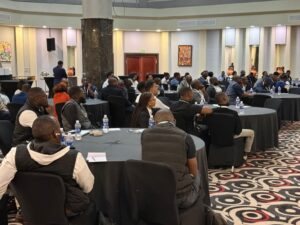
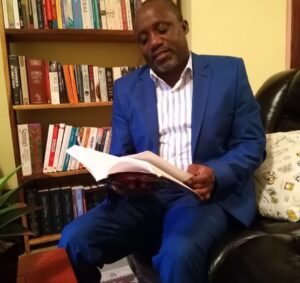
Top: Ms. Lucy C. Kasonde (left) with ConCourt President Justice Arnold Mweetwa Shilimi (right). Bottom: Celestine Mambula Mukandila (left) and Munir Zulu (right)
LCK Freedom Foundation files landmark Constitutional Court Petition challenging validity of Constitution (Amendment) Act No. 13 of 2025
Lusaka, Zambia | Tuesday 5th May 2026
Linda Kasonde
Executive Director – LCK Freedom Foundation
The LCK Freedom Foundation has filed a Petition in the Constitutional Court of Zambia challenging the constitutionality of the process leading to the enactment of the Constitution of Zambia (Amendment) Act, No. 13 of 2025, and the constitutional validity of the Act itself.
The Petition is filed under Article 128 of the Constitution.

In Zambia, the Constitution belongs to the people, and the people alone have the authority to determine how it is changed.
That authority cannot be assumed by the Executive, laundered through a hurried process, and enacted by a Parliament whose own procedures were suspended to ensure a predetermined outcome.

Bottom: Celestine Mambula Mukandila (left) and Munir Zulu (right).
In June 2025, the Constitutional Court held — in Munir Zulu and Another v Attorney-General — that the Government’s approach to constitutional amendment was unconstitutional and directed that any future process must be people-driven, transparent, and led by an independent body of experts.
The Government did not comply. Instead, it appointed a Technical Committee without statutory authority, conducted nationwide consultations over barely three weeks, and then suspended Parliament’s Standing Orders to force the Bill through in a single day.

The result — Act No. 13 of 2025 — alters the architecture of Zambian democracy. It was delivered through a process the Constitutional Court had already declared unconstitutional.
The LCK Freedom Foundation is today exercising its right and duty to defend the Constitution on behalf of the people of Zambia.
WHAT THE CASE IS ABOUT?
Process challenge. The Petition contends that the Government failed to initiate a fresh, constitutionally compliant process as required by Munir Zulu.
The Technical Committee was established without legal foundation, its Terms of Reference issued by press release, and its consultations — conducted over approximately 18 days — fell far short of the wide, inclusive engagement the Constitution demands.
Substantive amendments were introduced on the floor of the National Assembly on 15 December 2025, the very day the Bill was passed, with less than the required notice.
No Votes and Proceedings for that day have been published.
Substantive challenge. Independently, the Petition argues that Act No. 13 constitutes an unconstitutional constitutional amendment.
It introduces a mixed-member proportional representation system, expands the National Assembly, and alters the tenure of ministers and the dissolution of Parliament — structural changes to the foundations of democratic governance that must meet the highest standards of constitutional legitimacy.
The Petitioner invites the Court to recognise the basic structure doctrine and hold that these changes, made through a defective process, are substantively unconstitutional.
Relief Sought
The Petitioner seeks declarations that: the Technical Committee lacked legal authority and its proceedings are null and void; the Executive has no constitutional power to initiate or control a constitutional amendment process; the consultation and legislative processes were unconstitutional; and Act No. 13 of 2025 is an unconstitutional constitutional amendment, invalid and of no legal effect.
The Petitioner also seeks an order of certiorari quashing the Technical Committee and its outputs, an order that any future process comply with the Constitution, an account of public funds expended, and costs.
Significance for Zambia
Sovereignty of the people. The case will settle whether the Executive may drive constitutional change over the objection of civil society and a prior Court judgment, or whether — as the Constitution requires — it must come from the people.
Enforceability of Constitutional Court judgments. The case tests whether Munir Zulu was binding law or mere guidance. A finding in the Petitioner’s favour would affirm that Court directives cannot be circumvented through cosmetic compliance.
Limits of amendment power.
For the first time, the Court is squarely invited to recognise a basic structure to the Constitution — foundational principles beyond the reach of any parliamentary majority.
Electoral integrity. Act No. 13 reconfigures Zambia’s electoral system months before the August 2026 general election.
The case will determine whether those changes can lawfully govern the election.
Linda Kasonde
Executive Director
The LCK Freedom Foundation Limited is an independent public-interest non-profit organisation dedicated to constitutional democracy, the rule of law, accountability, and good governance.
— END OF PRESS STATEMENT —