
Tobacco farmers cry foul over exploitation as calls grow for contract reforms and crop diversification
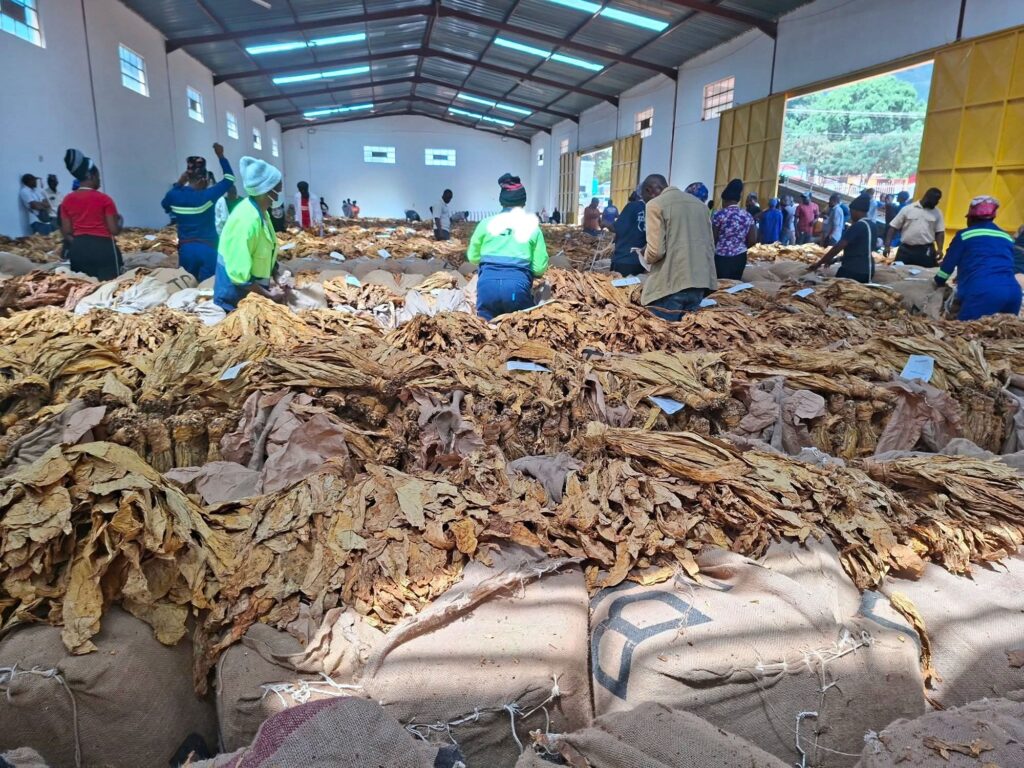
Tobacco farmers cry foul over exploitation as calls grow for contract reforms and crop diversification

May 6, 2026 – Lusaka

Growing discontent among Zambia’s tobacco farmers has once again exposed deep-rooted concerns surrounding farmer exploitation, weak contract enforcement and inadequate agricultural market regulation.

Hundreds of tobacco growers have reportedly remained stranded in Lusaka after failing to secure fair prices for their produce from contracting tobacco companies during the 2026 tobacco marketing season.

The unfolding situation has sparked urgent calls for government intervention to protect small-scale farmers from what stakeholders describe as predatory practices by some tobacco buyers, while also reigniting debate on the need for sustainable alternative crops that can provide better and more stable returns.

Farmers from major tobacco-producing districts, particularly in Eastern Province, have complained of being offered prices far below the cost of production despite entering into contractual agreements with licensed tobacco-buying companies at the start of the farming season.

Many of the affected farmers reportedly transported their produce to Lusaka in anticipation of sales, only to be met with delayed transactions, reduced buying quotas or outright rejection of their tobacco bales.

“This is not just a pricing issue. It is a structural problem in the way agricultural contracts are managed and enforced in Zambia,” agricultural market analysts have observed.

Selling vegetables in Zambia. – Picture by FAO

For many smallholder farmers, tobacco production requires substantial investment in seed procurement, fertilizer, chemicals, curing fuel, labour and transportation.

When buyers offer unexpectedly low prices or fail to honour agreements, the financial consequences can be devastating.

Some farmers say they have been pushed deeper into debt after borrowing money to finance production under the expectation of guaranteed purchase arrangements.

The crisis has raised serious questions about the effectiveness of Zambia’s agricultural market regulation systems, particularly regarding oversight of contract farming arrangements.

Stakeholders argue that while contract farming has the potential to provide farmers with predictable markets and technical support, weak enforcement mechanisms often leave growers vulnerable to exploitation.

There are growing calls for the Ministry of Agriculture, the Tobacco Board of Zambia and relevant regulatory agencies to strengthen oversight by ensuring that all licensed tobacco buyers demonstrate financial capacity before contracting farmers.

Experts are also pushing for the establishment of legally binding standard contract templates with clearly defined pricing mechanisms, dispute resolution procedures and penalties for defaulting companies.

Agricultural economist Dr. Peter Mwansa says Zambia must urgently reform its contract farming framework if it is to protect vulnerable producers.

“When contracts are not enforceable, farmers carry all the production risk while buyers retain the power to dictate terms at the point of sale. This creates an unfair market structure that undermines rural livelihoods,” he said.

Tobacco farmers cry foul over exploitation as calls grow for contract reforms and crop diversification

The latest tobacco market turmoil has also intensified discussion around crop diversification as a long-term solution.

While tobacco has traditionally been viewed as a lucrative cash crop, fluctuating global demand, tightening international tobacco regulations and recurring pricing disputes have made it increasingly risky for smallholder farmers.

Viable alternative crops 

Agricultural experts say Zambia offers several viable alternatives that could provide more stable incomes if supported by strong value chains and market access systems.

Among the most promising alternatives is soybean production, which continues to enjoy growing demand from the livestock feed, cooking oil and export markets.

Soybeans require relatively lower production costs compared to tobacco and can improve soil fertility through nitrogen fixation.

Groundnuts also present strong potential, particularly for export and domestic processing into peanut butter and edible oil.

For farmers in suitable climatic zones, sunflower farming offers an attractive opportunity due to rising demand for cooking oil.

The crop is less labour-intensive than tobacco and has a relatively shorter production cycle.

Paprika and chilli production have also emerged as high-value export-oriented crops capable of generating competitive returns when linked to reliable off-takers.

Horticulture crop cabbage is a good alternative crop.

Additionally, horticulture, including tomatoes, onions and cabbages, can provide faster income turnover if farmers have access to irrigation and organised markets.

Some experts are advocating for greater investment in cassava and sweet potato value chains, citing their resilience to climate variability and increasing processing opportunities.

However, analysts caution that diversification will only succeed if government and private sector players invest in extension services, aggregation systems, processing facilities and guaranteed markets.

Without these support structures, farmers risk moving from one exploitative market system to another.

As pressure mounts, affected tobacco farmers are calling for immediate intervention to resolve the current impasse and prevent similar crises in future marketing seasons.

Their plight serves as a stark reminder that Zambia’s agricultural transformation agenda cannot succeed without stronger market regulation, enforceable contracts and deliberate support for crop diversification.

For many stranded farmers, the hope is that their current hardship will trigger reforms that ensure no producer is left vulnerable to exploitation again.


About The Author

Zambia’s Tobacco Control victory earns Continental praise …ATCA hails historic passage of Tobacco Control Bill as major Public Health milestone May 5, 2026 – Lusaka Zambia’s adoption of the long-awaited Tobacco Control Bill has been hailed as a historic breakthrough for public health, with the African Tobacco Control Alliance (ATCA) describing the development as a turning point not only for Zambia but for the African continent at large. In a statement released from Lome, Togo, ATCA congratulated the Zambian Government, Parliament, public health advocates and civil society organisations for what it termed a “landmark achievement” in the fight against tobacco-related harm. ATCA said Zambia’s decision to enact the legislation sends a clear and powerful message across Africa that the health and well-being of citizens must take precedence over the commercial interests of the tobacco industry. The alliance noted that the newly adopted law introduces comprehensive measures aimed at curbing tobacco use and protecting future generations from nicotine addiction. Among its key provisions are a total ban on tobacco and nicotine product advertising and promotion, restrictions on sales to minors, establishment of smoke-free public spaces, and provision of cessation support services for individuals seeking to quit smoking. The legislation also establishes a dedicated Tobacco Control Fund to ensure sustainable financing for enforcement and long-term implementation. ATCA commended the Ministry of Health for what it described as steadfast leadership in championing the legislation despite sustained pressure from multinational tobacco corporations and vested interests. The alliance also praised Members of Parliament for taking what it called a courageous and principled stand in support of public health. “Their vote reflects responsible leadership and a strong commitment to safeguarding the health of the Zambian people,” the statement said. Special recognition was also given to civil society organisations, journalists and public health advocates whose persistent efforts helped ensure that the Bill remained evidence-based and aligned with Zambia’s international obligations under the World Health Organization Framework Convention on Tobacco Control (WHO-FCTC). ATCA has since appealed to Zambia’s President Hakainde Hichilema to quickly assent to the Bill to preserve the momentum generated by its passage and allow immediate commencement of implementation. According to the alliance, prompt assent will ensure that years of advocacy translate into tangible public health gains without unnecessary delays. ATCA further observed that Zambia’s achievement carries continental significance because of the country’s position as one of Africa’s major tobacco-growing nations. The country is often considered among the most difficult environments for advancing tobacco control due to the deep-rooted economic and political influence of the tobacco industry. The alliance said Zambia has now demonstrated that meaningful progress is possible even in challenging contexts when governments, lawmakers, civil society and the media unite around a common public health agenda. “This milestone renews hope for other tobacco-growing nations across Africa. Zambia has proven that the narrative can change, and that protecting citizens from tobacco harm is realistic and achievable,” ATCA stated. ATCA reaffirmed its commitment to continue supporting Zambia through technical and financial assistance as the country transitions from legislation to implementation. The organisation described the Bill’s passage as “a victory for Zambia, a victory for Africa, and a victory for future generations.” The African Tobacco Control Alliance is a pan-African network of civil society organisations operating in 39 countries and is dedicated to promoting public health and reducing tobacco-related harm across the continent.

Leave a Reply

Your email address will not be published. Required fields are marked *

You may have missed

Zambia’s Tobacco Control victory earns Continental praise …ATCA hails historic passage of Tobacco Control Bill as major Public Health milestone May 5, 2026 – Lusaka Zambia’s adoption of the long-awaited Tobacco Control Bill has been hailed as a historic breakthrough for public health, with the African Tobacco Control Alliance (ATCA) describing the development as a turning point not only for Zambia but for the African continent at large. In a statement released from Lome, Togo, ATCA congratulated the Zambian Government, Parliament, public health advocates and civil society organisations for what it termed a “landmark achievement” in the fight against tobacco-related harm. ATCA said Zambia’s decision to enact the legislation sends a clear and powerful message across Africa that the health and well-being of citizens must take precedence over the commercial interests of the tobacco industry. The alliance noted that the newly adopted law introduces comprehensive measures aimed at curbing tobacco use and protecting future generations from nicotine addiction. Among its key provisions are a total ban on tobacco and nicotine product advertising and promotion, restrictions on sales to minors, establishment of smoke-free public spaces, and provision of cessation support services for individuals seeking to quit smoking. The legislation also establishes a dedicated Tobacco Control Fund to ensure sustainable financing for enforcement and long-term implementation. ATCA commended the Ministry of Health for what it described as steadfast leadership in championing the legislation despite sustained pressure from multinational tobacco corporations and vested interests. The alliance also praised Members of Parliament for taking what it called a courageous and principled stand in support of public health. “Their vote reflects responsible leadership and a strong commitment to safeguarding the health of the Zambian people,” the statement said. Special recognition was also given to civil society organisations, journalists and public health advocates whose persistent efforts helped ensure that the Bill remained evidence-based and aligned with Zambia’s international obligations under the World Health Organization Framework Convention on Tobacco Control (WHO-FCTC). ATCA has since appealed to Zambia’s President Hakainde Hichilema to quickly assent to the Bill to preserve the momentum generated by its passage and allow immediate commencement of implementation. According to the alliance, prompt assent will ensure that years of advocacy translate into tangible public health gains without unnecessary delays. ATCA further observed that Zambia’s achievement carries continental significance because of the country’s position as one of Africa’s major tobacco-growing nations. The country is often considered among the most difficult environments for advancing tobacco control due to the deep-rooted economic and political influence of the tobacco industry. The alliance said Zambia has now demonstrated that meaningful progress is possible even in challenging contexts when governments, lawmakers, civil society and the media unite around a common public health agenda. “This milestone renews hope for other tobacco-growing nations across Africa. Zambia has proven that the narrative can change, and that protecting citizens from tobacco harm is realistic and achievable,” ATCA stated. ATCA reaffirmed its commitment to continue supporting Zambia through technical and financial assistance as the country transitions from legislation to implementation. The organisation described the Bill’s passage as “a victory for Zambia, a victory for Africa, and a victory for future generations.” The African Tobacco Control Alliance is a pan-African network of civil society organisations operating in 39 countries and is dedicated to promoting public health and reducing tobacco-related harm across the continent.