Inkosi Yamankosi: Reclaiming the Sacred Sovereignty of the AbaNgoni Beyond Colonial Titles

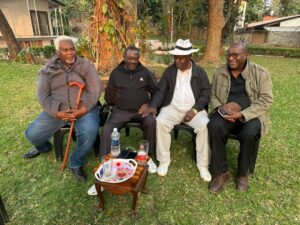
Paramount Chief Mpenzeni
Author: Maimisa Josphat
The title Inkosi Yamankosi is deeply rooted in the indigenous political and spiritual order of the AbaNgoni. It embodies a conception of kingship that colonial administrative labels such as Chief or Paramount Chief can neither define nor adequately translate. To continue substituting this sacred royal title with colonial terminology is not merely a linguistic choice—it is a distortion of African constitutional heritage.
*The Historical Foundation of Ngoni Kingship*
The Ngoni nation emerged during the great upheavals of the early nineteenth century under the visionary leadership of Zwangendaba Jele, whose people journeyed north from present-day South Africa into Central Africa. Following his passing, the nation evolved into several kingdoms, including the Jele Ngoni of present-day Zambia.
Among their greatest rulers stands Inkosi Yamankosi Mphezeni, revered not only for his military brilliance but also for his resolute resistance against British colonial expansion during the 1890s. His legacy remains a defining symbol of Ngoni resilience, dignity, and sovereignty.
*Inkosi Yamankosi: The Indigenous Constitutional Order*
Within the UbuNguni political philosophy:
Inkosi means King.
Inkosi Yamankosi literally means King of Kings—the Supreme Sovereign.
The subordinate rulers are AmaNkosi (plural of Inkosi), who govern their respective territories while owing allegiance to the supreme monarch.
This hierarchy reflects an indigenous constitutional order that predates colonialism by generations. It is a system grounded in custom, lineage, legitimacy, and sacred authority—not colonial bureaucracy.
*Colonialism and the Renaming of African Institutions.*
When Britain established colonial rule in Northern Rhodesia, it systematically replaced African political vocabulary with administrative classifications designed to facilitate indirect rule.
Colonial authorities introduced titles such as:
Chief
Senior Chief
Paramount Chief
These labels were never intended to preserve African constitutional thought. They were administrative conveniences created for colonial governance.
To colonial officials:
a Chief was an administrative functionary;
a Paramount Chief was simply a chief supervising other chiefs.
The Ngoni understanding of leadership was profoundly different.
Authority was historical.
Authority was judicial.
Authority was military.
Authority was spiritual.
Authority was ancestral.
Authority was national.
Consequently, Inkosi Yamankosi denotes an institution infinitely richer than the colonial expression Paramount Chief.
*The Sacred Office of Inkosi Yamankosi.*
The office of Inkosi Yamankosi transcends civil administration. It is a sacred institution embodying:
– Custodianship of ancestral traditions.
– Guardianship of the nation’s land.
– Symbolism of national unity.
– Supreme traditional judicial authority.
– Protection of royal ceremonies and rituals.
– The living bond between the ancestors and the present generation.
Its legitimacy flows from royal lineage, customary law, and ancestral sanction—not from recognition or appointment by the modern state.
*The Hidden Cost of Colonial Terminology.*
Referring to the supreme Ngoni ruler as “Paramount Chief Mphezeni” creates a hybrid identity that subtly subordinates an indigenous institution to colonial vocabulary.
It diminishes indigenous sovereignty by replacing a title expressing supreme national authority with one reflecting rank within a colonial administrative hierarchy.
It erodes cultural memory by stripping away centuries of political philosophy, ritual meaning, and historical identity embedded in the title Inkosi Yamankosi.
It normalizes colonial language, leaving younger generations more familiar with imperial classifications than with their own constitutional traditions.
Most importantly, it reduces sacred kingship to civil administration, diminishing a royal institution rooted in ancestry, spirituality, and nationhood.
The Eurocentric Nullification of Africanity
Hidden within the continued use of colonial titles is a subtle Eurocentric tendency to diminish African political institutions by compelling Africans to describe themselves through inherited colonial vocabulary.
The title Chief is not indigenous to UbuNguni political thought. Neither is Paramount Chief.
These are colonial creations.
Within UbuNguni, political reverence recognizes only two legitimate traditional designations:
Inkosi Yamankosi — the Supreme Sovereign.
AmaNkosi — the subordinate kings who exercise authority under the supreme monarch.
There is no indigenous place for Chief or Paramount Chief within the vocabulary of UbuNguni.
Their continued use perpetuates colonial classifications that obscure the authenticity, dignity, and constitutional richness of Nguni kingship. To persist in these borrowed titles is, consciously or unconsciously, to sustain a colonial lexicon that marginalizes African political philosophy.
*Reclaiming Indigenous Identity.*
Across Africa, traditional nations are increasingly restoring the authentic names of their royal institutions.
The Zulu honour Inkosi and Isilo.
The Ashanti uphold Asantehene.
Buganda reveres the Kabaka.
None of these institutions depends upon colonial translations for legitimacy.
Neither should the AbaNgoni.
The proper title is Inkosi Yamankosi Mphezeni.
Where explanation is necessary for international audiences, English translations should serve only as explanatory glosses—not as replacements for the authentic indigenous title.
*Conclusion* .
Chief and Paramount Chief belong to the vocabulary of colonial administration. Inkosi Yamankosi belongs to the constitutional, historical, and spiritual heritage of the AbaNgoni.
Words shape memory.
Titles preserve identity.
Names carry sovereignty.
To restore the title Inkosi Yamankosi Mphezeni is more than an exercise in linguistic preference—it is an act of historical justice, cultural renewal, and intellectual decolonization. It affirms that African institutions need not borrow colonial names to validate their legitimacy.
The dignity of the AbaNgoni monarchy lies not in imperial classifications but in the enduring authority of its own traditions, its own constitutional order, and its own sacred vocabulary.