
Beyond Aid: Why the Russia–Africa Economic Forum could redefine Africa’s economic future
“For Zambia and other mineral-rich nations, the priority should remain clear: attract investment from all willing partners while safeguarding sovereignty, insisting on value addition, protecting national interests and ensuring that Africa’s mineral wealth benefits its own people first’
Let's Explore Zambia
By Rainbow Newspaper Zambia Limited (RNZL) Correspondent
As geopolitical competition for Africa’s vast mineral wealth intensifies, the forthcoming October 2026 St. Petersburg International Economic Forum (SPIEF)—widely regarded as this year’s Russia–Africa Economic Forum—is emerging as one of the most consequential gatherings for African governments seeking to diversify their economic and strategic partnerships.
For decades, Africa’s relations with global powers have largely been shaped by aid, debt financing and the export of raw materials.
Today, however, the continent finds itself at the centre of a new global contest driven by the growing demand for critical minerals essential for electric vehicles, renewable energy technologies, artificial intelligence and advanced defence industries.
Countries such as Zambia, the Democratic Republic of Congo, Zimbabwe, Namibia, South Africa and Tanzania possess some of the world’s largest reserves of copper, cobalt, lithium, graphite, rare earth minerals and uranium—resources that have become indispensable to the global green transition.
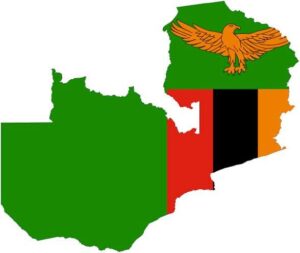
This has transformed Africa into one of the world’s most strategically important regions.
A changing global order
The 2026 SPIEF comes at a time when many developing countries are seeking alternatives to traditional economic partnerships dominated by Western institutions.
Russia is positioning the forum as a platform where countries of the Global South can pursue investment, technology transfer, industrialisation and trade on what it describes as the basis of mutual respect and national sovereignty.
According to the 2026 SPIEF forum’s agenda, discussions are expected to focus on developing transport corridors, strengthening financial cooperation outside traditional Western systems, expanding agricultural trade, supporting mineral value addition and increasing educational opportunities for African students in Russian universities.
For many African leaders, these discussions are attractive because they shift attention away from aid dependency towards production, industrialisation and investment.
Africa’s minerals attract global competition
The United States, the European Union, China, Russia, India, Turkey and Gulf states are all competing for access to Africa’s critical minerals.
Copper from Zambia, cobalt from the Democratic Republic of Congo, lithium from Zimbabwe and Namibia, graphite from Mozambique and rare earth elements across Southern Africa have become strategic assets in the global economy.
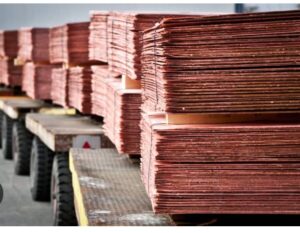
Western governments have openly acknowledged the importance of securing resilient supply chains for these minerals to reduce dependence on competitors and support their clean energy transitions.
As a result, Africa is increasingly becoming an arena of geopolitical competition.
Zambia at the centre
Zambia has become one of the continent’s most sought-after investment destinations because of its vast copper reserves and growing potential in cobalt and other strategic minerals.
The country’s ambition to produce more than three million tonnes of copper annually has attracted significant international interest.
American, Chinese, Canadian, Australian and European mining companies are all expanding their presence in Zambia.
For Zambia, this growing interest presents enormous opportunities—but also significant risks.
The challenge is ensuring that foreign investment creates local jobs, promotes technology transfer, supports mineral processing within Zambia and contributes meaningfully to national development rather than simply exporting raw materials.
Aid and strategic interests
Critics of Western foreign policy argue that development assistance has often been accompanied by broader strategic objectives, including securing political influence, market access or economic partnerships.
Supporters of Western engagement, however, contend that health programmes, humanitarian assistance and development financing have saved millions of lives across Africa and are not simply instruments for resource extraction.
The reality is that international relations are rarely driven by altruism alone. Every major power—including the United States, China, Russia and European countries—pursues its own national interests.
For African governments, the challenge is not choosing one bloc over another but negotiating from a position of strength.
Lessons from history
History demonstrates that countries heavily dependent on a single foreign partner often become vulnerable to political pressure, economic coercion and unequal bargaining power.
Whether through aid dependency, debt, military cooperation or exclusive investment agreements, excessive reliance on one external actor can limit policy independence.
African governments are therefore increasingly pursuing multi-alignment—maintaining constructive relations with multiple global powers while protecting national sovereignty.
Why SPIEF matters
The St. Petersburg International Economic Forum offers African countries an additional platform through which they can expand markets, attract investment and diversify partnerships.
Beyond mining, the forum provides opportunities for cooperation in agriculture, energy, transport, education, science, pharmaceuticals, digital technologies and manufacturing.
Russia has also expressed interest in supporting mineral beneficiation within Africa, enabling countries to export refined products rather than raw ores.
If implemented effectively, such partnerships could help African economies retain more value from their natural resources.
Building value at home
For Zambia, the future lies not simply in mining more copper but in producing copper cables, batteries, electric vehicle components and other finished products.
Industrialisation remains the missing link between Africa’s abundant natural resources and sustainable economic prosperity.
Forums such as SPIEF provide opportunities to negotiate technology partnerships, skills development and industrial investments that can accelerate this transformation.
Africa’s negotiating moment
Africa’s greatest strength is no longer aid—it is leverage.
With the world’s fastest-growing population and some of the largest untapped reserves of strategic minerals, African nations possess assets that every major global economy needs.
The continent must therefore negotiate partnerships based on mutual benefit rather than dependency.
The road ahead
The 2026 Russia–Africa Economic Forum will not, by itself, transform Africa’s economic fortunes.
However, it represents an important opportunity for African governments to broaden their diplomatic and economic options at a time when the global balance of power is rapidly changing.
For Zambia and other mineral-rich nations, the priority should remain clear: attract investment from all willing partners while safeguarding sovereignty, insisting on value addition, protecting national interests and ensuring that Africa’s mineral wealth benefits its own people first.
As competition among global powers intensifies, Africa must avoid becoming merely the prize in someone else’s geopolitical contest. Instead, it should emerge as an equal partner capable of shaping its own economic destiny.


Здесь ресурсе можно обнаружить обилие ценной сведений.
https://coub.com/liujosneakers
На этом ресурсе вы сможете обнаружить обилие нужной материалов.
https://medium.com/@litecat/liu-jo-%D0%B8%D1%82%D0%B0%D0%BB%D1%8C%D1%8F%D0%BD%D1%81%D0%BA%D0%B8%D0%B5-%D0%BA%D1%80%D0%BE%D1%81%D1%81%D0%BE%D0%B2%D0%BA%D0%B8-%D0%BA%D0%BE%D1%82%D0%BE%D1%80%D1%8B%D0%B5-%D0%B7%D0%BD%D0%B0%D1%8E%D1%82-%D1%82%D0%BE%D0%BB%D0%BA-%D0%B2-%D0%B6%D0%B5%D0%BD%D1%81%D0%BA%D0%B8%D1%85-%D0%BD%D0%BE%D0%B3%D0%B0%D1%85-f59db011d4e5
Conscious gaming is a system that facilitates users to preserve control over their betting activity while being aware of the likely pitfalls.
https://metaltp.ru/data/2026-06-25-kaluzhskiy-zhitel-osuzhdyon-za-popytku-podzhoga-sotovoy-vyshki/
Safe wagering is a methodology that aims for players to preserve mastery over their wagering activity while acknowledging the attendant dangers.
https://femidasurgut.ru/info/2026-07-09-the-impact-of-live-dealer-games-on-superbet-casino-s-overall-player-engagement.htm
Responsible gambling is a framework that promotes participants to keep balance over their betting activity while understanding the inherent risks.
https://satin-shop.ru/full-text/2026-06-29-die-wichtigsten-sicherheitsmassnahmen-von-superbet-casino-lizenzen-verschluesselung-und-spielerschutz.html
Mindful gaming is a methodology that promotes participants to retain oversight over their gaming decisions while understanding the associated dangers.
https://megadomoz.ru/
Responsible gambling is a set of principles that promotes players to maintain balance over their wagering activity while noticing the inherent risks.
https://www.trustami.com/erfahrung/6a757f52e218a2fa33566f23-bewertung