
ZATO president Patson Chifumbe questions Zambia’s tourism growth claims, cites teething marketing, access challenges

Chifumbe
By Chali Mulenga in Livingstone, Southern Province, Zambia
The Zambian Association of Indigenous Tour Operators (ZATO) president Patson Chifumbe has questioned claims that Zambia’s tourism sector is experiencing strong growth, saying operators on the ground are not seeing the same positive trends reflected in official statistics.
As of early 2026, Tourism Minister Rodney Malindi Sikumba has announced ambitious plans to further expand Zambia’s tourism sector, targeting 2.5 million international arrivals and 20% growth in domestic tourism for the year.

Following a strong recovery from 2021-2025, the 2026 strategy focuses on infrastructure, increased air connectivity, and community-driven conservation.
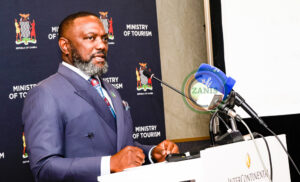
Flanked by Minister of Labour and Social Security Brenda Mwika Tambatamba during an Intercontinental Hotel Media Breakfast Press Briefing in Lusaka, Mr. Sikumba said government has deliberately repositioned the sector from traditional tourism to the broader travel and tourism model in recognition of its extensive economic linkages.
Meanwhile, Minister of Labour and Social Security Brenda Tambatamba reaffirmed government’s commitment to supporting the tourism sector through improved governance, labour law reforms, and enhanced worker protection.

Ms Tambatamba described tourism as one of Zambia’s key economic priority sectors under the Presidential Delivery Unit (PDU), alongside mining, agriculture, and energy.
But in response, Dr. Chifumbe said while government statements indicate an increase in tourist arrivals, tour operators handling visitors at ground level are experiencing a different reality.
Dr. Chifumbe said the discrepancy has raised concerns among local operators who believe Zambia may be using a different data collection framework compared to neighbouring countries.
“The issue about numbers still stands out. We wonder whether Zimbabwe and Namibia are using the same data collection methods as Zambia,” Dr. Chifumbe said.
Dr. Chifumbe noted that what operators are witnessing on the ground suggests that Zimbabwe is receiving significantly more tourist traffic than Zambia, particularly in the region around the iconic Victoria Falls.
Dr. Chifumbe said operators acknowledge that the falls are a shared natural heritage between Zambia and Zimbabwe, but stressed that the attraction remains Africa’s most distinctive tourism site.

“There is only one Mosi-oa-Tunya Falls and nothing can dwarf it. Safaris are found across Africa, but this waterfall is the biggest iconic attraction we have,” Dr. Chifumbe said.
Dr. Chifumbe added that while Zambia’s recent reintroduction of the Black Rhinoceros is commendable, the species is not unique to Zambia as several other African countries, including Namibia, also host large populations.
“It is a good conservation milestone, but it is still not something unique to Zambia because other countries already have large numbers of the species,” Dr. Chifumbe said.
Dr. Chifumbe further cited limited air connectivity as a major challenge affecting tourism growth, particularly in areas where unique wildlife species are located.
Dr. Chifumbe explained that some of Zambia’s endemic wildlife resources are located in remote areas that are difficult to access due to a shortage of both domestic and international flights.
“This is a challenge compounded by very limited flight connections. Unique wildlife is often found in areas that are difficult to reach,” Dr. Chifumbe said.
The ZATO president also expressed frustration with the country’s tourism marketing approach, accusing the national tourism agency of prioritising private company branding instead of promoting Zambia’s natural attractions.
“Our marketing is very frustrating because the national tourism agency is marketing private companies instead of maximising the projection of natural tourism resources,” Dr. Chifumbe said.
Dr. Chifumbe said complaints had also been raised by ZATO members regarding participation in international tourism exhibitions such as the ITB Berlin.
According to him, some companies that did not participate in such exhibitions were allegedly promoted by the national agency, while others that paid to attend were overlooked.
“The question is whether those companies pay for such advertisement. These are serious flaws in our national marketing strategy,” Dr. Chifumbe said.
Dr. Chifumbe said ZATO represents the country’s largest group of ground handlers and destination management companies, and its observations reflect the actual state of the industry.
“Our views are not biased but authentic because we represent operators who interact with tourists daily,” Dr. Chifumbe said.
Dr. Chifumbe raised concerns about wildlife conservation conflicts affecting communities living near national parks, citing growing human-elephant conflicts in Livingstone.
According to Dr. Chifumbe, residents have been facing increasing challenges with elephants but there are no compensation mechanisms in place for affected communities.
“Livingstone is highly troubled by elephants and there is no compensation consideration,” Dr. Chifumbe said.
Dr. Chifumbe claimed that proposals from industry organisations intended to address some of the challenges facing tourism are often rejected.
 Facebook +3
- Arrivals Target: The goal is to reach 3 million international arrivals in 2026, following 2.3 million in 2025.
- Economic Impact: The sector is projected to be a major economic driver, with aims to reach a $1 billion valuation by 2031.
- Job Creation: Tourism employment has grown, reaching 164,800 jobs by the end of 2025.
- Investment & Strategy: The government has allocated K1.3 billion to the sector in 2026, focusing on infrastructure, improving the northern circuit (Kasaba Bay, Lake Tanganyika), and aggressive marketing in India, China, and the GCC.
- Policy Reforms: Key initiatives include visa-free access for over 40 countries, duty-free imports for tourism goods, and the expansion of the Zambia Tourism Agency’s marketing efforts.
 Zambia Daily Mail +6