𝐙𝐚𝐦𝐛𝐢𝐚’𝐬 y𝐨𝐮𝐭𝐡 r𝐞𝐝𝐞𝐟𝐢𝐧𝐢𝐧𝐠 p𝐞𝐚𝐜𝐞 t𝐡𝐫𝐨𝐮𝐠𝐡 a𝐜𝐭𝐢𝐨𝐧 in Crime Down Campaign
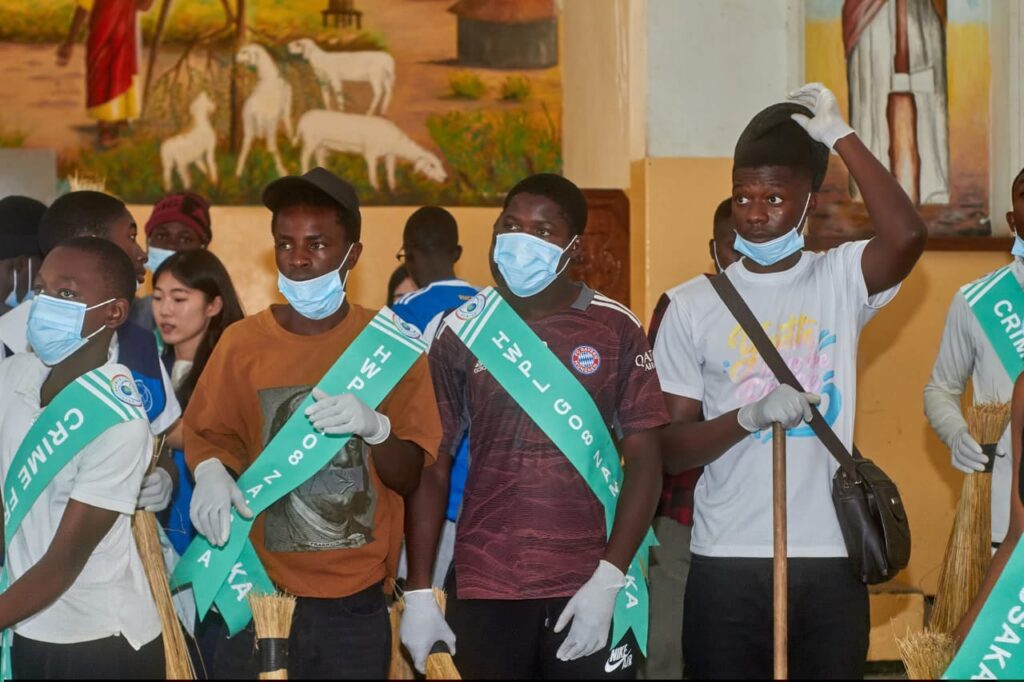
“Clean Up, Crime Down!: Zambia Youth Revolution for Sustainability” campaign launched in Kabwata, Lusaka, Zambia.
By Juliet Makwama
Across Lusaka, the wave of cleanup and community action continues to grow through ongoing monthly youth-led initiatives.
Reflecting the national slogan “Zambia Moves You,” the movement highlights a growing sense of responsibility, unity, and civic pride among young people.
Zambian youth are going beyond simply cleaning streets.
They are actively transforming their communities while contributing to the positive and hopeful national image that Zambia seeks to present to the world.
Over the weekend, that movement reached Kabwata through the “Clean Up, Crime Down!: Zambia Youth Revolution for Sustainability” campaign.
Hosted by HWPL Zambia Branch in partnership with the Lusaka City Council Junior Council and Good Shepherd Catholic Church Kabwata Parish, the event “Clean Up, Crime Down!: Zambia Youth Revolution for Sustainability” brought together youth leaders, students, faith communities, and local stakeholders in a united movement for peace.
What made this initiative remarkable was not only the cleaning itself, but the philosophy behind it.
Inspired by the “Broken Windows Theory,” organizers emphasized that neglected environments can create psychological signals that invite crime and hopelessness.
By restoring public spaces, young people were also restoring community trust, mental well-being, and a sense of shared responsibility.
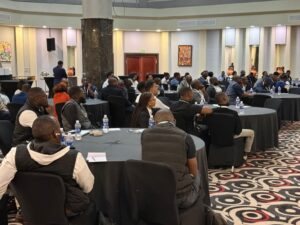
The program began with an interactive education session and dialogue at Good Shepherd Catholic Church Kabwata Parish, where participants discussed peace culture, youth responsibility, and practical ways to prevent violence in local communities.
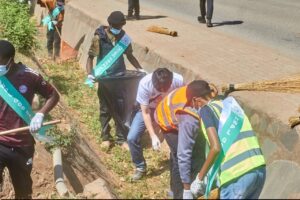
Participants later marched together to Chibwa Road, carrying cleaning tools, banners, and a message: peace is something people build with their own hands.
One of the strongest impressions came from seeing Catholic youth, Muslim youth, students, and civic leaders working side by side.
In a world increasingly divided by politics, religion, and social tension, the streets of Kabwata offered a different image — one of cooperation, dignity, and hope.
Moreover, The event carries even greater significance because it was proactively planned and led by Lusaka Junior Councillors Cyrus Malama and Benard Kambole themselves.
Their leadership demonstrates that young people are not merely participants in community activities, but key actors capable of driving meaningful change and building peace within their own communities.
Public support also strengthened the initiative.
The Director of Public Health under Lusaka City Council officially endorsed the campaign through a video message and institutional cooperation, demonstrating growing recognition that youth-led peacebuilding is essential for sustainable urban development.
The initiative is part of HWPL’s YEPW (Youth Empowerment & Peacebuilding Working Group), inspired by Article 10 of the DPCW (Declaration of Peace and Cessation of War), which emphasizes spreading a culture of peace through civic participation and education.
Unlike one-time volunteer campaigns, organizers announced a long-term vision: to expand “Clean Up, Crime Down” into all 38 wards of Lusaka through monthly youth-led peace actions and leadership training programs.
International observers noted that HWPL’s approach is attracting growing attention because it connects peace with visible action.
Rather than discussing peace only in conference rooms, the organization empowers ordinary citizens — especially youth — to become direct actors of social transformation.
As cities around the world search for solutions to violence, isolation, and youth disengagement, Zambia’s example sends a clear message: peace is not built only through policy. It begins when communities decide to care for one another again.
And in Kabwata, that future has already begun.