Zambia’s mineral wealth draws U.S. power play amid revenue leak concerns
“Despite booming investment, Zambia is estimated to be losing up to US$3 billion annually through tax avoidance, profit shifting, illicit financial flows and generous tax incentives granted to multinational mining firms”
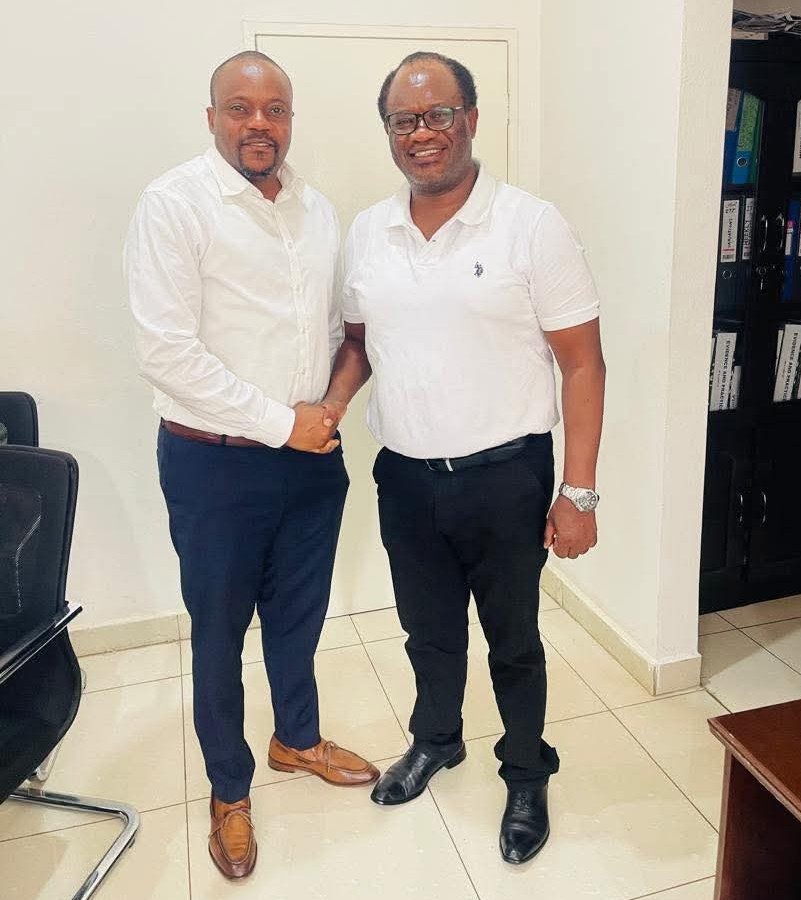
Antonio Mourinho Mwanza
By Correspondent
Monday, April 20, 2026 – Lusaka
Zambia’s vast mineral wealth is fast becoming a focal point of global power politics, as the United States intensifies its push to secure critical resources—while concerns grow over billions lost through tax leakages.
Rich in copper, cobalt, nickel and other strategic minerals such as gold and sugelite, Zambia remains one of Africa’s most resource-endowed nations.
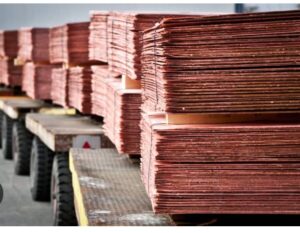
As the continent’s second-largest copper producer after Democratic Republic of Congo, the country is ramping up output to meet surging global demand driven by electric vehicles, renewable energy and advanced manufacturing.
But Zambia’s growing importance is no longer just economic—it is geopolitical.
U.S. eyes Strategic Minerals
Washington’s rising interest in Zambia’s mining sector is part of a broader strategy to reduce dependence on China and secure alternative supply chains for critical minerals.

This engagement is taking shape through direct investment, infrastructure support such as the Lobito Corridor, and partnerships aimed at promoting “responsible” mineral sourcing.
The shift places Zambia at the heart of an intensifying global contest over the resources powering the clean energy transition.
KoBold Metals: Silicon Valley Meets the Copperbelt
At the centre of this renewed U.S. interest is KoBold Metals, a technology-driven mining company leveraging artificial intelligence to unlock mineral deposits.
Backed by billionaires Bill Gates and Jeff Bezos, KoBold is redefining exploration by using advanced data analytics to target high-value resources including copper, cobalt, lithium and nickel.

Its flagship investment in Zambia—the Mingomba copper-cobalt project on the Copperbelt, in partnership with ZCCM-IH—is already being hailed as one of the country’s most significant discoveries in decades.
With over US$150 million already committed and total project costs projected to exceed US$2 billion, Mingomba could become a cornerstone of Zambia’s ambition to dramatically scale up copper production in the coming years.
Production is expected in the early 2030s, with the project poised to reshape the country’s mining landscape.
A Sector in Transition
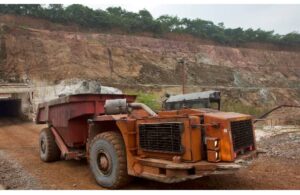
KoBold’s entry signals a broader shift:
Rising Western participation in a sector long dominated by Chinese firms
Increased use of technology-driven, precision mining.
Greater potential for skills transfer and local job creation
Yet beneath the optimism lies a more troubling reality.
The US$3 Billion Question
Despite booming investment, Zambia is estimated to be losing up to US$3 billion annually through tax avoidance, profit shifting, illicit financial flows and generous tax incentives granted to multinational mining firms.

Critics, including politician Democratic Progressive Party (DPP) president Antonio Mourinho Mwanza, argue that widespread tax holidays and incentives are depriving the country of much-needed revenue.
Data points to a systemic challenge: mining accounts for over 70% of Zambia’s export earnings and nearly 30% of government revenue, yet weak enforcement, transfer mispricing and underreporting continue to erode the tax base.
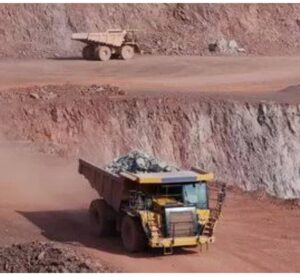
Cases such as profit shifting by major mining firms have previously cost the country hundreds of millions of dollars annually, exposing gaps in oversight.
Policy Crossroads
As global players deepen their foothold, Zambia faces a delicate balancing act:
Attracting investment without surrendering fair value.
Tightening tax systems to curb revenue losses
Managing geopolitical competition between global powers.
Empowering local businesses and strengthening value addition
Experts argue that reforms—ranging from stronger auditing systems to revised royalty regimes—are critical if Zambia is to fully benefit from its mineral wealth.
The Stakes
Zambia stands at a pivotal moment.
The influx of U.S. investment and cutting-edge mining technology offers a pathway to industrial growth, job creation and economic transformation.
But without stronger governance and fiscal discipline, the country risks remaining resource-rich—yet revenue-poor.