Council of Elders call for a Fourth Republic
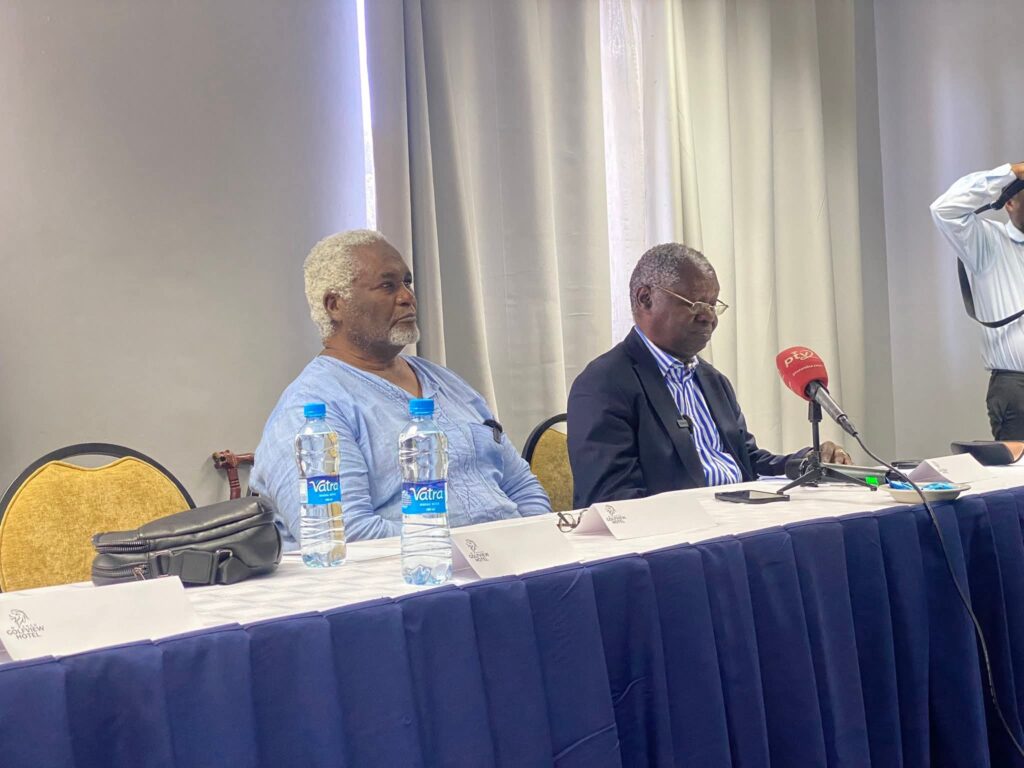
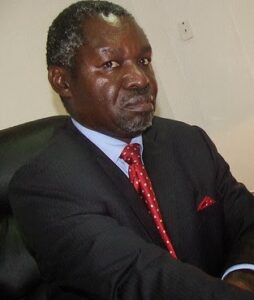
Prince Akashabatwa Mbikusita Lewanika (left) with Dr. Mbita Chitundya Chitala (right) at Cresta Golf View HOTEL, Lusaka.
By Brian Matambo |Thursday 26th February 2026
Dear Readers,
Yesterday was probably one of the most important days yet this year in Zambia’s political calendar. I was privileged to attend a momentous press conference at which two of Zambia’s decorated leaders of multiparty democracy spoke to the media. The event, organised by the Centre for Policy Dialogue, was held at M’kango Golfview Hotel in Lusaka. The press statement was given by Dr Mbita Chitala, and Prince Akashambatwa Mbikusita-Lewanika delivered a powerful keynote.
Dr. Mbita Chitala carries a unique credibility in this conversation. He is not theorising about reform from the sidelines. He is one of the men who stood in the furnace of 1991 and helped compel President Kenneth Kaunda to repeal Article 4 of the Constitution, reopening Zambia to multiparty democracy. When such a man stands up and says the job was not finished, we would be foolish not to listen.
The message delivered yesterday was clear and sober. Zambia is not merely approaching another election. Zambia is approaching a structural reckoning. As we move toward 13 August 2026, the question before us is not simply who will occupy State House. The deeper question is whether the constitutional and governance framework of this Republic can sustain another cycle without collapsing under its own contradictions.
The elders did not dramatise the moment. They diagnosed it. Constitutional contestation has never fully settled since independence. A presidency that has grown stronger through successive amendments. Institutions are drifting from national service into partisan service. The national debt stands at approximately 28 billion dollars. A cost-of-living crisis biting families and businesses alike. Load shedding is crippling productivity. Political competition is increasingly treated as something to be managed rather than embraced.
These are not isolated problems. They are symptoms of a centralised and personalised governance model that has never been fully dismantled. The first republican constitution emerged from consensus but was eroded by selective amendments. The second republican constitution entrenched the one-party state. The third republican constitution restored multiparty politics in 1991 but did not fully uproot the structural dominance of the executive. Over time, instead of diffusing power, amendments have often reinforced it.
Dr Chitala made it plain: those in government rarely complain about a framework that concentrates authority. The discomfort lies with those outside that concentration and with citizens who feel governed but not empowered. That tension has defined Zambia’s political life for decades.
Prince Akashambatwa’s keynote cut through the noise of ordinary politics. He reminded us that being non-partisan does not mean being neutral between justice and injustice. That line deserves reflection. In Zambia, we often confuse neutrality with virtue. But neutrality in the face of structural imbalance is not a virtue. It is avoidance.
The National Conference scheduled for 6th and 7th March is therefore not a rally. It is not an endorsement event. It is being positioned as a forum where over twenty political leaders and representatives of civil society will sit as equals to deliberate on what has been described as a minimum program for change. The aim is not to elevate one individual. The aim is to confront the architecture itself.
At the centre of that confrontation is the proposal for a Fourth Republic. This is not a slogan. It is a call for a comprehensive review and reconstruction of the current constitutional order. A genuinely people-driven constitution, not one negotiated solely among elites. A system anchored in power sharing rather than power hoarding. A governance model that reduces personalisation and restores institutional integrity.
When Prince Akashambatwa repeatedly invoked the national anthem and its call to stand up proud and free, it was not ceremonial nostalgia. It was a challenge. How proud can citizens be if their economic survival depends on political alignment? How free can institutions operate if authority remains heavily centralised? How fearless can political actors be in an environment where competition is viewed with suspicion?
The elders are effectively saying that Zambia’s independence remains incomplete if its citizens cannot participate directly in shaping the rules that govern them. That is the moral core of the Fourth Republic argument. It is not about rebellion. It is about reconstruction.
Of course, not everyone will embrace this call. Some are comfortable with the existing framework. Some benefit from its concentration of authority. In a democracy, people are free to endorse what they choose. But comfort cannot be the measure of national progress. Sustainability must be.
What struck me most yesterday was not anger. It was urgency without hysteria. Experience without bitterness. These are men who have seen Zambia at its lowest and its most hopeful. When they speak of structural reform, it is not out of fashion. It is out of memory.
“We stand at a crossroads.” That phrase is easily overused. Yet crossroads are defined by decision. We can continue adjusting personalities within the same structure and hope for different results. Or we can examine the structure itself.
The elders have placed the question before the nation. Will Zambia manage symptoms, or will it treat the root? The coming weeks will reveal whether political leaders are prepared to think beyond immediate advantage and engage in genuine collective reconstruction.
History has a habit of revisiting unfinished business. The conversation about a Fourth Republic suggests that Zambia’s constitutional journey is not yet complete. The choice now is whether we confront that reality deliberately or wait for a crisis to force the matter upon us.
Yesterday was not ordinary. It was a reminder.