Unified Inter-party Political Leadership: Building Consensus for Zambia’s Future
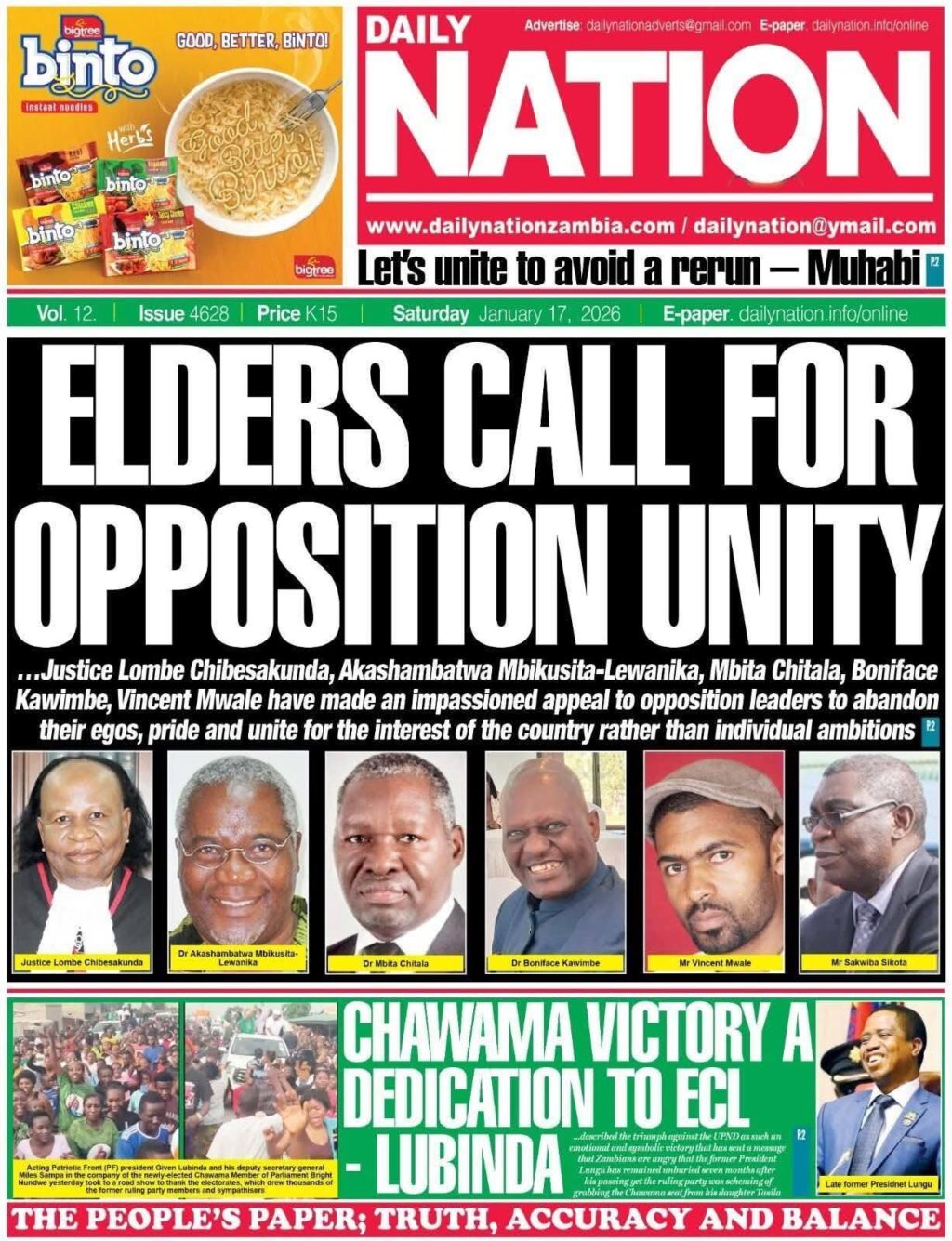
Daily Nation Newspaper Saturday 17th January 2026
…Cross-party dialogue focuses on integrity, servant leadership, and national restoration ahead of 2026 elections
By Francis Maingaila ♥️
Lusaka, Zambia24 — (Friday, 16th January 2026) – Political leaders, civil society actors, and citizens convened in Lusaka yesterday in a high-level forum aimed at forging national consensus and unity, addressing the country’s persistent political fragmentation, governance challenges, economic stagnation, and the need for constitutional reform ahead of the 2026 general elections.
Retired Acting Chief Justice Lombe Chibesakunda opened the discussions by warning that Zambia’s fractured political and governance structures threaten the country’s development trajectory.
Speaking under the theme “Zambia We Want,” Justice Chibesakunda stressed the need for a shared national vision while safeguarding the independence of institutions such as the judiciary, which she described as a cornerstone for sustainable governance.
“Even if we agree that there may be different parts, this meeting is meant to determine how we can collectively move forward,” Kunda said, urging stakeholders to focus on practical strategies for national development and institutional integrity.
Akashambatwa Mbikusita Lewanika, veteran politician and former Cabinet Minister, set the tone for the forum, emphasizing that the country’s future cannot be shaped by individuals acting alone.
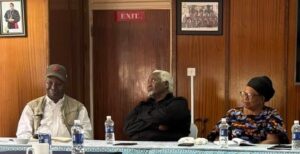
Lewanika (Aka) called for the establishment of a common political agenda to dismantle personalised leadership, end single-party dominance, and promote collective, team-based governance.
“This forum is not for one person to dictate direction, but to create space for free expression, open listening, and mutual respect among participants,” Lewanika (Aka) said, adding that solidarity and dialogue are critical for meaningful progress.
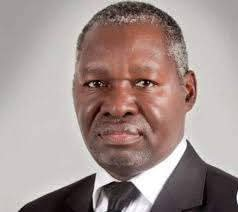
Dr. Mbita Chitundya Chitala of the Socialist Party highlighted the urgent need for constitutional reform, economic recovery, and a decisive fight against corruption.
Dr. Chitala identified six key issues that must form the foundation for national unity: constitutional reform, national cohesion, economic development, corruption, the rule of law, and foreign policy.
Dr. Chitala warned that disunity leaves citizens vulnerable to “predatory forces” undermining Zambia’s future and proposed the convening of a national elective conference to formalize a shared agenda.
Beauty Katebe, Chairperson of the Oasis Forum, urged political actors to defend constitutionalism while ensuring that reforms are inclusive, consensus-driven, and conducted in good faith.
Ms. Katebe reflected on Zambia’s history, including the principled opposition to former President Frederick Chiluba’s third-term bid in 2001, arguing that legitimacy in reform processes is as important as the content of reforms themselves.
“We defended term limits in 2001. We demanded people-driven reforms from 2011 to 2016. We opposed on principle, not politics,” Ms. Katebe said, emphasizing that constitutional change must strengthen democracy, not merely manage it.
Former Minister of Information Fackson Shamenda called for broad-based opposition unity and proposed a transitional government to level the political playing field ahead of the 2026 elections.
Drawing lessons from Zambia’s transition from a one-party state in 1991, Mr. Shamenda emphasized that no single party can govern alone.
Shamenda warned that unity must be demonstrated on the ground, not just in statements or press briefings, and stressed that coalition-building and collective leadership are essential for preserving democratic gains.
Professor Boniface Kawimbe underlined the importance of a national consensus and broad-based unity, calling on political players, civil society, and citizens to define “the Zambia we want” in concrete terms.
Professor Kawimbe warned that fragmented political efforts would fail to reverse the nation’s declining quality of life, stressing that success depends on a shared message, credible collective leadership, and the strategic use of political vehicles capable of carrying diverse actors.
Sakwiba Sikota, leader of the reconstituted We Are One Zambia Alliance, urged opposition parties to set aside personal ambition and work collaboratively.
Drawing inspiration from the 1990 Garden House Meeting that restored multiparty democracy, Sikota highlighted teamwork as a central pillar for political success.
State Counsel (SC) Sikota proposed a transparent process to select a presidential flag bearer, warning that leaving leadership unresolved would weaken any future coalition.
“I left my ego at the registration table. What must drive us is what is good for the people of Zambia,” Sikota said.
Given Lubinda, Patriotic Front Acting President, cautioned against superficial alliances formed for electoral convenience.
Mr. Lubinda argued that opposition unity would remain hollow unless parties confront the root causes of fragmentation, such as mistrust, personal ambition, and lack of ideological clarity.
Lubinda stressed that unity must be demonstrated under pressure, on the political ground, and with clear agreements on leadership and election strategy.
Auxiliar Bupe Ponga, National Chairperson of Zambia We Want, raised alarm over the country’s leadership integrity, national direction, and the erosion of traditional authority.
Ms. Ponga argued that aspiring leaders must demonstrate integrity, empathy, and accountability, warning that ethical deficiencies among politicians compromise national cohesion and undermine development.
“Integrity is of short supply in our leaders. You cannot tell lies today and tomorrow you don’t even apologise. I have no respect for such leaders, and I don’t want them to be my leaders,” Ponga said.
Silvia Nawa of the Movement for Multiparty Democracy (MMD) called for urgent action to address disunity and underdevelopment, citing the lagging progress in Barotseland as a symptom of historical and political neglect.
Ms. Nawa stressed that national development requires confronting historical inequities and fostering citizen participation.
“Our generation needs to make a change,” Nawa said.
“The responsibility cannot be left to the next generation.”
Bishop Trevor Mwamba, President of the United National Independence Party (UNIP), emphasized that Zambia risks failure if leadership is divorced from character, morality, and servant leadership.
Bishop Mwamba urged political, civic, and religious leaders to place citizens above personal and factional interests.
“The people are what matter,” Bishop Mwamba said, stressing that leadership must be guided by integrity, humility, and service.
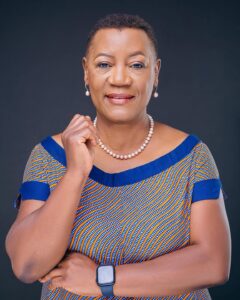
Chishala Kateka, President of New Heritage Party, described Zambia as “a train that has gone off the rails,” warning that the scale of the country’s challenges requires a non-partisan, cooperative effort.
Ms. Kateka argued that limited resources make collective leadership essential for national survival and that partisan considerations must not override competence and the national interest.
Former corporate executive Dorika Banda called for immediate political and economic reform, highlighting endemic poverty despite Zambia’s resource wealth.
Ms. Banda urged citizens to actively participate in shaping the nation’s future and emphasized the need for collective action to restore dignity and social justice.
The forum concluded with the establishment of a Unified Inter-party Political Leadership Team, agreements to plan a collaborative election strategy, and commitments to implement a national restoration agenda.
Speakers stressed that integrity, ethical leadership, and citizen-driven reforms are essential for forging a shared vision and a sustainable path forward for Zambia.
Followers 1 TopFan Follow Edith Nina Daka Following