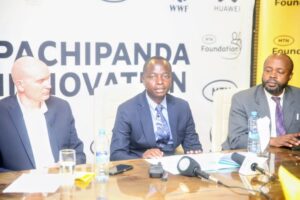
REA, filling the lighting gap to boost rural livelihoods, healthcare, and small businesses
“Granny Jennifer, a differently abled elderly and a widow of Lubanda Village in Chief Chikaza Munyama’s area in Itezhi-Tezhi, never imagined that her grass-thatched home would one day have electricity, as the standard K4,846 connection fee was far beyond her reach. –
Wednesday, July 2nd, 2025, Zambia Business Daily”
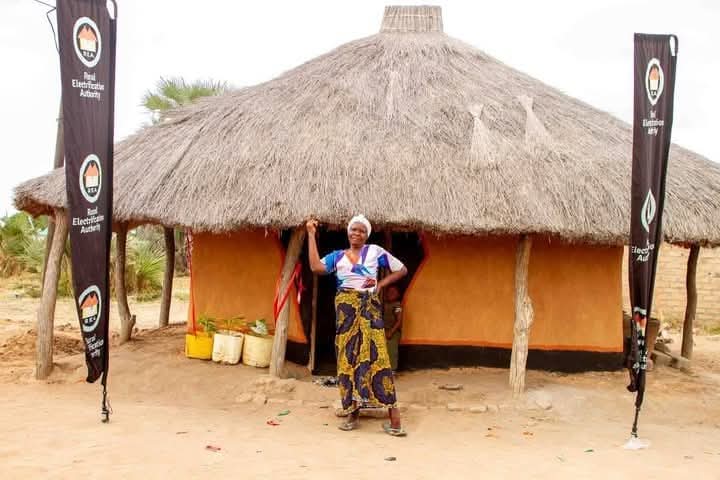
Granny Jennifer, a differently abled elderly and a widow of Lubanda Village in Chief Chikaza Munyama’s area in Itezhi-Tezhi, never imagined that her grass-thatched home would one day have electricity, as the standard K4,846 connection fee was far beyond her reach. - Wednesday, July 2nd, 2025, Zambia Business Daily.
By Kelly Njombo
The arrival of affordable and reliable electricity marked the beginning of a new chapter not just for her, but her entire community in Itezhi-Tezhi District.
For years, small businesses and households in Granny Jennipher’s village and surrounding areas faced a daily struggle against lack of access to power, unreliable electricity, as well as soaring operating and connection costs.
Granny Jennifer, a differently abled elderly and widow of Lubanda Village in Chief Chikaza Munyama’s area, never imagined that her grass-thatched home would one day have electricity, as the standard K4,846 connection fee was far beyond her reach.
However, thanks to the K300 subsidy connection project, she is now enjoying the comfort and dignity of a powered home, a powerful reminder that equitable access to energy changes lives.
“People like me don’t usually benefit from things like this. I still can’t believe I will sleep with lights tonight,” she said.
In an effort to increase rural electrification, the K300 electricity connection subsidy under the National Energy Advancement and Transformation (NEAT) project was last year launched and is being implemented by the Rural Electrification Authority (REA) and ZESCO Limited.
The subsidy which is made possible through a US$10 million facility supported by the World Bank, aims to deliver 23,695 new standard electricity connections to households and small and medium enterprises (SMEs) across rural Zambia.
The unique project continues to deliver tangible results in expanding access to electricity for under-served communities, with out of the 23,695 applications received during the subsidy window, a total of 17,114 households and small businesses have already been connected to the grid as of November 10, 2025.
The strong uptake reaffirms the critical role of the NEAT programme in making electricity affordable for rural and peri-urban communities.
In line with its mandate to expand electricity access in rural areas, REA from January 2025 to October 2025 made significant progress by broadening inclusive development and energy equity in various rural parts of the country, ensuring that even remote communities thrive through access to modern energy services.
REA Acting Manager Corporate Affairs Bright Chifulo disclosed that during the period under review, the Authority completed 45 projects and facilitated over 5,000 new household and institutional connections, significantly improving access to electricity in under-served communities.
Mr. Chifulo broke down the figures as follows, in the first quarter 13 projects were completed, delivering 856 new connections, second quarter saw 17 projects implemented, adding 1,631 connections, and in the third quarter 15 projects were finalised, resulting in 2,532 new connections.
Chifulo disclosed that during the period under review; REA successfully completed three major projects that have significantly expanded electricity access in rural Zambia.
These include the landmark K51 million Mitete Grid Development Project in Western Province, which now supplies power to an estimated 42,000 residents through 55 kilometres of concrete-pole grid infrastructure and a 550-metre Zambezi River crossing connecting the district to the national grid for the first time.
In Luapula Province, REA has also completed the K32.7 million Chishi Island Submarine Cable Project, delivering electricity to over 14,300 residents through a 32-kilometre under-lake and overhead cable system.
Similarly, the K11.53 million Lunga Electrification Project is fully complete, with 300 initial household connections already in place, benefiting an estimated 1,800 people as well as key facilities such as Lunga Primary Schools A and B, Itala Primary School and the New Apostolic Church.
Evidently, the completion of these projects has already begun to transform rural communities by improving livelihoods, strengthening public services and stimulating economic activity.
With reliable electricity available, health facilities in project areas now provide safer maternal care, operate life-saving equipment and maintain vaccine cold chains directly reducing maternal and infant deaths.
It is also worth noting that schools that previously relied on daylight can now support evening study, Information and Communication Technology learning and improved teacher retention, contributing to better education outcomes.
“Access to power has also boosted small businesses, enabling welders, barbershops, fish processing centres, Internet cafés, shops and agro-processing enterprises to operate more efficiently and for longer hours. Households that once depended on costly and unsafe energy alternatives now enjoy better lighting, enhanced security and lower living costs.
“Collectively, these benefits are helping reduce poverty by opening new income opportunities, enabling value addition and improving service delivery, thereby accelerating social and economic transformation in rural Zambia,” Mr Chifulo said in response to a query.
However, despite the Authority making commendable strides in expanding access to electricity across Zambia’s rural communities, several challenges continue to affect the pace and effectiveness of implementation.
Chifulo cited lack of affordability and low uptake of electricity connectivity due to various challenges.
“Despite the extension of electricity infrastructure to many areas, household connection rates remain low due to affordability constraints. Many rural families cannot afford the full connection fee, limiting the impact of these investments. To address this, REA is actively collaborating with Government and cooperating partners to reinstate and scale up connection subsidies. And this is where projects such as the NEAT comes in, which has already connected 17,114 households, demonstrating the trans-formative potential of targeted financial support,” Chifulo explained.
Other challenges include contractor performance and project delays; another significant challenge has been delays or stoppages caused by under-performing contractors who fail to meet project timelines or quality standards.
In response to the challenges, the Authority has taken decisive action by terminating contracts where necessary and engaging more capable contractors to ensure communities receive the reliable service they deserve.
However, to accelerate progress and improve delivery, REA is implementing a new subsidy programme, strengthening contractor performance monitoring, and enhancing procurement due diligence.
These measures aim to ensure timely, high-quality execution of electrification projects and bring sustainable energy access to more rural households across Zambia.
It is evident that access to reliable, affordable and sustainable electricity is critical for powering economies, delivering essential and health services, as well as spurring job creation for the country’s growing population.
Reliable power allows community enterprises to grow, the youth to innovate and households to improve their incomes and quality of life by boosting rural businesses such as salons and barbershops, welding shops and grain mills among others.
The deliberate investment in rural electrification by Government through REA is aimed at improving lives, stimulating economic growth at grassroots as well as ensuring improved health care services, as mothers deliver in safe and modern ways.
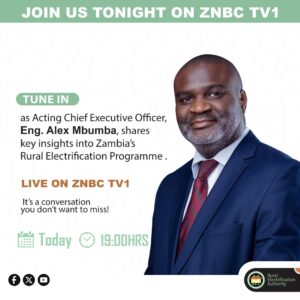
In his new year message to the public, REA Acting Chief Executive Officer Engineer Alex Mbumba reaffirmed the Authority’s commitment to expanding access to electricity through grid extension and off-grid solutions in line with Government policy.
Government through the Energy Regulation Board (ERB) develops grid solutions especially for decentralised energy, through frameworks for mini-grids and smart grids, focusing on licensing, tariffs and technical standards to attract investment and ensure quality service for rural electrification.
Engineer Mbumba explained that in 2025 significant strides were achieved, and that the authority has set new targets for the year 2026, with more focus on electricity access and connectivity.
REA and ZESCO Limited have reaffirmed the two institution’s resolve to strengthen collaboration in order to accelerate the delivery of electricity connections and support Government’s target of achieving 100,000 new connections in 2026.
“We are grateful for the support you gave us in 2025. In 2026, we look forward to quite a number of things, building on what we achieved last year. In 2025, we implemented 62 projects out of the targeted 84 projects.
“So, this year we want to look at a very ambitious project which is focusing on more, mainly on access and connection. So, our target of 109,600 is what we intend to work with, and ensure that we achieve the target. The plan is to make such achievements in a similar manner this year,” Eng. Mbumba said.
To deliver affordable power and expand electricity access in Zambia, REA is implementing a number of projects in various parts of the country’s rural areas.
REA, which also recently unveiled its 2026 rural electrification plan, outlined a comprehensive programme to accelerate access to electricity across all ten provinces.

Led by REA board chairperson Charles Matomola Mboma and Eng Mumba, the Rural Electrification Authority presented its 2026 rural electrification plan to the Minister of Energy Makozo Chikote, a United Party for National Development (UPND) Luampa Constituency Member of Parliament (MP) Western Province.
The plan proposes the implementation of 149 projects, comprising 125 Grid Development Projects and 24 Off-Grid Projects, reflecting Government’s strategy of expanding the national grid while deploying sustainable energy solutions in remote and underserved areas.
The projects are expected to deliver 52,730 new electricity connections, benefiting 655 schools, 89 rural health centres, 80 public facilities, 53 traditional palaces, and 51,853 households nationwide.
REA emphasised that the plan is aligned with Government’s aspirations for inclusive development, balanced regional growth, and universal access to electricity, with a strong focus on improving service delivery, stimulating rural economies, and supporting climate-resilient and sustainable national development.
Mr. Chikote implored the REA team to work hard as rural areas still lagged in electrification of domestic, private and public buildings.