Challenges of being a man – Book Review by Mwizenge S. Tembo, Ph. D, Emeritus Professor of Sociology
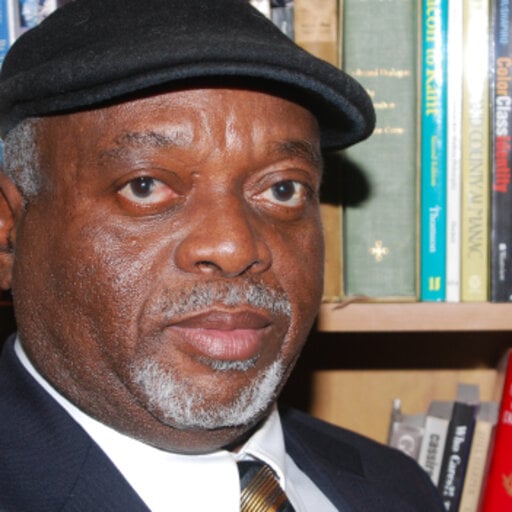
Mwizenge-Tembo
Challenges of being a man
Book Review by Mwizenge S. Tembo, Ph. D, Emeritus Professor of Sociology
Introduction
During the last hundred thousand years of history, we human beings evolved from living in caves, to living in small bands of 30 people of migrating hunters and gatherers, to villages, to towns and large cities of twenty million people living in skyscrapers. We have had spectacular runs of leaps and advances in technology from use of fire, stone axes for hunting and fighting each other, to guns including AR15s, nuclear warfare, developing language, reading and writing, and massive industrialization. Today we have 8 billion people using the internet and soon AI.
Along the way, we have survived natural and human made disasters and threats. These disasters and threats include wars to end all wars, greed, and climate change which we face today. In plain pragmatic language, there has been one very crucial constant: small and large human societies have always collectively mobilized natural and social resources that ensured that young men and women between the age of 18 and 30 years, physically met, created physical bonds, had sex, they reproduced, and advanced our physical survival. How is American society today and the world doing along this front? Are we going to survive the internet and AI?
Book Review
In his book “Notes on Being a Man”, Scott Galloway describes growing up and living in the United States of the 1970s up to the present day 2026. In the memoir, he describes himself in a very mundane and easy to understand way as a nondescript white male who showed perhaps barely average intelligence in school who probably no one remembers from his school days. After struggling with and surviving childhood family adversities, traumas, and pathologies, facing emotional challenges of being a young male, he somehow got some unexpected breaks in life. He eventually became rich and loved being a father to his two sons.
This probably will be a shock to the current massive social media vocal and highly opinionated audience. This audience is vested in highly inflammatory and divisive gender debates that always go viral. Scott Galloway in the entire book of 287 pages and in so many different ways, boldly argues that the major role of men is to protect, provide, and procreate. Describing what is happening in America, Galloway says “….there are fewer matting opportunities, less family and household formation, and not as many babies. Here is a terrifying statistic: 45 percent of men ages eighteen to twenty-five have never approached a woman in person. And without the guardrails of a relationship, young men behave as if they have….no guardrails.” (p. 4)
Galloway uses credible statistics to assert that there is a crisis among American young men today. He suggests the society should do better to raise the boys and young men to be protectors, providers, and procreators. What I did not find surprising is that according to Galloway, American society is failing and doing a terrible job raising boys and young men to play this historically crucial role for every society.
Challenges of Manhood
Notes on Being a Man has ten chapters that include an Introduction, Adolescence, Boyhood, Higher Education, Work, Health, Sex, Love, Marriage, Fatherhood, and Life is So Rich. The introduction of every meaningful book describes the objectives of the book. After stating his case and the concern for the future of American boys and young men, Galloway does not pretend to have a ten-step solution prescribing how every male should become a responsible man. “I hope my story resonates and intersects with the lived experiences of other groups, as many of the issues outlined here are especially acute for nonwhite males. ….as a white, heterosexual male, I don’t purport to have the skills or life experience to tell others what it means to be a man….it should matter to everyone if men aren’t thriving. Women and children can’t flourish if men aren’t doing well. Neither will our country.” (p. 10)
This quote is perhaps about everything that I found attractive and resonated with me, the reviewer, about the book. It describes so many meaningful experiences, nuggets, and perspectives, challenges, and problems about masculinity and manhood today. I grew up as a young man in the rural villages of the Eastern Province of Zambia and the capital city of Lusaka in Southern Africa. I have been a strong responsible adult man supporting my family and raising 3 boys for 46 years. I was blessed and fortunate enough to grow up with a strong responsible father and other men as a masculine role models.
Recommendations

I highly recommend this book to the following: scholars and teachers of gender studies that address the issue of masculinity, men who raise, mentor boys and young men, religious leaders and pastors, and those who wish to both understand and contribute to serious possible solutions to the crisis of dysfunctional boys and young men. I would not recommend the book to those who have short attention spans which social media has created. If you are looking for short provocative polarizing talking points for a social media post or intent on name calling to buttress shallow academic and politically highly charged pontifications, this may not be the proper use of the book.
Radical feminists may as well stay away from the book as it may cause them to have cardiac arrest. Radical feminists are likely to misinterpret the notion that men should protect, provide, and procreate as advocating oppression of women back in terms of the gains in the long struggle for gender or sexual equality. I know radical feminist views because I have been a feminist for more than forty years.
Scott Galloway, Notes on Being a Man, New York: Amsterdam/Antwerp, London, Toronto, Sydney/Melbourne, New Delhi: Simon & Schuster Publishers, 2025, 287 pages, Hardcover, $29.00, Canada $41.00 (ZK653.90)