“IMINGALATO and the state of politics: A call for accountability in Zambia”
“It is time for citizens to demand accountability, transparency and ethical leadership”
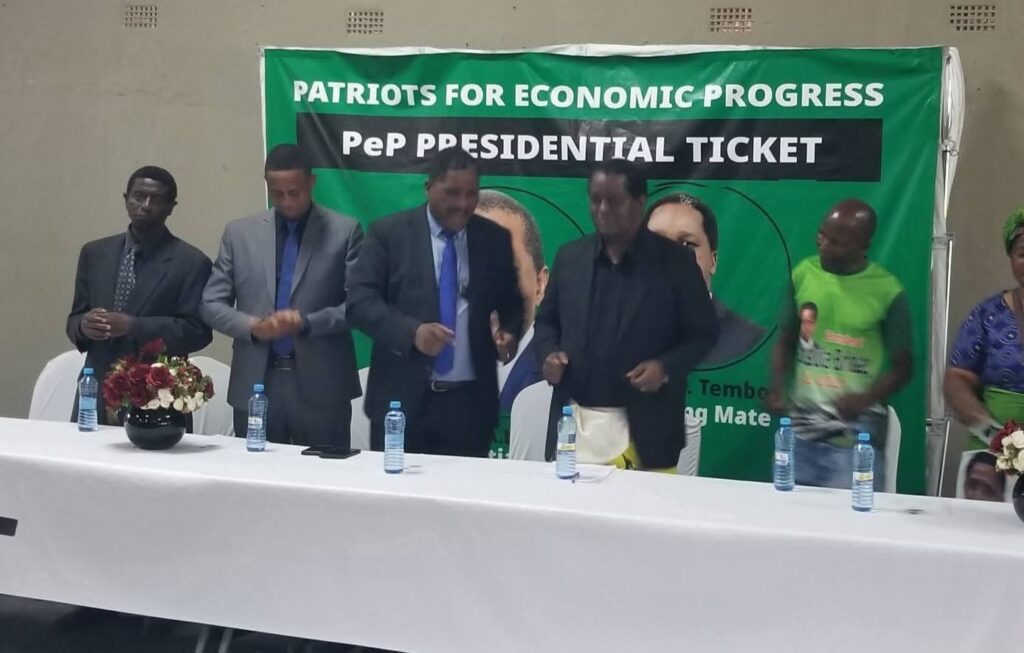
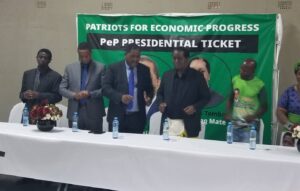
Running Mate Sean Tembo (left) with Patriots for Economic Progress (PEP) presidential candidate Engineer Chanda Katotowe (right)
IMINGALATO
Guest Article
I have been reflecting on the word “IMINGALATO” for quite some time.
In my understanding of Bemba, the word simply means games or playing games.
However, when viewed through a political lens, one begins to see how “IMINGALATO” may symbolise actions that undermine rules and promote underhand methods in the governance of public affairs.
How does one explain the transformation of a political party into a church?

Opposition Patriots for Economic Prosperity (PeP) leader Sean Tembo shared that his party was found to have been registered as a church at the Registrar of Society.
On this technicality, the “church” cannot participate in the August 13 polls.
How can official records or details be altered without the knowledge or consent of the rightful owners of an organisation?
Perhaps the most worrying aspect is that many of us have simply watched these developments unfold, while some have even laughed them off.
As Zambians, we sometimes have a tendency to joke even about serious issues that directly affect our families and the future of our country.
As someone living in the diaspora, I find this deeply shocking and troubling.
It is wrong for anyone to alter the details of an institution or organisation without the knowledge or consent of those who own or manage it.
How do we explain the confusion and uncertainty the nation is currently facing?
Many people are being subjected to what can only be described as “IMINGALATO,” often at the expense of their basic rights and freedoms.
When did participation in politics become a nightmare?
Every citizen has fundamental rights, including:
• The right to vote in free and fair elections
• The right to stand for public office
• The right to join political parties or movements
• The right to freely express political opinions
• The right to participate in public affairs and decision-making
Article 21 of the Universal Declaration of Human Rights states that everyone has the right to take part in the government of their country, either directly or through freely chosen representatives.
Unfortunately, this does not appear to reflect what many people believe they are witnessing today.
Instead, concerns continue to be raised about practices perceived as lacking transparency and fairness.
Can we truly define IMINGALATO?
How far does this “IMINGALATO” extend?
What are its boundaries?
Who authorises it?
What criteria determines its application, and ultimately, who benefits from it?
Before dismissing or laughing off certain concepts, we must first understand their meaning and implications.
Tampering with documents or institutional records within established organisations should always be treated as a matter of serious concern.
Transparency and integrity are essential pillars of any democratic society.
It is time for citizens to demand accountability, transparency and ethical leadership.
Author: Charity Katotobwe
PhD Candidate, South Africa
24 May 2026