Professor Fastone Mathew Goma sounds alarm on rising hypertension burden among Zambian women
“Zambia, like many African countries, is already grappling with a heavy national hypertension burden, with only about 40 percent of affected individuals aware of their condition, even fewer on treatment, and a small proportion achieving adequate blood pressure control,” laments Professor Fastone Mathew Goma

Professor Fastone Mathew Goma
Monday, February 2, 2026 – Lusaka, Zambia
Professor Fastone Mathew Goma, a Professor of Physiology and Cardiovascular Health, has called for urgent, sustained action to address hypertension among women in Zambia, warning that pregnancy-induced hypertension and preeclampsia are silently fueling long-term cardiovascular disease and preventable maternal deaths, reports Francis Lungu.
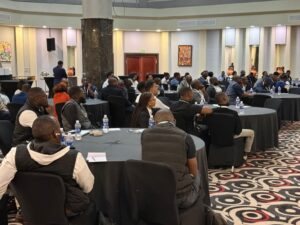
Speaking in a presentation titled “Hypertension in Women in Zambia,” at the launch of CRADLE-B theory of change workshop at Lusaka’s Intercontinental Hotel, on Haile Selassie Avenue, Professor Goma highlighted that pregnancy-induced hypertension affects an estimated 21 percent of pregnant women, while preeclampsia accounts for about 12 percent, placing both conditions among the leading causes of preventable maternal illness, death and stillbirth.
Prof. Goma noted that for every woman who dies from preeclampsia, between 50 and 100 others suffer severe complications, underscoring the scale of the hidden crisis.
While acknowledging government progress in expanding antenatal care, increasing skilled birth attendance and improving emergency obstetric services, Prof. Goma stressed that major gaps remain in continuity of care and long-term monitoring for women with hypertension after childbirth.

According to Prof. Goma, women who experience hypertensive disorders in pregnancy face a dual burden: high-risk pregnancies and an increased likelihood of developing cardiometabolic diseases later in life.
Prof. Goma explained that Zambia, like many African countries, is already grappling with a heavy national hypertension burden, with only about 40 percent of affected individuals aware of their condition, even fewer on treatment, and a small proportion achieving adequate blood pressure control.
This situation, Prof. Goma warned, is driving high rates of heart failure, stroke and kidney disease.
Prof. Goma emphasized that pregnancy should be viewed as a “window of opportunity” to detect underlying cardiovascular risk early.
Changes in blood vessel function, blood pressure patterns and kidney regulation during pregnancy can reveal women who are likely to develop chronic hypertension and heart disease if not followed up and managed appropriately.
Prof. Goma welcomed the Credible Usage Project, a five-year initiative funded by the UK National Institute for Health Research and led by King’s College London in partnership with the University of Zambia (UNZA).
The project seeks to determine whether community-based interventions can improve early detection and management of hypertensive disorders in pregnancy, generate local evidence from more than 2,400 women, and build capacity among health workers and community champions.
Prof. Goma aligned the project with Zambia’s national health policy, which promotes a continuum of care from preconception through pregnancy, childbirth and the postnatal period.
Prof. Goma stressed that evidence must translate into action, noting that the Ministry of Health has committed to supporting the project, granting access to health facilities and using the findings to shape national policy and clinical practice.
In concluding, Prof. Goma called for hypertension in women to be treated as a special research and public health priority, with a focus on early diagnosis, effective treatment and lifelong follow-up.

“We want Zambian women not merely to survive childbirth, but to thrive for decades afterward,” Prof. Goma said, adding that strengthening women’s cardiovascular health will ultimately strengthen families, communities and the nation as a whole.
The CRADLE (Community Blood Pressure Monitoring in Rural Africa and Asia: Detection of Underlying Pre-eclampsia and Shock) project is strengthening maternal health systems in Sierra Leone, South Africa and Zambia by improving early detection and response to pregnancy complications linked to non-communicable diseases, particularly hypertensive disorders such as pre-eclampsia.
At the centre of the initiative is the CRADLE Vital Signs Alert (VSA) device, a low-cost, portable blood pressure and pulse monitor designed for low-resource settings.
The device uses a simple traffic-light alert system to help frontline health workers quickly identify women at risk of severe hypertension or shock and take timely action.
In Zambia, CRADLE-related research is generating evidence on how improved vital signs monitoring can guide clinical decision-making, including the management of pre-eclampsia and severe hypertension.
In Sierra Leone, the project is being implemented at scale through the CRADLE-5 programme, with the aim of embedding routine vital signs monitoring into maternal care nationwide. The initiative focuses on training health workers, improving referral pathways and reducing maternal deaths, major complications and fetal loss associated with hypertensive disorders of pregnancy.
South Africa’s involvement has centred on evaluating the performance, acceptability and feasibility of the CRADLE VSA device in different levels of care, including tertiary hospitals.
Findings from these studies are informing best practices on how the technology can be integrated into routine antenatal and maternity services.
The results are supporting efforts to integrate CRADLE-informed approaches into national policy and maternal health guidelines.
Across the three countries, the common objective is to strengthen frontline maternal care, empower health workers with simple but effective tools, and reduce preventable deaths and complications linked to NCD-related conditions in pregnancy.