
Zambia reviews Public Sectorial Perform …..rejuvenated policies will actualise 9NDP
Zambia reviews Public Sectorial Perform …..rejuvenated policies will actualise 9NDP
Lusaka (Zambia Informer) ——Zambia, one of Africa’s low income states, has reviewed performance of mining, agriculture among other sectors, in recent years, with researchers urging the administration to hype their performances as it transitions into the Ninth National Development Plan.
Research findings task the administration to re-dedicate itself and review and streamline various policies governing various fiscal and monetary spheres, citing the exchange rate volatility.
This is, a key determinant of the currency stability against others, the role of agriculture, energy, manufacturing and the contributions of the mining sectors to allow the country earn real returns from the country’s life-blood.
The report dubbed: “The Role of Real Sector Investments in Stabilising the Exchange Rate in Zambia”, an analysis of the mining, manufacturing, agriculture and Energy sectors, calls for a review of the fundamentals that determine the exchange rate, rooted in structural weaknesses and uneven sector performance.
Achieving sustainable currency stability requires targeted interventions. Manufacturing should prioritise value addition, diversification, and technological adoption, while mining must focus on refining and processing of minerals to increase export value.

…..rejuvenated policies will actualise 9NDP
It calls for reforms in the energy sector and whose reforms should be accelerated to jump-start diversification towards domestic renewable sources, among others, solar and biofuels.
Agricultural modernisation through mechanisation, irrigation and improved market access remain critical for economic growth.
There is dire need to promote agro-processing to derive greater value from the sector. To complement this, coordinated macroeconomic policies on exchange rate management that align with sectoral investments are imperative.
Arguably, strengthening and diversifying real sectors is central to Zambia’s exchange rate resilience. Deepening industrial capacity, promoting energy independence, and enhancing trade competitiveness will reduce vulnerability to external shocks and support a stable exchange rate.
These actions, the report envisages, should be tailored in line with the national development objective, the report notes, among other forward looking initiates spurred by incentives to lure foreign direct investment into the economy needing urgent surgery to grow into middle income status in the next four years.
“Overall, strengthening and diversifying real sectors is central to Zambia’s exchange rate resilience. Deepening industrial capacity, promoting energy independence, and enhancing trade competitiveness will reduce vulnerability to external shocks and support a stable exchange rate, in line with the national development objective.” The report launched in Lusaka, Thursday says.
The report recommends cross-cutting actions that should be implemented and actualized to the latter to foster growth of the country, maximizing on the under-utilized sectoral capacities as the country transitions in the ninth National Development Plan, deemed the country’s economic growing apex.
There is need to promote Domestic Mineral Processing and Value Addition to enhance currency stability and maximise foreign-exchange benefits.
There is need to accelerate the development of local mineral value chains by promoting local smelting, refining, and beneficiation of critical minerals, particularly copper and other strategic metals.

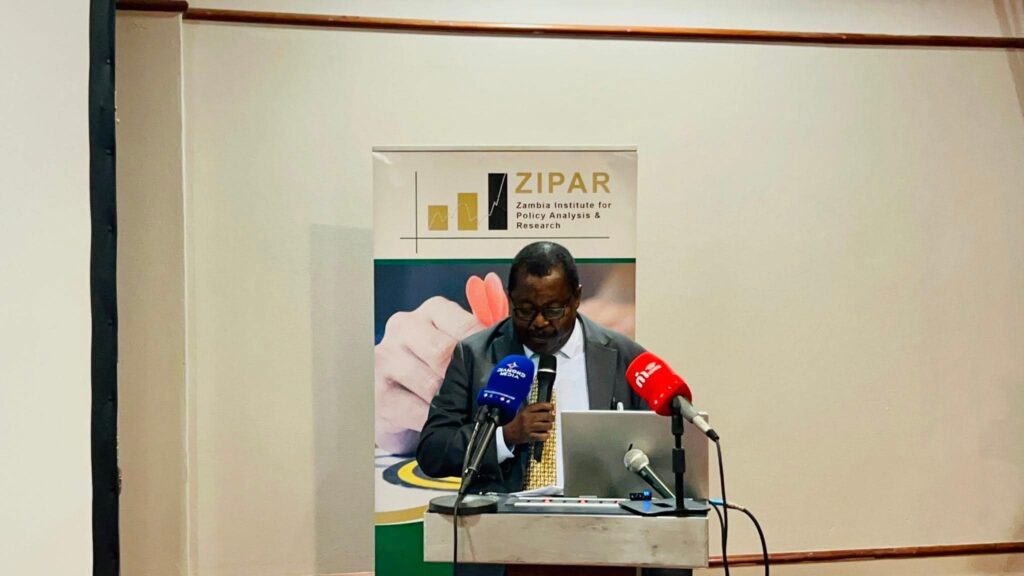
…..rejuvenated policies will actualise 9NDP as Permanent Secretary for Investment and Industrialisation at the Ministry of Commerce Trade and Industry (MCTI), Mr. Crusivia Hichikumba launches report.
There be linkages between mining companies and Zambian manufacturers to encourage local sourcing of inputs, stimulate domestic industrial growth, and reduce foreign currency repatriation.
Expediting the implementation of the Critical Minerals Strategy’s value-addition goals will also improve investor confidence and increase foreign-exchange inflows.
Optimise Foreign-Exchange Collection and Manage Volatility Efficient collection and timely conversion of mineral royalties should be strengthened to ensure that foreign-exchange inflows are immediately available to support the national currency.
Establishing and safeguarding an Exchange Rate Stabilisation Fund, managed by the Bank of Zambia, to buffer the economy against external shocks such as commodity price swings, smoothing short-term volatility and supporting macroeconomic stability.
Drive Manufacturing Growth and Export-Oriented Value Addition The government should intensify support for industrial growth through fully operational MultiFacility Economic Zones (MFEZs) and export-oriented industrial parks, especially along mining hubs and transport corridors.
There be reliable energy supply, infrastructure, and export incentives for value-added products-all critical to induce growth.
Special attention should be paid to agro-processing, metal fabrication, electrical cables, industrial chemicals, and other mining-input industries.
Encouraging domestic production of these inputs reduces the need for imports, eases foreign-exchange pressure, and strengthens the Kwacha while creating jobs and stimulating economic growth.
Accelerate Agricultural Productivity, Diversification, and Value Addition Zambia’s agricultural sector should move beyond policy targets to actual implementation of infrastructure and technological improvement through expanded irrigation, modenisation of value chains, and promoting climate-smart agriculture practices.
There be sustained support for high-value crops with export potential, alongside staple food production to increase foreign-exchange earnings.
Linking agricultural production to processing and export markets is key to translating productivity gains into foreign exchange stability.
There is need to secure Energy Supply and Improve Efficiency Ensuring a reliable and diversified energy supply is critical for production and foreign-exchange generation.
There is need to accelerate renewable energy investments through Public-Private Partnerships and power purchase agreements.
Reduce reliance on hydropower, and encourage domestic biofuel production from agricultural feedstocks to replace imported petroleum. Petroleum products be fully incorporated into the TAZAMA Open Access Framework.
The action will encourage greater private-sector participation. Plans to import fuel from Angola’s Lobito refinery be expedited to diversify supply and reduce foreign-exchange vulnerability.
Enforcing energy-efficiency standards in high-consumption sectors, such as mining and manufacturing, is critical to reduce overall energy demand and relieve pressure on foreign-exchange reserves.
Zambia should enhance Trade Integration and Export
Diversification.
This will be done while pursuing a proactive trade policy to strengthen export competitiveness and diversifies foreign-exchange sources.
Expanding regional and extra-regional market access, including full exploitation of the Africa Continental Free Trade Area (AfCFTA, and reduce reliance on a few commodity buyers.
Modernise customs procedures, and introduce single-window border clearance systems, and establishing one-stop border posts will improve trade facilitation, reduce delays, and increase exports, a yardstick to luring both local and foreign partners in growing the economy.
“Complementing these measures with investment promotion, targeted export incentives, and export-financing mechanisms for high-value products will further stabilise foreign-exchange ” researchers suggest.
Launching the report, Permanent Secretary for Investment and Industrialisation at the Ministry of Commerce Trade and Industry (MCTI), Mr. Crusivia Hichikumba noted the recommendations as vital to economic emancipation.
The Government is and has undertaken various cross-cutting policy initiatives to induce a new lease of life in the growth sectors, as it drives into a new phase.
“These interventions reflect the government’s commitment to building a diversified and resilient economy—one that generates exports, creates wealth and employment, opportunities, strengthens domestic production, and supports macroeconomic stability, including the exchange-rate.”
The Government notes the credibility of the report findings and will contribute to a deeper understanding of the linkages between real-sector investment and exchange-rate dynamics, and help inform ongoing policy deliberations for sustained growth.
© Copyright Protected