
NewsCreatorExchange: Adriana Lacy on bridging journalism and influence

Adriana Lacy

News
#NewsCreatorExchange: Adriana Lacy on bridging journalism and influence
2026-01-09. Award-winning US media entrepreneur shares how newsrooms can thrive in an increasingly creator-driven online world: By combining investigative reporting with personality-led distribution – and building teams that reach audiences where they live.
by Lucinda Jordaan lucinda.jordaan@wan-ifra.org | January 9, 2026
Adriana Lacy is an award-winning journalist, educator, media consultant and serial entrepreneur: she’s CEO of her own consultancy, which houses a content agency, social media analytics company, a mentorship program, an Influencer Journalism consulting agency and, as of last week, a digital design studio.
Her background in both journalism and academia are equally impressive: she’s done stints as a senior associate for audience and growth at Axios; as audience engagement editor at the Los Angeles Times, and as senior news assistant at the New York Times.
Lacy is now also an adjunct lecturer in the journalism department at Brandeis University in Massachusetts.
She will be on stage at our 77th World News Media Congress in Marseille in June, and will join the advisory board of WAN-IFRA’s #NewsCreatorExchange.
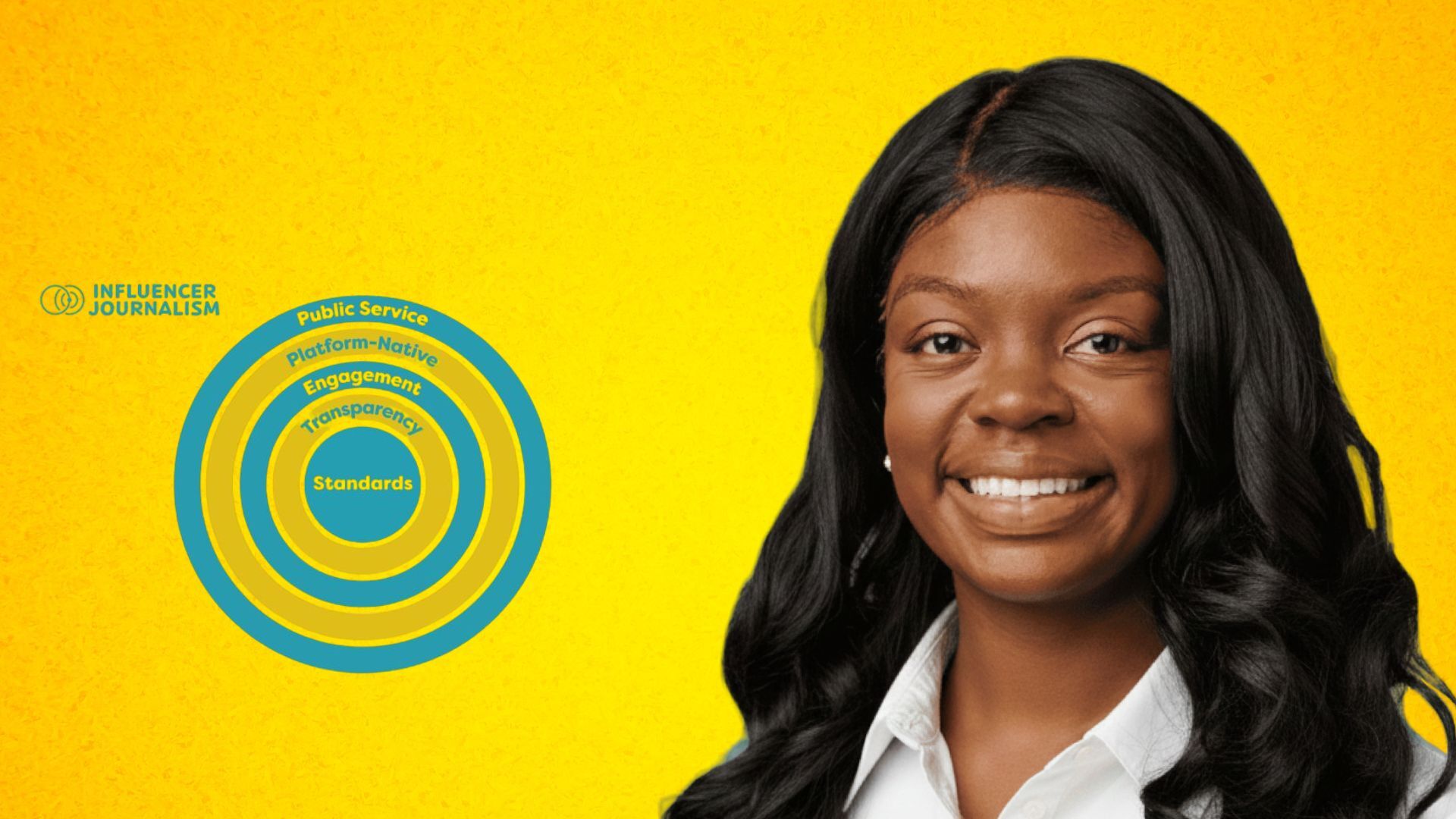
She’s just launched her Influencer Journalism newsletter, introducing her STEPP Framework: A Comprehensive Guide to Ethical Creator-Newsroom Partnerships.
Somehow, she also found time to record her responses to 10 Questions for the World Editors Forum – and shared insights on …
… Creators as Newsroom Partners
When newsrooms ask me about working with creators, the first thing I tell them is that creators are not a replacement for journalists; they are a distribution layer that newsrooms have never had.
A lot of traditional newsrooms are great at producing journalism, but historically bad at meeting audiences where they are. Creators solve that “last mile” problem, getting verified information to people who aren’t going to your homepage or downloading your app.

And from a business model perspective, creators can expand your reach without expanding your headcount at the same rate.
‘You are not replacing reporters; you are simply extending the value of the journalism you are already producing.’
But this only works with standards – that’s why I developed the STEPP framework, because you need very clear editorial guidelines, transparency with audiences, and a commitment to public service to make this all work, not just reach.

… Bridging Journalism and Personality
I actually push back on the idea that personality-driven content and serious journalism are in tension. They serve different functions but in the same ecosystem. The in-depth reporting is the foundation. That’s your investigations, your accountability work.
Personality-driven content is your distribution. How you get that work in front of the people who would never find it otherwise.
For example, in investigation lands, the newsroom publishes a 30,000-word piece. Their creator partner does a 90-second TikTok explaining why it matters and drives people to the full story.
The key here is that the creator content has to still meet that same editorial standard as the original reporting. But you’re still not dumbing things down. You’re just translating it for different contexts.
…. Emerging Trends in Media
So, there are a few things that I’m watching closely.. First is AI as a production tool. I teach AI and journalism at Brandeis University, and I’m seeing creators and newsrooms use AI to speed up production. Things like transcription, first draft, social copy, thumbnail generation, you name it. But all of this is happening while keeping humans on the editorial decisions.
Second, platform-native formats beyond just video. Carousels, interactive stories, community tabs. Creators are figuring out how to make information digestible in formats that weren’t designed for news.
And third, I’m really interested in creator-led community building. The best creators aren’t posting; they’re actually building communities around certain topics. Newsrooms can learn a lot from that.
But what I’m cautious about is a hype cycle. Not every platform trend is worth chasing. Newsrooms really have to be strategic, especially with limited resources.
… Tools of the Trade
For video editing, I use CapCut a lot for quick turnarounds, as well as vScription for anything that needs transcriptions or more complex editing. For graphics, I typically use Canva for speed, but Figma when I want more control.
If I am interested in AI, I really like Claude for research synthesis and first drafts. But, like all the other AI tools, of course, human editorial judgment is on top. In terms of research, I am constantly reading Pew Research, Reuters Institute, NiemanLab…
You really just need to know what the data actually says, not just what the vibes are; honestly, the tools matter less than the strategy. I always say pick what works for you and get fast at it, and get good at it.
… Building Resilient Newsrooms
So, we know that The Washington Post was early to a lot of this work with their TikTok team. At the time, they got a lot of criticism, but they were genuinely experimenting and doing some great work.
All of this really shows that there’s a lot of tension here. It works until that reporter leaves and takes the audience with them. That’s the real risk with newsrooms that they need to think through.
My view is that newsrooms really need to build capacity to produce platform native content, not just rely on one personality or one team. If you can train your whole team in these skills, you’re not dependent on one single person.
…Fair Pay for Creator Content
Compensation is honestly one of the biggest gaps I see in newsroom creator partnerships. Newsrooms are used to freelance rates from 10 years ago, and creators operate in a completely different economy.
My advice is simple: Treat creator partnerships like any other professional service. If you want quality work that meets editorial standards, you pay professional rates.
And on copyright, negotiate it clearly upfront. Who owns the content? Can the newsroom repurpose it? Can the creator use it in their portfolio? Build this into contracts the same way you would for any contributor.
The underpayment problem in media is real, and it extends to creator work as well. If you’re asking creators to meet journalistic standards, compensate them like professionals.
… Effective Creator Journalism Models
First, distribution partnerships. The newsroom produces the journalism, the creator repackages and distributes it to their audience with clear disclosures.
Second, there’s co-creation – this is where the creator and the journalist work together from the beginning. The creator brings audience insight and platform expertise, and the journalist brings reporting skills.
Third is verified storyteller programs. This is where the newsrooms train and certify creators on editorial standards, then deploy them for specific coverage.
And fourth is event and live coverage – creators covering community events, local government meetings, things that newsrooms don’t have the capacity for.
And the common thread in all of these is this clear standards upfront, transparency with audiences, and genuine public service motivation. Without that structure, these partnerships fall apart.
… Measuring True Audience Impact
So, this is where a lot of partnerships go wrong: they default to vanity metrics. Views and reach matter, but they are not the whole picture.
What I advise newsrooms to measure first is engagement quality: Are people commenting, sharing, and saving? Are they clicking through to the full journalism?
Second, audience trust indicators: Do people come back? Do they engage with other content?
Third, community impact: Did this reach an audience you were not previously reaching?
And fourth, conversion to deeper engagement: Newsletter sign-ups, app downloads; those are really important to make sure that you are tracking and really making sure that you have a plan to measure.
… Innovative Newsroom Collaborations
There are a few newsrooms that I point to, regularly. High Country News in the U.S. is doing some really strong work partnering with creators for environmental journalism.
They are reaching younger audiences who care about these issues but were not reading traditional environmental coverage.

ProPublica has also gotten very smart about distributing investigations through creator-friendly formats.
Public Source in Pittsburgh, Pennsylvania, has a really community-focused approach to working with local creators as well.
NLTO, which is a Cuban-American newsroom working with Spanish-speaking creators, has done a really great job to reach diaspora communities.
What all of these have in common is that they are not just handing content to creators and hoping for the best.
They are really building structured partnerships with editorial standards baked in from the start.
In the situation of ProPublica, they are even getting their team prepared to do this work by getting their reporters and staff in front of the camera more, which is another great alternative to this.
Lucinda Jordaan