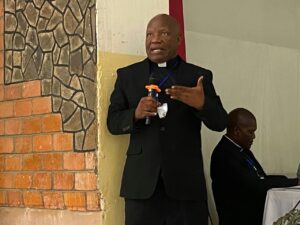
Zambians feel pinch as power prices soar – PF leader Mwewa Chilufya calls for relief
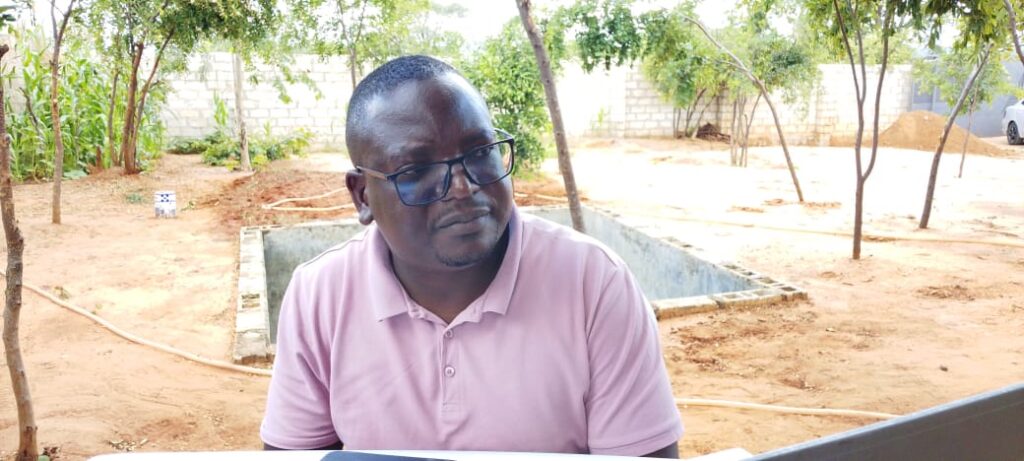
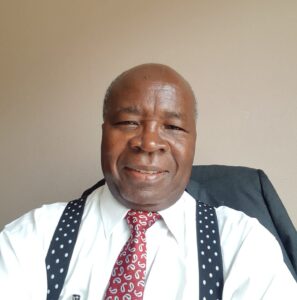
Zambians are being hit hard by rising electricity costs, with ordinary citizens struggling to afford power for their homes, Patriotic Front (PF) member Mwewa Chilufya has said
By Chali Mulenga in Livingstone, Southern Province, Zambia’s ‘Tourism Capital City!
Zambians are being hit hard by rising electricity costs, with ordinary citizens struggling to afford power for their homes, Patriotic Front (PF) member Mwewa Chilufya has said.
Mr. Chilufya said his own experience in purchasing electricity exposed discrepancies between official tariff calculations and the actual units received.
“I first calculated the amount of power used in a month and realised my household consumption came to 614 units. I then went on the ZESCO website to check the tariff plans because I wanted to buy power once for that particular month,” Chilufya said.
Chilufya explained that under the current emergency tariff, electricity from zero to 100 units is charged at K0.35 per unit, meaning a consumer should receive 100 units for K35.
However, Chilufya said when he attempted to buy more power, the outcome did not match the published calculations.
“Instead of buying 615 units, I decided to buy 700 units. According to my calculations, it came to about K 1,250, and I bought power worth K 1,200. But the units I was given were only 598,” Chilufya said.
Chilufya said the figures showed a clear mismatch between the information provided on ZESCO’s website and what consumers actually receive. “The mathematics on ZESCO’s website and the reality are two different things,” Chilufya said.
Chilufya also criticised the government’s power import arrangements, arguing that electricity is being imported and sold back to the same company at prices that ultimately disadvantage the State and the public.
“When you look at the price at which power is sold and the price at which the same power is being bought, government is being deprived, and the pressure is passed on to the ordinary Zambian,” Chilufya said.
Chilufya said the high cost of electricity was worsening the already difficult living conditions faced by many households.
“Life is very hard. Money is difficult to come by these days. People are struggling to get even three meals a day, and sometimes even one meal is a matter of survival. Then expensive power is added on top of that burden,” Chilufya said.
Calling on government officials to show compassion, Chilufya urged a reduction in electricity tariffs.
“Let us have compassion, you people who are serving in government. Reduce the cost of power and ease the burden on the Zambian people,” Chilufya said.
2026 National Budget for Zambia
The Minister of Finance and National Planning, Honourable Dr. Situmbeko Musokotwane, on Friday, 26th September 2025, presented the 2026 National Budget to the National Assembly under the theme “Consolidating Economic and Social Gains towards a Prosperous, Resilient and Equitable Zambia.”
He said, the 2026 National Budget projects national expenditure of K253.1 billion, representing 27.4 percent of GDP. He further said Domestic revenues are expected to contribute K206.5 billion, complemented by K12.1 billion in grants and K34.5 billion in borrowing.
“The allocations prioritize debt servicing, education, health, agriculture, road infrastructure, and social protection,” he said.
Dr. Musokotwane added that K92.6 billion has been set aside for general public services, K58.6 billion for economic affairs, K33.0 billion for education, K26.2 billion for health, and K15.7 billion for social protection.
KEY HIGHLIGHTS
Economic Growth
In his address, Dr. Musokotwane emphasized remarkable strides achieved since 2021. Over the past four years, Zambia’s economy has grown at an average of 5.2 percent, despite the twin shocks of COVID-19 and the 2024 drought. The country has also earned international recognition as the first to successfully restructure its external debt under the G20 Common Framework, reversing its reputation from a crisis-prone state to a solution-oriented nation.
Education and Health
Dr. Musokotwane said that 33. 0 billion has been catered to education and 26.2 billion catered to health, respectively. He said government is committed to improving the quality of education and the allocation will go towards the recruitment of an additional 2000 teachers and a further 3500 in 2026.
The Minister further stated that the allocation of secondary schools across the country as well as the completion of the remaining 120 in 2026, also informed that the allocation will go towards the construction of the Copperbelt University and the University of Zambia. Allocation will also go towards providing bursaries and training of 100 youths in various skills.
The Minister of Finance said, in the health sector government will in 2026 recruit another 2500 health personnel. He further stated that government using CDF will continue to construct maternity annexes.
Agriculture and Mining
Dr. Musokotwane informed the House that K851.7 million has been allocated to the Zambia Credit Guarantee Scheme, which includes resources for the Sustainable Agriculture Financing Facility to enable farmers’ access affordable financing.
He further reaffirmed government’s commitment to ambitious growth targets, including a 6.4 percent GDP growth rate in 2026, aiming to increase maize output to 10 million tonnes by 2031, while inflation reduced to the 6–8 percent band, and maintaining reserves above four months of import cover. He said key sectors will drive this agenda so that mining is on track to surpass the one million tonnes of copper production in 2025, as well as in agriculture and new investments in renewable energy are expected to add over 1,500 megawatts to the grid in 2026.
Tourism and Infrastructure
The Minister said with a proposed allocation of K1.5 billion to tourism, infrastructure and manufacturing, transport and connectivity remain central to Zambia’s transformation, with progress made on the Lusaka–Ndola Dual Carriageway, Lobito and TAZARA railway projects, and K1.1 billion proposed allocation for the upgrading of airports and border infrastructure.
Energy Dr. Musokotwane said Zambia today faces a serious shortage of power supply, almost all caused by the 2024 drought. However, with a proposed Electricity allocation fund of K500 million in 2026, Government will implement 100 on-grid and 30 off-grid projects.
https://www.facebook.com/share/p/1KnbGAmJYh/