
Kapelwa Musonda: The man who made Bembas and Lozis co-exist through writing

Kapelwa Musonda: The man who made Bembas and Lozis co-exist through writing
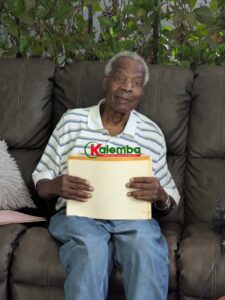
IN the Times of Zambia newspaper, he was known as Kapelwa Musonda. But what many readers of his satirical articles did not know was that Kapelwa Musonda was a pseudonym and his real name was Wizas Phiri.
The name Kapelwa Musonda was born at a time when there was a perceived Lozi–Bemba rivalry, from around 1971 to the early 1990s.

Kapelwa, a Lozi first name and Musonda, a Bemba surname was deliberately created to send a message to readers that Bembas and Lozis were not enemies, that intermarriages existed and that the two tribes could actually live together.
In the early 1970s, Zambia lived with this perceived rivalry because these were the two tribes with the most vocal, educated and politically influential.
In an interview with Kalemba, Phiri believed that if tribal tension was ever going to explode in the country at the time, it would be between the Bembas and the Lozis.
And so, he came up with an idea which he pitched to Times of Zambia editors who were impressed with his idea.
This idea was about political commentary that made people laugh and forget about the tribal talks around the country.
The satirical column started in 1971 and ran until 1991.
Phiri told Kalemba that he chose to write satire because he realised that the rivalry between Bembas and Lozis was somehow exaggerated but was capable of putting the country at war.
“The purpose was simply to make people laugh,” Phiri, now 88, told Kalemba.
“The aim was to enable us to laugh at ourselves, relax and get amused by our own stupidity,” he said.
The column became so popular that first President Kenneth Kaunda requested to meet him for lunch at State House.
“At the time, Vernon Mwaanga was chief editor at the Times of Zambia and he took me to State House where we had lunch, the three of us.
For his work, Phiri earned about K35 per month, writing four to five columns.
“It was not much,” he joked, “but it was enough to get a drink. By the way, it was part time, so I was okay.”
Through fictional characters whom he named Comrade Bonzo and Aunt Agatha, Phiri commented on the political situation in the country.
According to Phiri, Comrade Bonzo represented men, the type found in bars, always talking politics and claiming to know what was really going on while Aunt Agatha represented women, a marketeer, outspoken, educated woman active in the Women’s League.

“They were not real people,” Phiri explained. “They were characters I created from people I met in everyday life.”
Born in 1937 in Kabwe and raised in Lusaka, Phiri went to school in Eastern Province before moving to Kitwe to live with his aunt.
He later attended Munali Secondary School in 1955.
In 1961, he joined Nakambala Sugar Estate and later worked for Shell Chemicals Zambia Limited and in 1981 started his own company, making cleaning chemicals, which he ran until last year.
He also studied agro-chemicals in the United States and trained visually impaired people in agriculture under the Council for the Handicapped.
Wizas Phiri is still alive and his writings are preserved at the National Archives in Lusaka’s Ridgeway area.
He also published books, including The Kapelwa Musonda Files.
By Catherine Pule
Kalemba, February 3, 2026
Henry Kabwe wrote: “I have always referred to this man’s articles when defending President Kenneth Kaunda’s legacy which imperialists deceived Zambians as being dictatorial.
This man brought out issues a sensitive president in particular or government in particular could have frowned upon.
To even hear that he was invited to State House adds to KK’s decency as a leader.
Haven’t you noticed that his columns stopped running in 1991 when MMD came into office?
Uncle VJ should have reminded the MMD about the need to maintain a free press.
Well done @Kalemba!